


EN
3 Grocery Stocks Facing New Pressure From DoorDash and Instacart
DoorDash’s planned US$17b purchase of Instacart suddenly puts grocery delivery at the center of the conversation for every US supermarket stock exposed to third party apps. One deal could reshape how shoppers split spending between stores, screens and subscriptions, which can shift where investors’ attention goes next. This article walks through 3 stocks tied to this story and how this new delivery power block might matter for each one.
The stocks discussed below are a small sample of the grocery chains plugged into this delivery shift, and the full screen surfaces 17 more companies with equally detailed stories around how they reference online grocery, rapid fulfillment and partnerships with major delivery platforms. To size up that broader set in one place, head straight into the US Grocery & Supermarket Chains with Third‑Party Delivery Partnerships screener to identify, compare and analyze the highest conviction ways to play this theme.
Sprouts Farmers Market (SFM)
Sprouts Farmers Market plugs directly into this screener’s theme, pairing a health focused grocery format with a heavy reliance on third party delivery partners that extend its reach beyond physical stores and into the Instacart and DoorDash apps many customers already use.
Sprouts Farmers Market runs smaller format natural and organic supermarkets across the US with a strong online and delivery presence, and carries a market value of about US$5.7b.
Management has guided FY2026 comparable store sales at -1% to +1%, with the first quarter expected between -3% and -1%.
What happens to margins if a single unseen pressure on Sprouts Farmers Market’s third party delivery economics shifts in either direction?
If that unseen pressure matters to you, read the full narrative for Sprouts Farmers Market to see how delivery dependence, store format and capital allocation could be quietly decoupling.

Kroger (KR)
Kroger is the pure grocery heavyweight in this theme, running food, drug and general merchandise stores across the US while leaning on both its own online platforms and third party delivery partners to turn same day grocery into a mainstream habit for its shoppers.
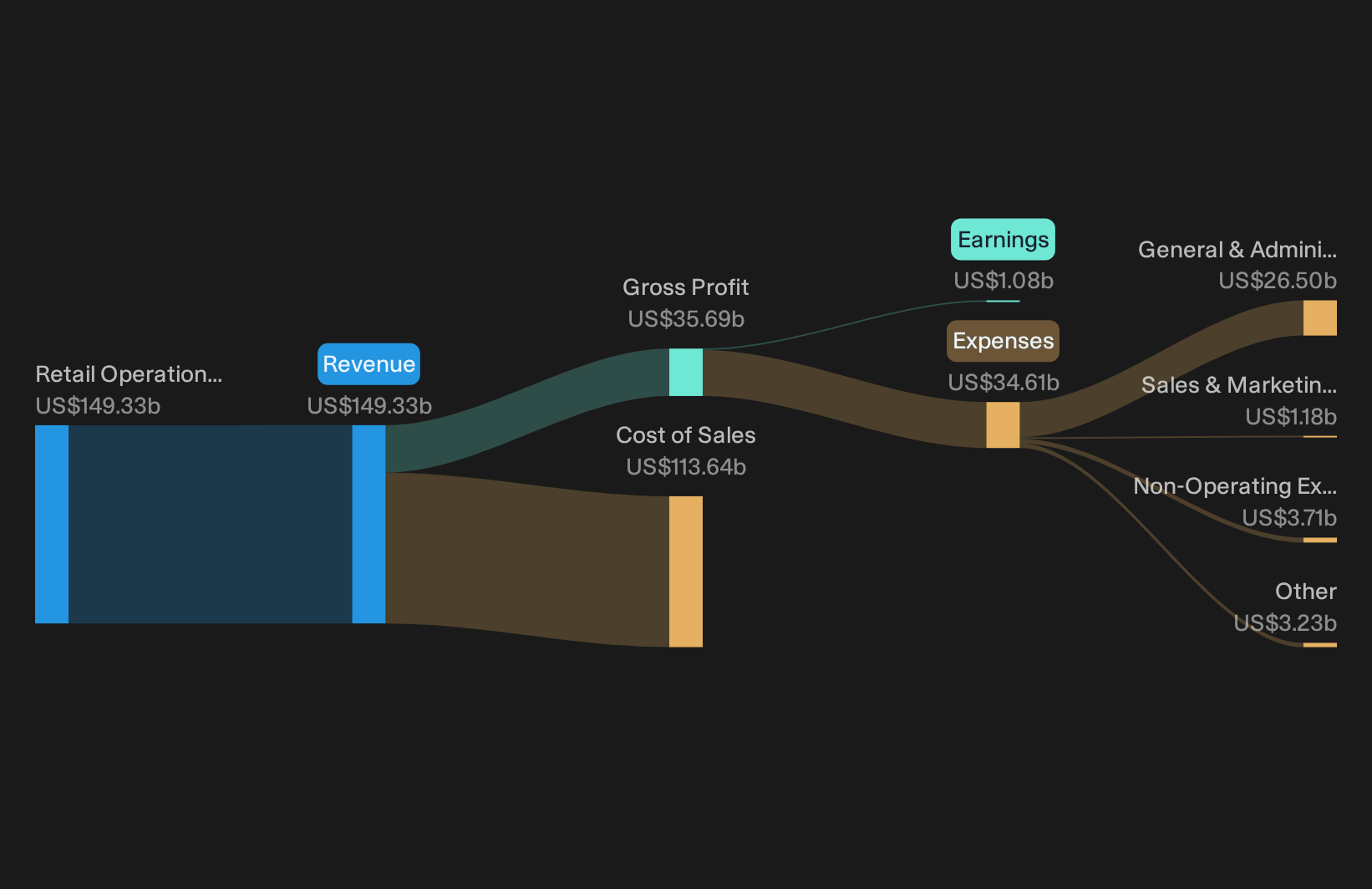
Kroger generates essentially all of its US$149.3b in revenue from retail operations in the United States and carries a market value of about US$38.4b.
Kroger sits at the point where full scale supermarkets, same day delivery and online baskets meet. Its experience with Instacart, DoorDash and other partners gives one of the clearest read throughs on how a more concentrated delivery market could reshape grocery economics.
The rapid growth in Kroger's e-commerce business, highlighted by adjusted online sales rising around 19% to 20% and the shift of this operation including media into profitability for two consecutive quarters, illustrates how growth in online grocery demand can affect the business.
What happens to that emerging profit pool if a single assumption about who controls customer data, ad dollars or delivery fees tilts in the other direction?
If that trade off is what you care about, read the full narrative for Kroger to see how Kroger’s e-commerce surge and its delivery partners could be reshaping its profit engine.
Albertsons Companies (ACI)
Albertsons Companies ties directly into the third party delivery theme because its national grocery and pharmacy chains lean on Instacart and other partners to move everyday baskets from aisle to doorstep. That delivery dependence is now colliding with a broader reset in digital, loyalty and cost efficiency.
Albertsons Companies runs a network of US grocery and drug stores under banners like Albertsons, Safeway and Vons, with about US$82.4b of its US$83.2b revenue coming from retail and the rest labeled unallocated other. The business is entirely US based and carries a market value near US$6.2b.
Accelerating growth in Albertsons Companies digital and e commerce channels, with recent double digit digital sales growth and approximately 10.5% penetration, continues to build on the earlier shift toward online grocery and convenience and can support revenue and earnings as digital profitability improves.
What happens to that digital profit path if one key pressure inside third party delivery fees or subscriptions tilts the economics in a different direction?
That delivery swing is exactly what the full narrative for Albertsons Companies unpacks, helping you weigh where Albertsons Companies’ accelerating digital reach and fee pressure might realistically meet next.

Seeking Alternatives Before Momentum Flies
Fresh opportunities can move from under the radar to fully priced faster than most headlines catch up. Scan these curated ideas before the crowd and consider them while they are still underfollowed.
- Find solid operators before momentum builds by running the list of solid balance sheet and fundamentals (23 results) while the numbers and balance sheets are still doing the quiet heavy lifting.
- Track where income strength meets price stability using the 6 dividend fortresses so you are not pursuing yield only after those payouts have been widely recognized.
- Consider powerful structural themes early by checking the 43 power grid technology and infrastructure stocks while critical infrastructure names are still priced as if demand growth is only a side story.
Have feedback on this article? Concerned about the content? Get in touch with us directly. Alternatively, email editorial-team@simplywallst.com