


EN
Is Higher Q3 Earnings Altering The Investment Case For Pitney Bowes Stock?
- Pitney Bowes reported Q3 2026 revenue of US$456.18 million, net income of US$52.67 million and diluted EPS from continuing operations of US$0.37, compared with the same period a year earlier.
- Despite slightly lower quarterly and nine month revenue, Pitney Bowes reported higher net income and earnings per share, which points to tighter cost control and a more efficient earnings mix.
- This article examines how Pitney Bowes' higher earnings per share may reshape the investment narrative built around logistics growth and debt risk.
Pitney Bowes Investment Narrative Recap
To own Pitney Bowes, you need to believe the shift from legacy mailing toward shipping, SaaS and efficiency can offset a flat to shrinking mail market and a high debt load. The latest quarter fits that story. Revenue for Q3 2026 stayed close to last year while net income and diluted EPS from continuing operations were higher, which points to tighter execution rather than top line momentum.
That mix matters because the key short term catalyst is earnings quality and cash generation, not rapid growth. Higher earnings on slightly lower sales suggest cost discipline is helping. The main near term risk stays the same. Structural mail decline and refinancing needs could still pressure profits if operating gains stall.
The Q3 2026 earnings release on October 28 is the clearest data point to focus on. Pitney Bowes reported Q3 revenue of US$456.18 million and net income of US$52.67 million, with diluted EPS from continuing operations of US$0.37. For the first nine months, revenue was US$1,385.09 million and net income was US$160.71 million, with diluted EPS from continuing operations of US$1.12.
Those figures line up with the key catalysts investors already watch. Earnings from continuing operations have been a core part of the Pitney Bowes narrative, and the company reports higher net profit margins than a year ago. Against risks like mail digitization, competition and leverage, the latest update mainly shows that the current earnings focused thesis is being reflected in reported operating results.
Pitney Bowes' current earnings of US$187.3 million sit against analyst forecasts for US$285.9 million of earnings and US$1.8b of revenue by 2029, with that outlook assuming fairly flat revenue growth and an earnings increase of about US$98.6 million by the forecast year.
Uncover how Pitney Bowes' fair value indicates a 12% potential upside to its current price that could narrow quickly.
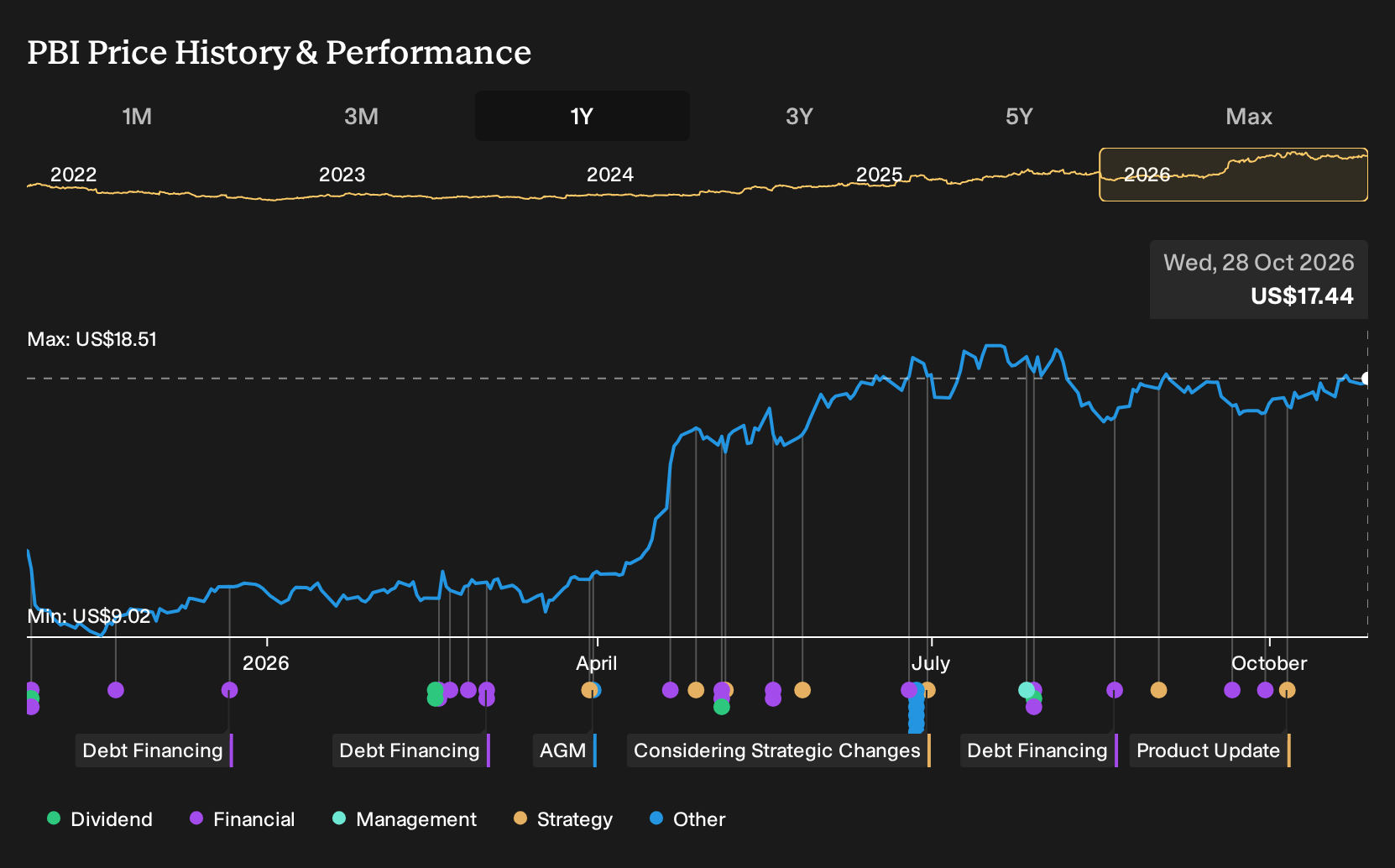
Exploring Other Perspectives
One optimistic twist in the Pitney Bowes story focuses on Pitney Bowes Bank as a future earnings engine. Before this Q3 update, the most bullish analysts were already penciling in about US$1.9b of revenue and roughly US$285.2 million of earnings by 2029. Those projections had not seen this latest earnings release yet, so if you lean toward that more upbeat view, it is worth asking whether these fresh numbers reinforce that banking and credit thesis or push you to reassess it.
Explore 3 other Pitney Bowes fair value estimates, including one that indicates up to 173% potential upside from the current price!
The Verdict Is Yours
Don't just follow the ticker. Dig into the data and build a conviction that's truly your own.
- A great starting point for your Pitney Bowes research is our analysis highlighting 4 key rewards and 3 important warning signs that could impact your investment decision.
- See our latest analysis for Pitney Bowes. The report includes a comprehensive fundamental analysis summarized in a single visual, the Snowflake, making it easy to evaluate Pitney Bowes' overall financial health at a glance.
Looking For More Ideas Beyond Pitney Bowes?
Once you have a handle on Pitney Bowes and its earnings story, it can help to line it up against other opportunities with clear financial profiles. The Simply Wall St Screener gives you a quick way to do that by filtering for traits like value, resilience and balance sheet strength so you can compare Pitney Bowes with peers that match your own risk and return preferences.
- If you want companies that combine quality with potentially mispriced valuations, start by reviewing a focused 26 high quality undervalued stocks that share strong fundamentals and room for a re rating.
- If capital preservation and steadier profiles matter most to you, scan a 32 resilient stocks with low risk scores that may better match your tolerance for volatility.
- If financial robustness is non negotiable in your process, filter for a list of solid balance sheet and fundamentals (24 results) to see which businesses pair healthier leverage with fundamental strength.
Have feedback on this article? Concerned about the content? Get in touch with us directly. Alternatively, email editorial-team@simplywallst.com