


EN
How Mixed Earnings Results Will Impact Stewart Information Services Stock Investors
- Stewart Information Services reported third quarter 2026 revenue of US$900.68 million and net income of US$30.32 million, with diluted EPS from continuing operations of US$0.98, alongside nine month revenue of US$2.58 billion and net income of US$84.5 million.
- The combination of higher sales over both periods and lower quarterly earnings per share suggests that rising activity is being offset by pressure on profitability.
- The next step is to consider how Stewart Information Services' higher revenue but weaker quarterly EPS could reshape the existing investment narrative.
Stewart Information Services Investment Narrative Recap
To own Stewart Information Services, you need to be comfortable with a story where higher commercial and Real Estate Solutions volumes carry more of the load while the housing market stays subdued. The latest quarter fits that script. Revenue grew to US$900.68 million, yet EPS from continuing operations slipped to US$0.98, highlighting margin pressure as the key short term swing factor.
The main near term catalyst is whether management can convert higher activity into cleaner profitability, especially as operating expenses linked to outside services and data stay elevated. The biggest current risk is that cost inflation and a weak existing home sales backdrop keep net margins tight, which would blunt any benefit from higher revenue.
The earnings release itself is the most relevant recent announcement for this story. For the nine months to September 30, 2026, Stewart Information Services reported revenue of US$2.58 billion and net income of US$84.5 million. EPS from continuing operations was US$2.74, slightly below the prior year, with profitability as the area investors are watching most closely.
Those numbers sit alongside earlier commentary that commercial title and Real Estate Solutions have been important growth levers, supported by acquisitions and expansion in agency operations. The latest figures provide a fresh read on how well those segments are offsetting a challenging housing market and higher operating expenses, which remain the central catalysts and execution tests for the business.
What The Stewart Information Services Forecasts Assume
Analysts are effectively saying that for Stewart Information Services to justify current expectations, the business needs to turn steady revenue expansion into meaningfully higher earnings. The assumptions on the table are quite specific, which gives you some concrete numbers to pressure test rather than just broad optimism.
Revenue is projected to rise at 7.8% a year over the next few years, with profit margins moving from 4.1% today to 4.6% by around 2029. On those inputs, consensus calls for earnings to move from US$134.7 million today to US$190.2 million by about 2029, with analysts also expecting the share count to climb roughly 7% annually over the next 3 years.
On top of those profit and volume assumptions, the market view in the reports depends on the P/E ratio stepping up from 11.9x today to 18.5x on the 2029 earnings estimate. That multiple is higher than the 11.0x currently quoted for the broader US Insurance industry, which means the scenario requires not just higher earnings but also a richer valuation multiple.
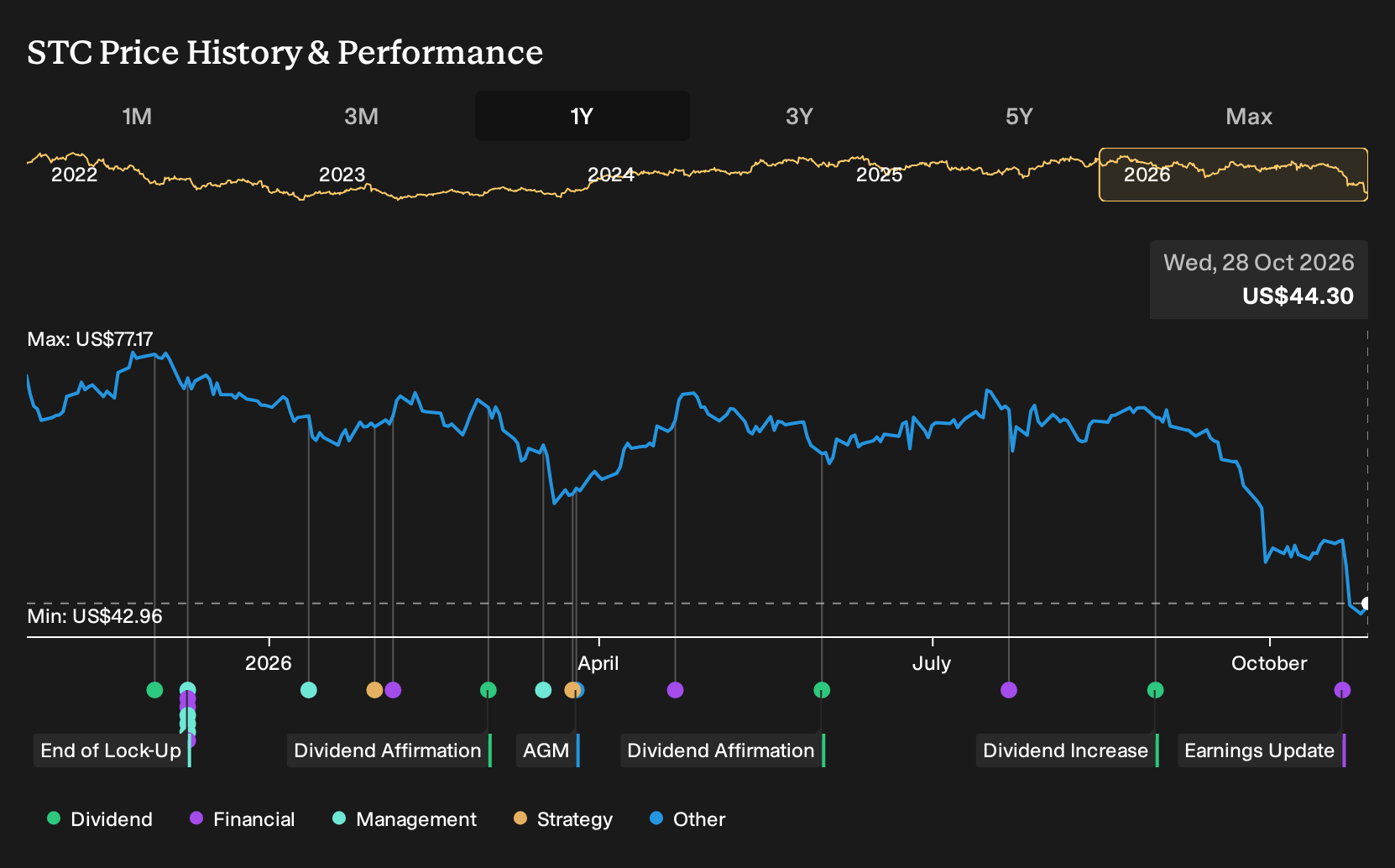
The valuation work in the reports ties this all together into a consensus price target of US$76.25 per share, versus a recent price of US$52.57. The range of analyst views is wide, with the most optimistic target at US$87.0 and the most cautious at US$63.0, so the spread itself is a reminder to treat any single scenario as one possible path rather than a fixed outcome.
Underlying all of these projections is the idea that commercial title and Real Estate Solutions continue to contribute more profit, that acquisitions add useful scale, and that cost discipline keeps the higher operating expense load from eating into margin gains. If any of those building blocks falls short, the numbers around 2029 earnings and P/E could look very different from the current analyst spreadsheets.
Stewart Information Services' narrative projects US$4.1 billion revenue and US$190.2 million earnings by 2029. This rests on 7.8% yearly revenue growth and requires earnings to rise by about US$55.5 million from US$134.7 million today.
Discover why Stewart Information Services' fair value indicates a 75% potential upside to its current price, which may not last much longer.
Exploring Other Perspectives
You are seeing two very different stories about Stewart Information Services. The lowest analysts lean hard into cost risk, assuming revenue of about US$4.0b and earnings of roughly US$138.4 million by 2029, which is well below consensus. After this quarter's higher sales but softer EPS, those cautious models may either look too harsh or start to gain traction.
Explore another Stewart Information Services fair value estimate, including one that suggests as much as 16% downside from the current price.
Decide For Yourself
Don't just follow the ticker. Dig into the data and build a conviction that's truly your own.
- A great starting point for your Stewart Information Services research is our analysis highlighting 5 key rewards that could impact your investment decision.
- See our latest analysis for Stewart Information Services. The report includes a comprehensive fundamental analysis summarized in a single visual, the Snowflake, making it easy to evaluate Stewart Information Services' overall financial health at a glance.
Looking For More Investment Ideas Beyond Stewart Information Services?
If Stewart Information Services has you thinking more broadly about margin risk and valuation, it can be useful to line it up against other companies facing similar trade offs. The Simply Wall St Screener lets you quickly filter for different financial profiles so you can compare quality, balance sheet strength, and income potential side by side.
- If you want potential mispricing where cash flows and balance sheets already look robust, scan through our 29 high quality undervalued stocks to filter for quality businesses the market may be discounting.
- If capital preservation matters as much as upside, focus on our 30 resilient stocks with low risk scores which highlights companies with more resilient risk scores.
- If you prefer resilient finances as a starting point, search within the list of solid balance sheet and fundamentals (24 results) to see businesses with sturdier fundamentals that could warrant a closer look.
Have feedback on this article? Concerned about the content? Get in touch with us directly. Alternatively, email editorial-team@simplywallst.com