


EN
What MTR Holders Got Right
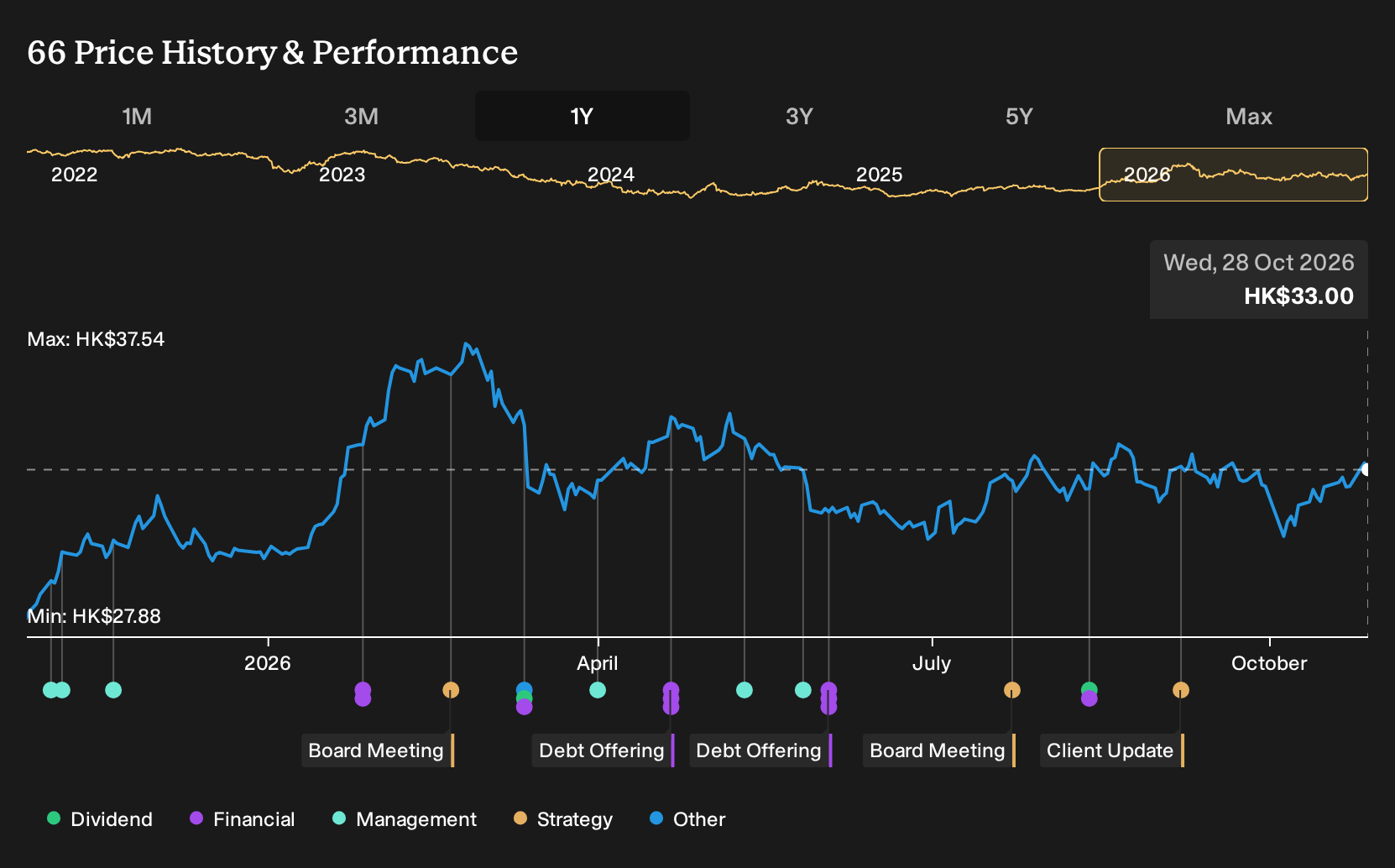
If MTR was on your watchlist instead of in your portfolio over the past year, the outcome may feel like a miss. Investors who held MTR over the past year are up 23.3%, including dividends. That result now sits alongside fresh headlines about a multi decade Northern Metropolis rail build and new work on Sydney’s Parramatta Metro. The real puzzle is simpler though. What early conviction on urban growth and rail plus property economics would have given you the confidence to own it before that news landed?
On Simply Wall St, a Narrative is an investor's thesis written down: the reasoning, plus the numbers it rests on. Run those numbers and you get an estimated Fair Value.
MTR has already moved. See which of 195 high quality undervalued stocks still trade below our estimates.
The Argument You Would Have Been Weighing On MTR
The shares cost HK$27.88 at the start of the period, so anyone looking at MTR then had to decide which story felt more convincing.
The bullish narrative put fair value at HK$32, based on the idea that urban growth and large property projects would support recurring earnings and that advanced digital technology and AI maintenance could lift efficiency over time.
The bearish view set fair value at HK$21.8 and leaned on the risk that lasting shifts toward remote work, higher capital spending and weaker Hong Kong retail conditions would squeeze margins and limit fare and property income.
What The MTR Evidence Actually Tested
MTR’s plan to invest about US$5b in the Northern Metropolis link, plus the land development rights, leaned toward the bullish view that rail plus property could underpin future earnings. The Parramatta Metro win and H1 2026 profit of HK$16,490m with a 62.9% net margin, even as revenue dipped to HK$26,231m, challenged the bearish margin squeeze story. The evidence cut both ways.
The hinge assumption was whether heavy rail investment would crush profitability or earn its keep. For any other transport stock, track how margin trends alongside capex and project wins rather than focusing only on headline revenue.
What MTR's One Year Gain Already Prices In
MTR now trades at HK$33 after a 23.3% gain over the past year, while the selected Narrative’s Fair Value sits below the current price. That view leans on concern that project heavy spending and overseas expansion may not yet translate into durable underlying profit.
The key question is what must keep going right for today’s level to make sense. A buyer at HK$33 has to assess whether large rail and property projects can steadily support recurrent earnings without ongoing help from one off property development gains.
"The main thing that has to go right is that MTR turns its large rail expansion and Rail plus Property pipeline, including more than HK$100b of projects and thousands of housing units, into sustainable earnings that support both capital spending and dividends without relying on one off property profits."
Not everyone reads the same price the same way. → See the lower figure this Narrative lands on, and how it gets there
Who Moves When MTR Riders Log Off?
MTR lives in the world of tracks, stations and long contracts. Your daily reality might split differently between trains, food apps and ride requests.
Those phone taps create a different problem. Moving people and parcels efficiently needs someone matching demand with cars, couriers and capacity in real time.
One platform is turning that matching job into its central skill. It links rides, deliveries and freight in a single technology layer.
The open question is who owns that digital crossroads if human drivers gradually matter less. Does the routing brain stay just as important when the driver is software?
It is written up in full, assumptions and all. → Explore the Narrative that puts this company 76% above its price
Have feedback on this article? Concerned about the content? Get in touch with us directly. Alternatively, email editorial-team@simplywallst.com