


EN
Penske Automotive Group (NYSE:PAG) surprises with Q3 2026 sales

Global automotive retailer Penske Automotive Group (NYSE:PAG) reported Q3 2026 results beating Wall Street’s revenue expectations, with revenue up 9.4% year on year to $8.42 billion. Its GAAP profit of $3.36 per share was in line with analysts’ consensus estimates.
For more on Penske Automotive Group, read our full research report, available free.
Penske Automotive Group (PAG) Q3 2026 highlights:
- Revenue $8.42 billion vs S&P analysts’ consensus estimates of $8.13 billion (9.4% year-on-year growth, 3.5% beat)
- EPS (GAAP) $3.36 vs analysts’ consensus estimates of $3.38 (in line)
- Adjusted EBITDA $378.4 million vs analysts’ consensus estimates of $375.8 million (4.5% margin, 0.7% beat)
- Operating margin 3.6%, in line with the same quarter last year
- Market capitalization $13.93 billion
Revenue growth
A company’s long-term revenue performance can indicate its overall quality. Any business can deliver a good quarter or two, but many enduring ones grow for years.
With $32.56 billion in revenue over the past 12 months, Penske Automotive Group is one of the larger companies in the consumer retail industry and benefits from a well-known brand that influences purchasing decisions. However, its scale is a double-edged sword because it’s harder to find incremental growth when you’ve penetrated most of the market. To expand meaningfully, Penske Automotive Group likely needs to adjust its prices or enter new markets.
Penske Automotive Group grew its revenue at a sluggish 3.6% compounded annual growth rate over the last three years as it barely increased revenue at existing, established locations.
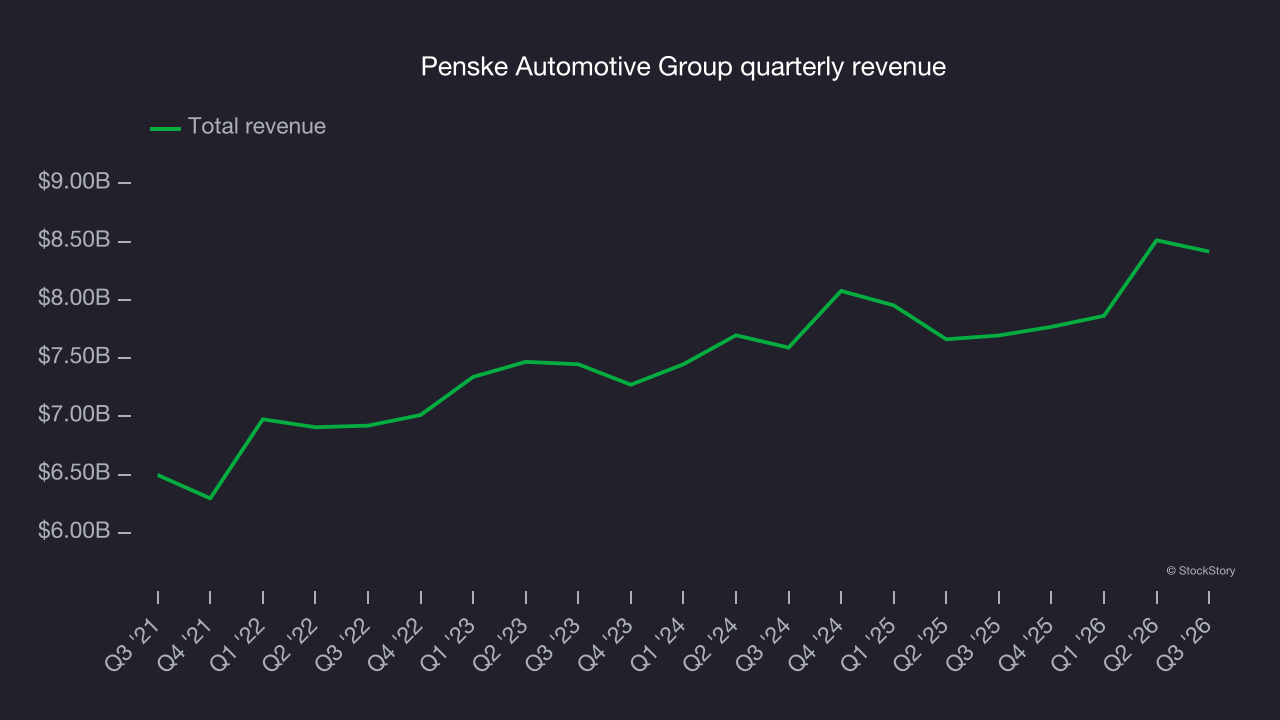
This quarter, Penske Automotive Group reported year-on-year revenue growth of 9.4%, and its $8.42 billion of revenue exceeded Wall Street’s consensus estimates by 3.5%.
Looking ahead, sell-side analysts expect revenue to grow 1.5% over the next 12 months, according to S&P, a slight deceleration versus the last three years. This uninspiring projection suggests its products will face some demand challenges.
Store performance
Number of stores
The number of stores a retailer operates is a critical driver of how quickly company-level revenue can grow.
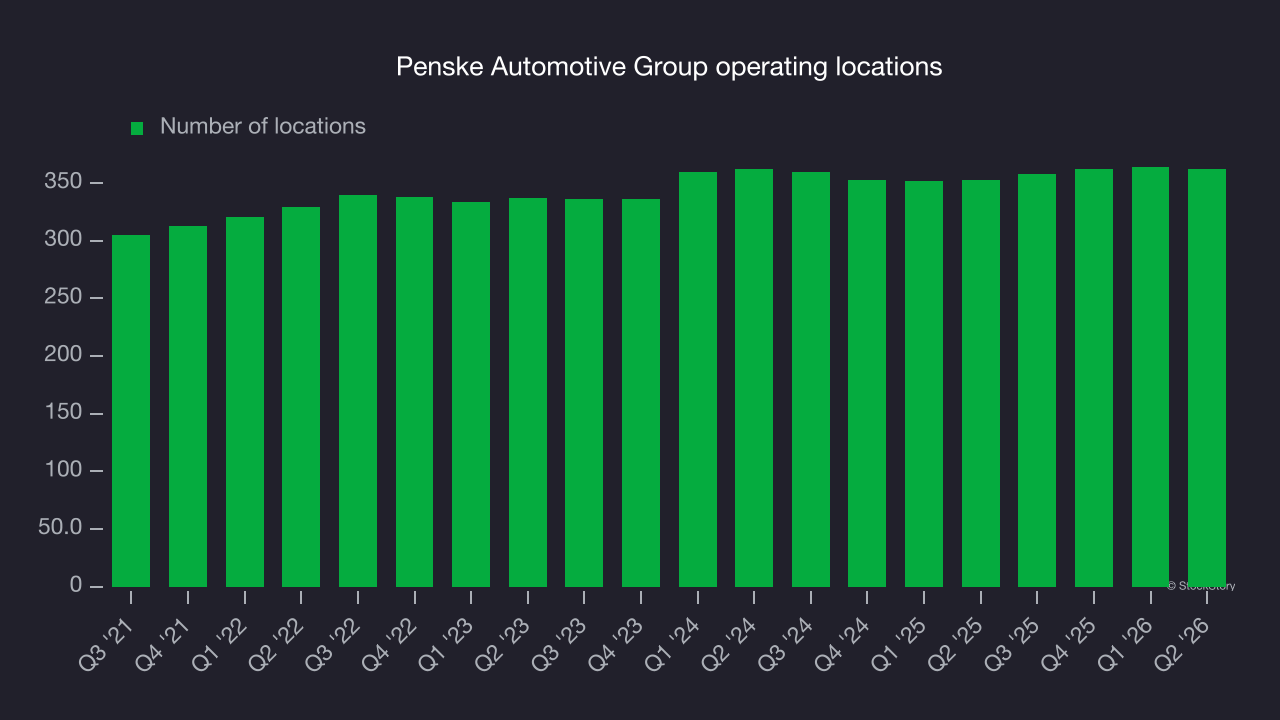
Penske Automotive Group has generally opened new stores over the last two years and averaged 1.2% annual growth, faster than the broader consumer retail sector.
When a retailer opens new stores, it usually means it’s investing for growth because demand is greater than supply, especially in areas where consumers may not have a store within reasonable driving distance.
Note that Penske Automotive Group reports its store count intermittently, so some data points are missing in the chart below.
Same-store sales
The change in a company’s store base only tells one side of the story. The other is the performance of its existing locations and e-commerce revenue, which informs management teams whether they should expand or downsize their physical footprints. Same-store sales is an industry measure of whether revenue is growing at those existing stores and is driven by customer visits (often called traffic) and the average spending per customer (ticket).
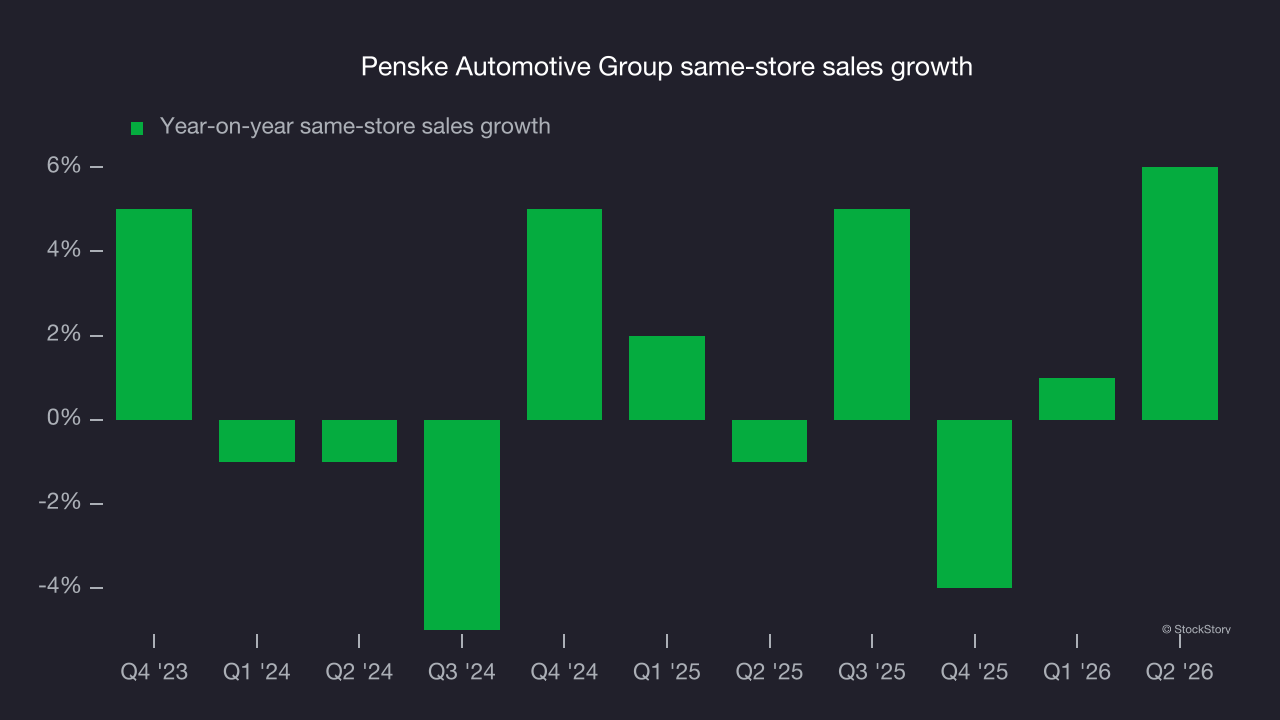
Demand at Penske Automotive Group’s existing locations has been relatively stable over the last two years but lagged that of most retailers. On average, the company’s same-store sales have grown by 2% per year. This performance suggests it should consider improving its foot traffic and efficiency before expanding its store base.
Note that Penske Automotive Group reports its same-store sales intermittently, so some data points are missing in the chart below.
Key takeaways from Penske Automotive Group’s Q3 results
Penske Automotive Group’s quarter had some key positives, led by revenue that topped analysts’ consensus estimates, but gross margin missed expectations. Shares remained flat at $212.15 immediately after the release.
To assess Penske Automotive Group as an investment, consider valuation, business quality and the latest earnings. Read the full research report here (it’s free).