


EN
Dan Ives Sees an Imminent SpaceX-Tesla Merger. The Biggest Win Would be in AI Data Centers.
Popular analyst and senior managing director at Yorkville Ives has said that the merger between two companies led by the world's richest man, Elon Musk, SpaceX (SPCX) and Tesla (TSLA) is the next “logical step” as the former secured a $40 billion debt raise from Apollo Global Management for building AI infrastructure.
Ives predicts that the merger has an 80% to 90% chance of fruition by the end of 2027. Elaborating on this further in a note to clients, Ives said:
“Musk's framing was blunt: debt markets have 'almost entirely shut off' for companies without substantial revenue independent of AI data centers, and more than 200 neoclouds face consolidation or failure. SpaceX gets the money because Starlink and launch throw off cash that has nothing to do with AI, the same reason the hyperscalers can keep spending while single-purpose compute renters are repriced. We disagree with the broad version of that call: compute demand still exceeds supply, and neoclouds with contracted capacity and funded balance sheets will keep filling the gap the hyperscalers cannot. But there will be losers, and they will be the ones that built on debt against uncontracted demand. SpaceX is making itself one of the handful of balance sheets that can fund gigawatts.”
However, a crucial component that Ives highlighted is worth noting regarding the potential merger and its acceptance among Tesla shareholders when he said, “The hurdle is a Tesla shareholder base that owns the stock for autonomy and Optimus and will not vote for an exchange ratio that values those businesses at today's price.”
Thus, it is worth examining what the possible implications would be if these two trillion-dollar companies do eventually come together. Let's find out.
A $3.5 Trillion Giant
The combination of SpaceX and Tesla, if and when it happens, would be historic in numerous ways. For instance, it will be the first time in history that two companies with market caps exceeding $1 trillion would combine and create a behemoth whose market cap would be around $3.5 trillion, making it the fifth-largest company in the world. Together, they would be operating in myriad industries like automobiles, space exploration, data centers, AI, social media, and energy.
Notably, formal processes have already begun, with both companies forming committees of independent directors to consider it.
In terms of synergies, the most tangible one is power for AI data centers, because the companies are already doing business here. SpaceX bought $480 million of Tesla Megapack products during the first nine months of 2026. Tesla says its batteries can support large data center loads, help manage swings in demand, and strengthen power reliability. Thus, a merged company could plan battery supply, installation, and data center expansion under one capital budget, potentially resulting in lower costs.
Meanwhile, chips offer another specific point of overlap. Tesla is building compute for vehicle and robot development, with a stated goal of reaching 400 megawatts of training capacity by the end of 2026. SpaceX needs enormous computing capacity for its own AI models and services. Musk has also identified chip design and the companies’ planned Terafab manufacturing project as reasons to cooperate. A merger could give their engineers one process for deciding which chips to design, which workloads receive scarce capacity, and how much manufacturing risk to take.
Finally, software is a similar mix of opportunity and overlap. SpaceX’s AI business includes Grok and its agent products. Tesla reported 1.74 million active subscriptions to its supervised driving software at the end of September and said Cybercab passengers can already access Grok and Grok Bot by voice. Common ownership could make it easier to coordinate assistants, entertainment, and fleet services across vehicles, phones, and other devices.
However, some concerns may also arise. Apart from the acceptability of the exchange ratio for Tesla shareholders, the spectre of regulatory scrutiny is there as well, as the merger would put Tesla’s substantial China manufacturing business under the same corporate parent as a major United States space and defense contractor, inviting scrutiny that a commercial partnership might avoid.
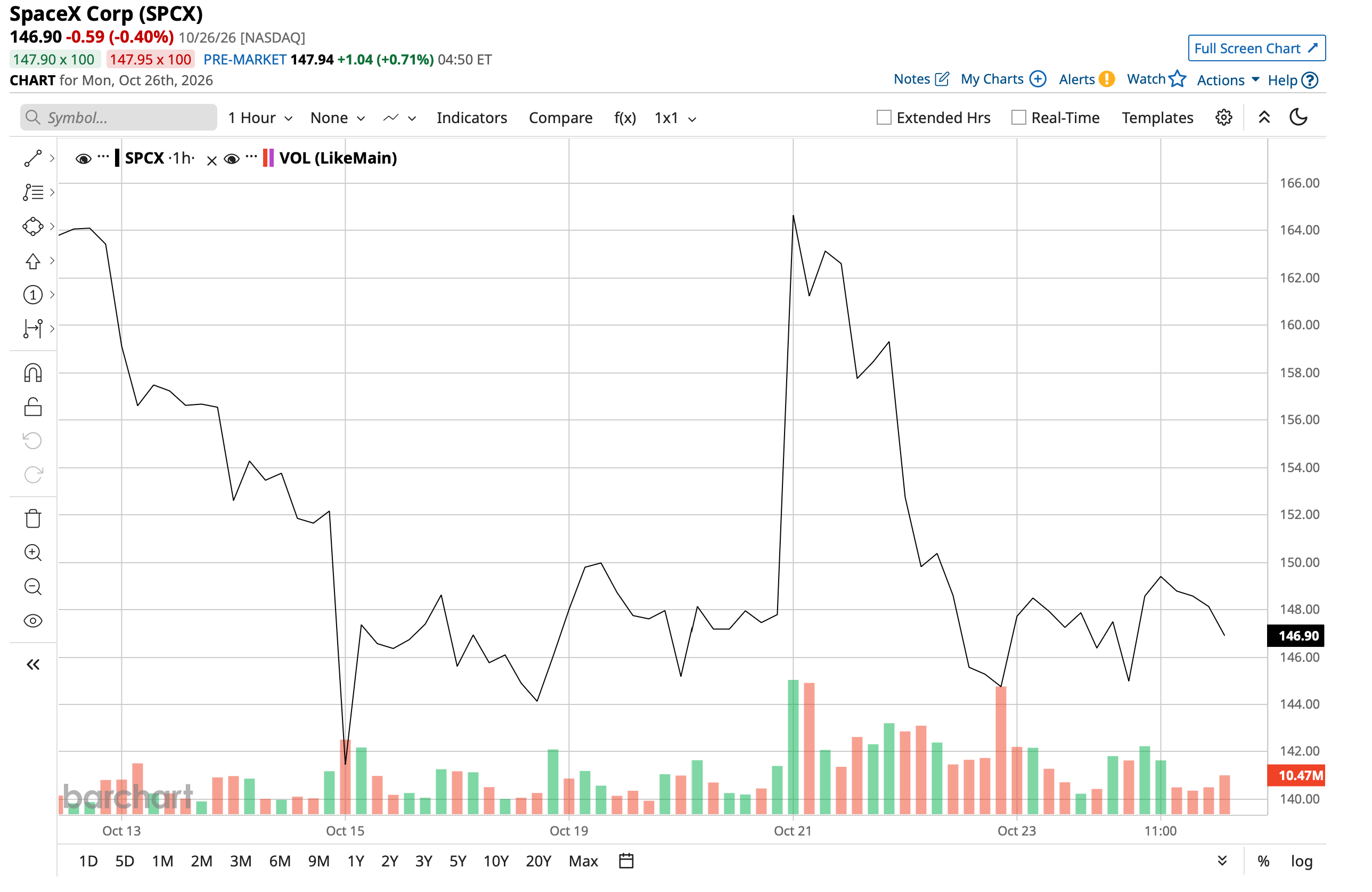
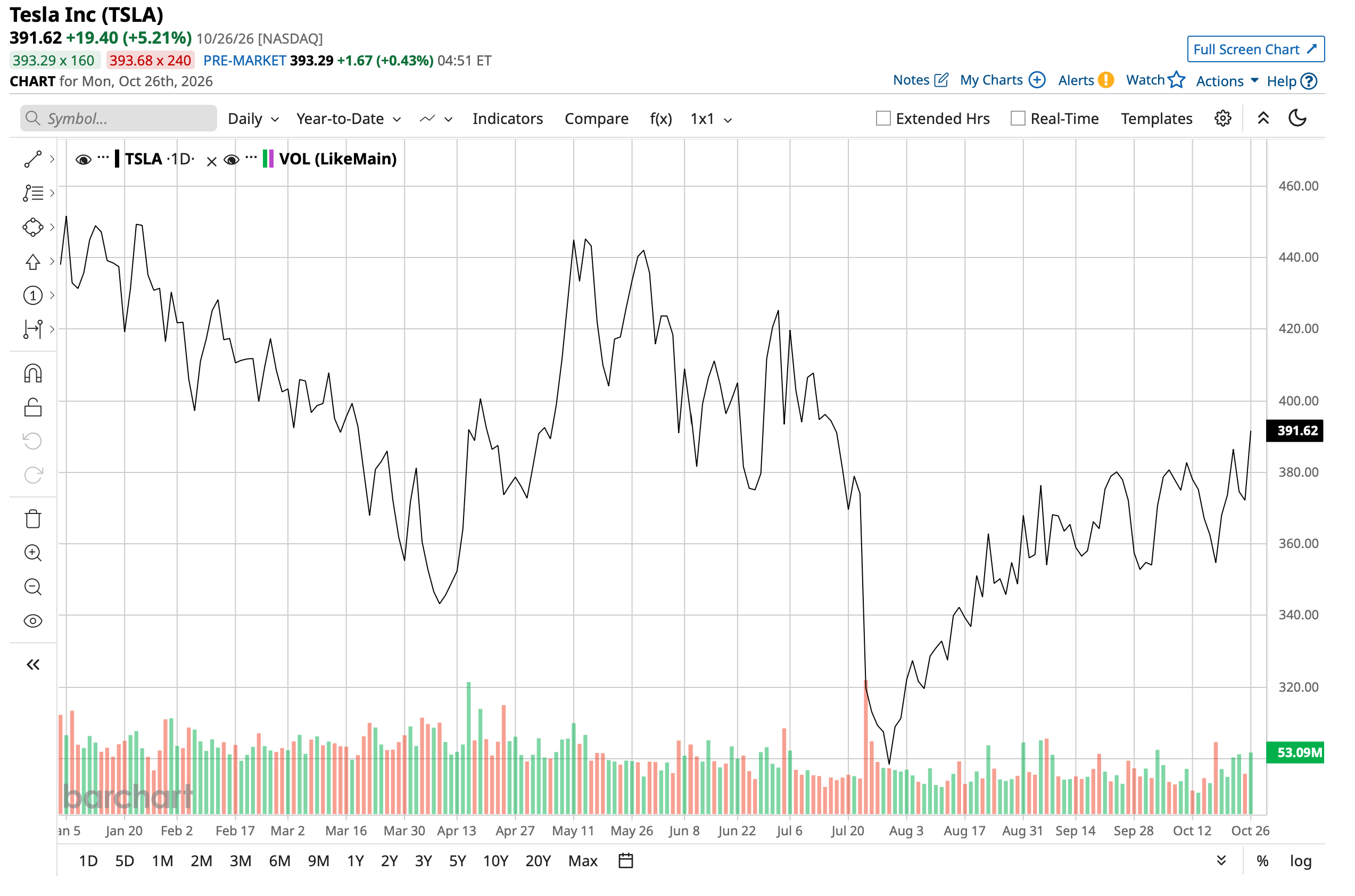
Shares of SpaceX are down 9% since its listing, while TSLA stock is down 9% on a year-to-date (YTD) basis.
Analyst Opinion on SPCX and TSLA Stocks
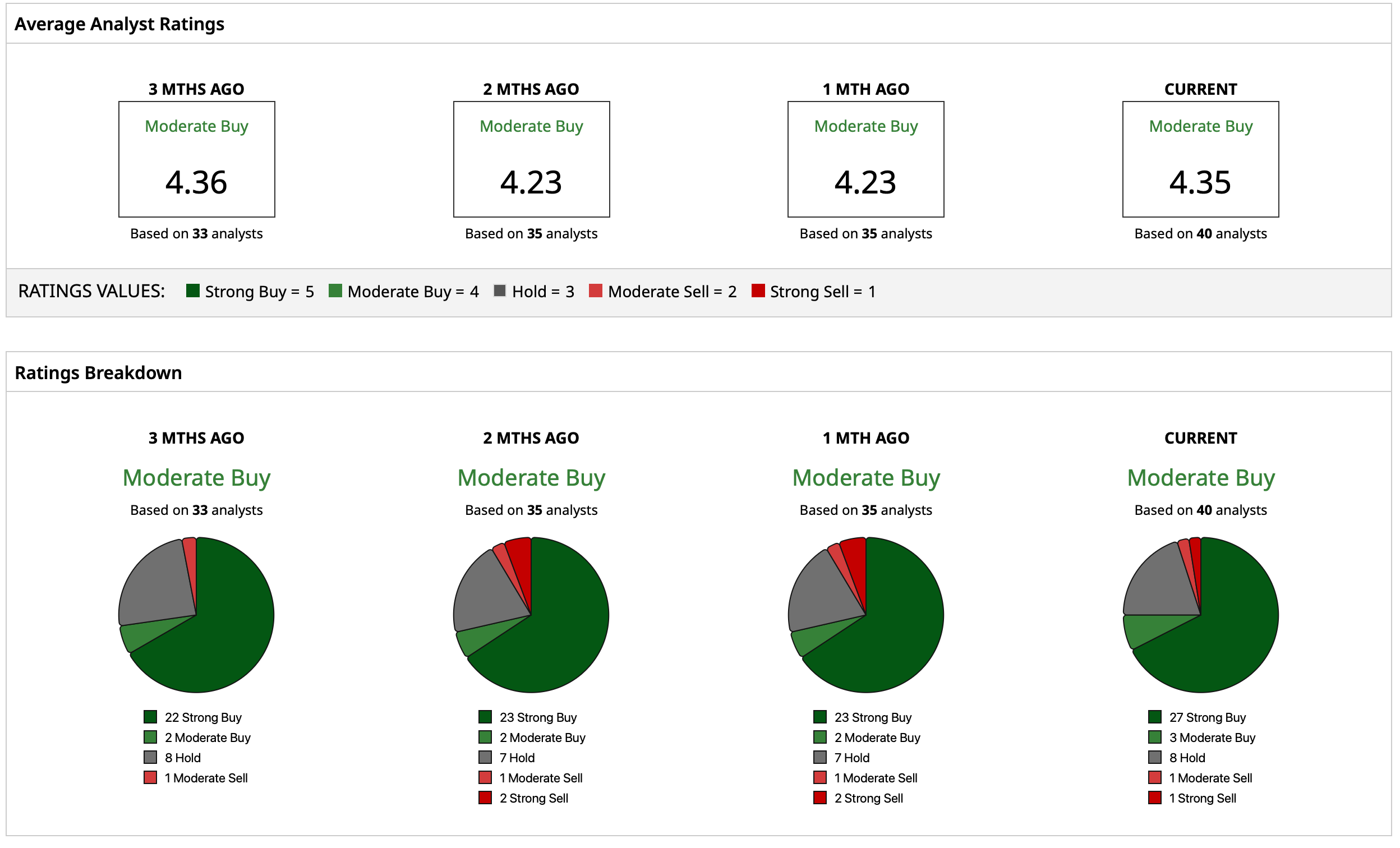
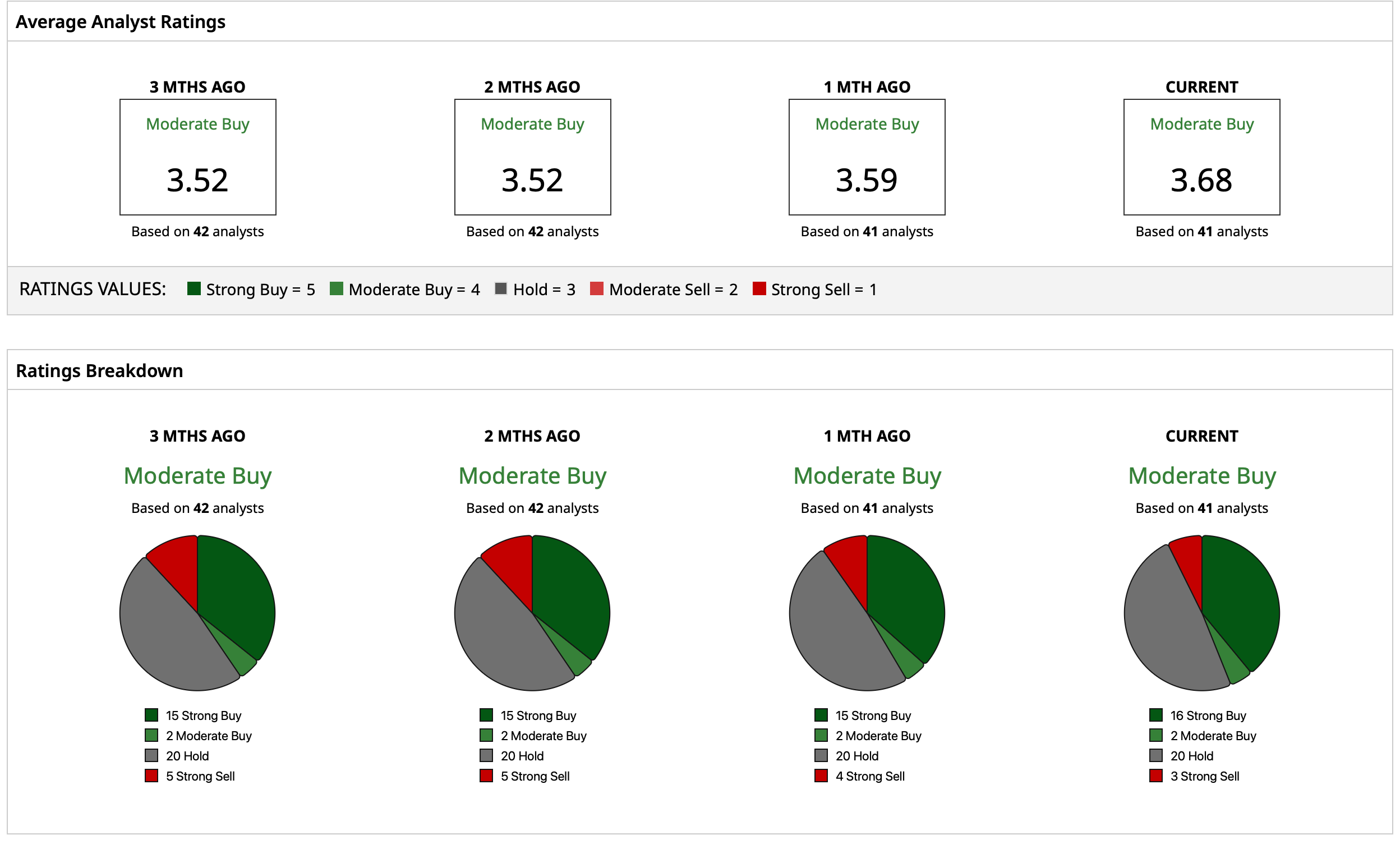
Overall, analysts have deemed both SPCX and TSLA stocks as consensus “Moderate Buys.” While the mean target price for SPCX stock is $249.70, the one for TSLA is $412.29, indicating upside potential of 68% and 5.2%, respectively. Out of 40 analysts covering SPCX stock, 27 have a “Strong Buy” rating, three have a “Moderate Buy” rating, eight have a “Hold” rating, one has a “Moderate Sell” rating, and one has a “Strong Sell” rating. For TSLA stock, out of 41 analysts, 16 have a “Strong Buy” rating, two have a “Moderate Buy” rating, 20 have a “Hold” rating, and three have a “Strong Sell” rating.
On the date of publication, Pathikrit Bose did not have (either directly or indirectly) positions in any of the securities mentioned in this article. All information and data in this article is solely for informational purposes. For more information please view the Barchart Disclosure Policy here.