


EN
What Fortinet (FTNT)'s AI Security Launch Means For Shareholders
- Fortinet recently introduced the FortiGuard Inline AI Security Service for AI-specific inspection and control, the FortiLink SASE Service for cloud-delivered branch security without on-site firewalls, and Atos announced an expanded global engagement that embeds Fortinet technology into worldwide managed cybersecurity services.
- The tighter focus on AI-aware security and Unified SASE, delivered through both new services and the Atos global framework, reflects Fortinet’s effort to convert a large hardware footprint into higher margin, recurring security subscriptions.
- The discussion now turns to how Fortinet’s investment narrative could be influenced by these AI security launches and the Atos partnership.
Scan how Fortinet’s AI security push compares with other potential breakouts by reviewing a hand-picked 55 AI infrastructure stocks shaping the next wave of digital defenses.
Fortinet Investment Narrative Recap
To own Fortinet, you need to believe the firewall base and SASE Firewall business can keep feeding higher margin subscriptions, even as the big hardware refresh cycle matures. The key short term swing factor is whether AI focused security and Unified SASE services keep billings and service growth on track while hardware tied revenue stays resilient.
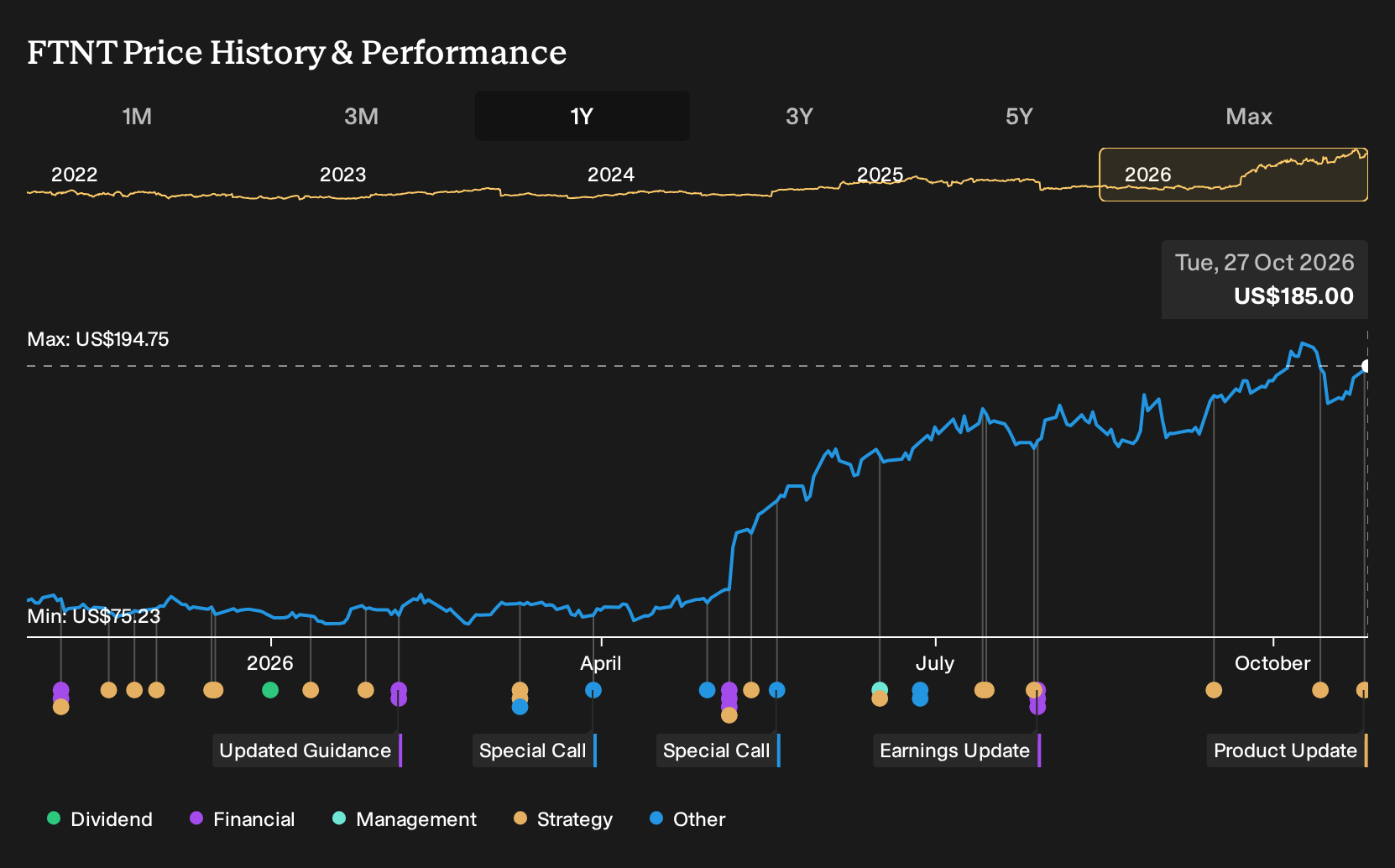
The biggest near term risk is that rich expectations meet any wobble in billings, AI security traction or SASE momentum, given the high P/E and strong share price run. The latest AI and SASE launches support the subscription story, but do not remove the risk of a valuation reset if execution stumbles.
The FortiGuard Inline AI Security Service looks most relevant right now. It plugs directly into existing FortiGate deployments, so it speaks to the core thesis that Fortinet can sell more cloud delivered security through the footprint customers already run. That is exactly where recurring revenue and earnings quality could shift over time.
Operationally, this AI service concentrates several near term catalysts into a single offering. It connects the firm’s AI focused R&D, Virtue AI technology, regulatory driven data protection needs and customer demand for unified control into one product set. The main execution watchpoints are adoption rates, real world performance on false positives and how quickly it is bundled into broader Atos and SASE deals.
Fortinet Forecasts Behind the AI Security Story
Forecasts around Fortinet are already tightly linked to this AI security push. Analysts are working with revenue growth assumptions, expanding profit margins and a path where more of the firewall estate converts into higher margin services tied to offerings like FortiGuard Inline AI and Unified SASE.
Consensus estimates point to earnings of US$2.1b today and US$3.2b by 2029, with a wide spread between the most optimistic and most cautious views. That US$1.1b gap between current and projected profit effectively tests whether AI aware security, SASE Firewall and OT wins can support higher quality earnings rather than just cycling another hardware upgrade.
Revenue assumptions sit at 13.2% annual growth over the next three years, which aligns with the idea that Fortinet needs both steady appliance demand and ongoing subscription uptake to meet the 2029 forecasts. The same reports factor in profit margins rising from 28.2% to 29.4% over that period, tying the margin story directly to a richer mix of services like the new inline AI inspections and cloud delivered branch security.
Valuation work from analysts effectively embeds these operating targets into a 2029 scenario where Fortinet generates about US$10.9b of revenue and US$3.2b of earnings. That outlook uses a discount rate around 8.6% and a projected P/E multiple of 47.2x on those earnings, which is above the cited US Software sector average and underlines how much faith is being put in the subscription and AI security transition.
The recent share price of US$169.13 sits close to the consensus price target of US$167.91, only 0.7% lower, so the market is already treating the stock as roughly fairly valued on these group assumptions. For you as an investor, the key consideration is whether the Fortinet AI roadmap, SASE rollout and Atos partnership provide enough confidence in those revenue, margin and earnings paths or whether the embedded expectations feel too tight for your risk tolerance.
Fortinet's narrative projects US$10.9b revenue and US$3.2b earnings by 2029. This requires 13.2% yearly revenue growth and an earnings increase of about US$1.1b from US$2.1b today.
Uncover why Fortinet's fair value indicates a 9% potential downside to its current price, which leaves little room for error.
Exploring Other Perspectives
One alternate storyline says the real risk is AI and SASE interest stalling out. The most bearish analysts were penciling in only 10.2% yearly revenue growth and about US$2.9b in earnings by 2029 before this Fortinet AI and FortiLink SASE news. That is a much colder view, so use it as a prompt to compare several competing narratives for yourself.
Explore 5 other Fortinet fair value estimates, including one that suggests as much as 32% downside from the current price!
Reach Your Own Conclusion
Disagree with existing narratives? Extraordinary investment returns rarely come from following the herd, so go with your instincts.
- A great starting point for your Fortinet research is our analysis highlighting 2 key rewards that could impact your investment decision.
- See our latest analysis for Fortinet. The report includes a comprehensive fundamental analysis summarized in a single visual, the Snowflake, making it easy to evaluate Fortinet's overall financial health at a glance.
Looking For More Investment Ideas Beyond Fortinet?
If Fortinet’s AI security push has sharpened your focus on where recurring revenue and balance sheet strength really matter, it can help to compare it with a wider set of companies that fit different risk and income profiles. The Simply Wall St Screener lets you quickly filter for traits that match your own goals, whether you want durability, upside potential, or reliable payouts.
- For investors who care most about resilience and capital preservation, start with a 30 resilient stocks with low risk scores that score well on stability and downside protection.
- If your priority is quality at a reasonable price, scan a 29 high quality undervalued stocks that pair stronger fundamentals with what analysts see as discounted valuations.
- Income focused portfolios may benefit from a 5 dividend fortresses that combine higher yields with an emphasis on sustainability and balance sheet support.
Have feedback on this article? Concerned about the content? Get in touch with us directly. Alternatively, email editorial-team@simplywallst.com