


EN
What Campbell's Doubters Saw Before The Drop
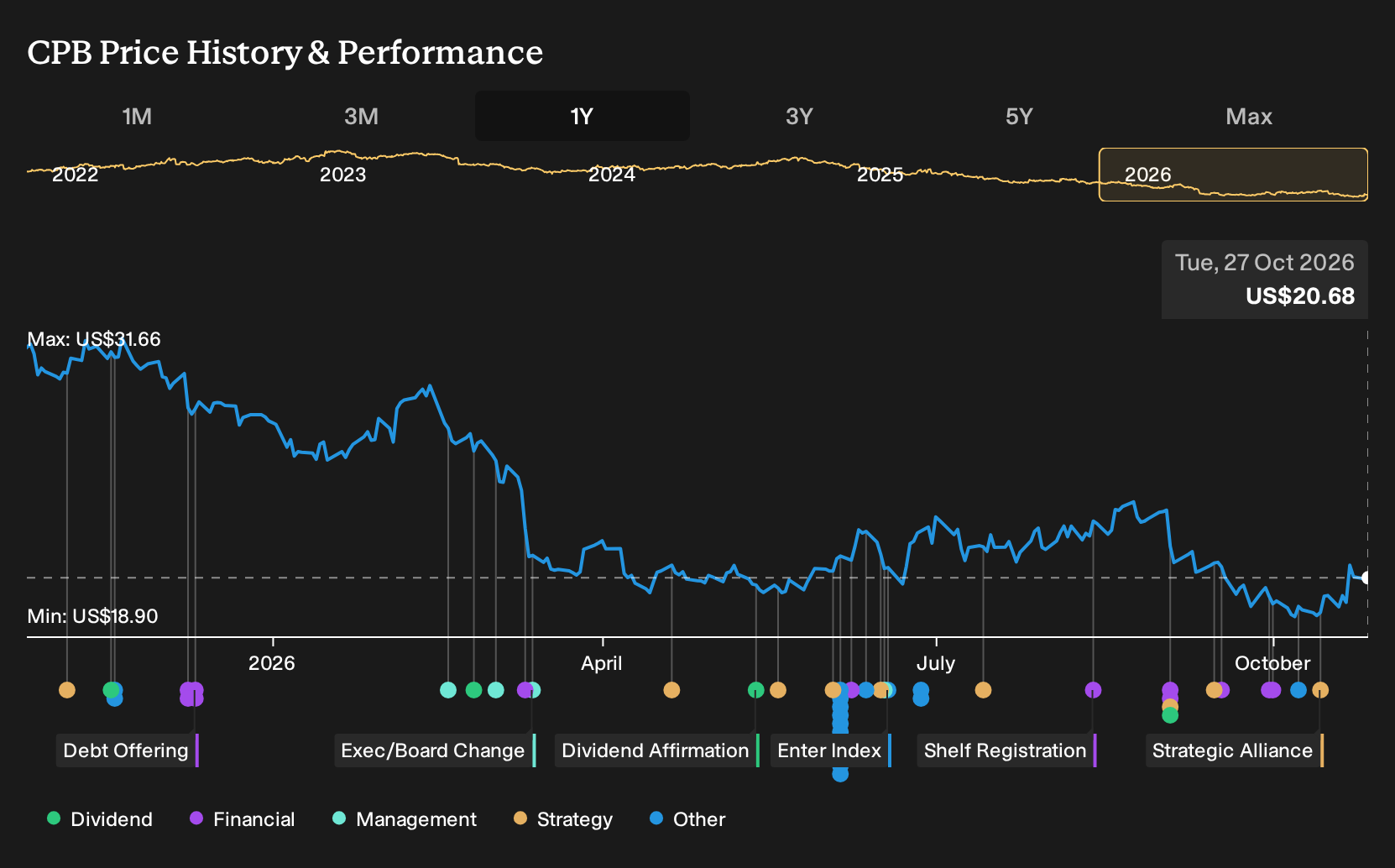
If you only checked the headlines, Campbell’s seemed to be busy tightening costs, pushing wellness products, and expanding premium brands like Rao’s. For Campbell's shareholders, the loss over the past year was 28.9%, including dividends. That gap between the business story and the portfolio result raises a sharper question. If you were weighing an investment in late October 2025, what signals were already on the table before that slide played out?
The easy part of this move is behind Campbell's. Zero in on 29 high quality undervalued stocks for companies trading below our estimates.
The Two Campbell's Narratives Investors Had To Weigh
The shares cost US$31.39 at the start of the period, and anyone looking at Campbell's then was really choosing between two cleanly opposed stories.
On the optimistic side, one camp saw a future for convenience and at home cooking, with a Fair Value around US$34.58 that reflected a view that profit margins could reach 8.5% and a future P/E of 14.4x.
The cautious view pinned Fair Value closer to US$28, based on the idea that processed food volumes could keep sliding and that import tariffs, at roughly 4% of product cost, might squeeze earnings despite only modest assumed margin gains.
What The Results Put To The Test For Campbell's
Campbell's move to deepen its Rao's platform, including a 49% stake in La Regina, supported the optimistic narrative about premium brands and at-home cooking. The reported results pointed in the opposite direction. Revenue moved from US$2,321m in Q4 2025 to US$2,137m in Q4 2026 and net income shifted from a US$145m profit to a US$65m loss, with net margin changing from 6.2% to 3.0%. The evidence cut both ways.
The key assumption investors can apply elsewhere is margin resilience. When an investment thesis focuses on future profitability, track net margin and absolute earnings in each filing to see whether brand investments are flowing through to results or being absorbed by costs.
What Campbell's Price Drop Now Asks You To Believe
Campbell's changes hands at US$20.68 today, after a loss of 28.9% over the past year. The selected Narrative sees Fair Value above that level and attributes the gap to a cash flow story built around deleveraging, semi scratch products and center store brands.
The key consideration for a buyer now is whether Campbell's can execute cost savings and balance sheet repair well enough that semi scratch and premium offerings support steadier earnings and underpin that higher Narrative figure.
"The reset of Campbell's capital allocation priorities, including a 36% dividend cut, capex held around US$300m in FY27 and at least US$100m working capital targeted for release, opens room for faster debt reduction that could lower interest expense and widen net margins over time."
One Narrative has put a figure on that disagreement. → See the Narrative with its higher Fair Value, assumptions and all
Where Campbell's Leads Your Search Next
Campbell's keeps you focused on pantry habits at home. That same kitchen routine points toward another nearby opportunity.
Households that rely on soup and sauces often reach for condiments and ready meals. One packaged foods group leans directly into that pattern.
Management there has been putting more money into brand support and product improvement instead of chasing breakups or rapid deals.
It is also emphasizing steady cash generation, disciplined debt reduction, and a dividend policy that remains important to income focused holders.
If Campbell's has you studying comfort food demand, that peer’s quieter, cash rich reset could earn a closer look.
The case is on the record, with the assumptions it rests on. → See the Narrative that values this company 45% above its price
Have feedback on this article? Concerned about the content? Get in touch with us directly. Alternatively, email editorial-team@simplywallst.com