


EN
3 US Stocks Riding The Shift To Mainstream Crypto Payments
Ripple’s full national trust bank charter and fresh ties with BNY Mellon and Robinhood push crypto rails closer to mainstream finance, and that shift matters for anyone watching listed platforms that touch digital assets. When regulation, custody and stablecoins move forward together, capital often follows. This article walks through three US stocks exposed to this Ripple news and explains how their business models could be helped or hurt by this reset in crypto infrastructure.
The three stocks in this piece are a starting sample rather than the full picture, since the broader screen surfaced 13 more US listed crypto enabled payments and trading platforms with equally compelling storylines tied to custody, wallets and blockchain rails.
To identify and analyze those extra opportunities side by side, head straight into the US-Listed Crypto-Enabled Payments and Trading Platforms screener.
Paysafe (PSFE)
Paysafe fits into this crypto enabled payments theme because its merchant acquiring and wallet tools can be used to route transactions over traditional rails today and crypto or stablecoin rails later as that infrastructure matures.
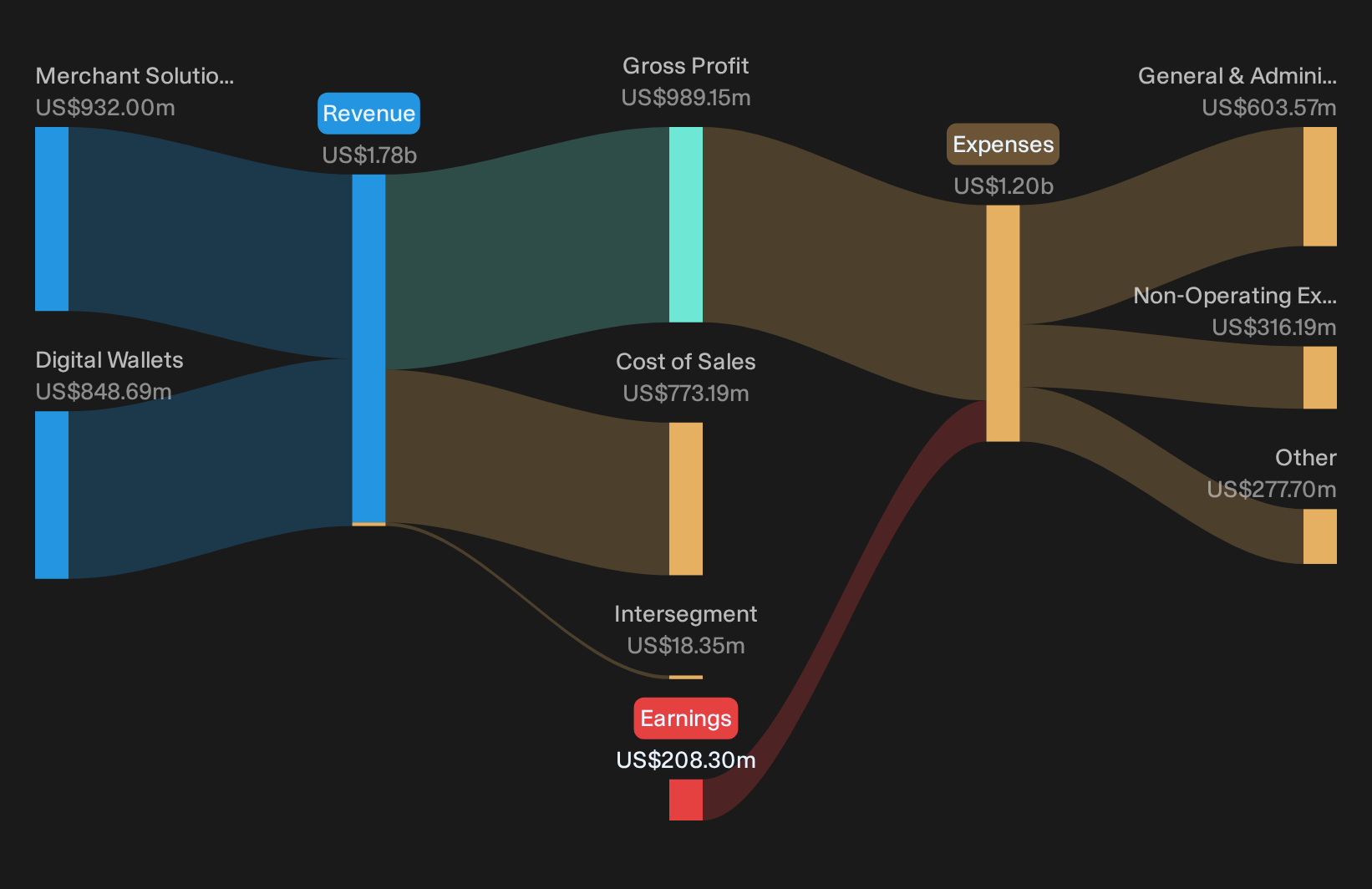
Paysafe runs two main activities, with Merchant Solutions generating about US$932 million and Digital Wallets about US$848 million, and has a market value near US$300 million. Investors are looking at a relatively small player handling large payment flows.
"Expansion of Paysafe’s data licensing agreements, which generated US$7m in Q1 2026 and US$12.5m in Q2 2026 with management indicating a potential run rate above US$50m annually over time, creates an additional high margin revenue stream that could lift both revenue and net margins beyond what is captured in current forecasts."
This raises the question of what happens if that newer income stream scales just as one underappreciated pressure on profitability starts to ease.
If that shift in pressure is what you are watching, read the full narrative for Paysafe to see how data economics, funding choices and competition could reshape Paysafe’s earnings mix.
Repay Holdings (RPAY)
Repay Holdings is a payments processor that helps lenders, billers and businesses move money electronically. This fits neatly with a screener focused on platforms that could plug into stablecoin or blockchain based settlement as those rails gain more institutional support.
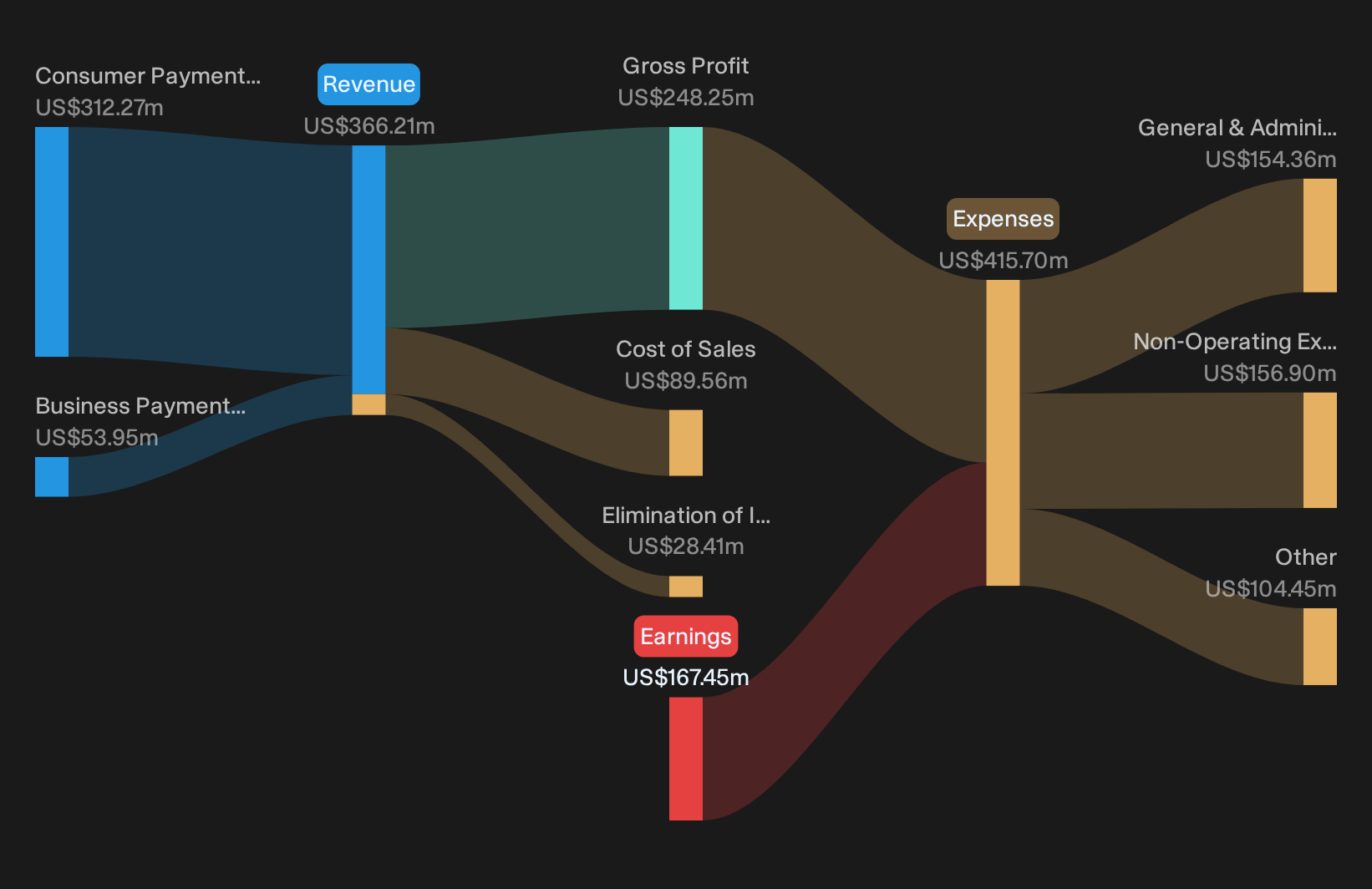
Repay generates about US$312 million from Consumer Payments and roughly US$54 million from Business Payments, with small intersegment eliminations, all in the United States, and has a market value near US$384 million.
"The acquisition brought in a larger bill-payment business, but it also changed the balance sheet at a time when shareholders were already questioning the board’s capital allocation."
What happens if a single assumption about how that acquired unit converts into cash flow shifts even slightly against expectations?
If that cash conversion risk is what you are weighing, read the full narrative for Repay Holdings to see how capital allocation, integration and repayment timing could be decoupling expectations from reality.
Bitgo Holdings (BTGO)
Bitgo Holdings plugs into the screener theme as plumbing for crypto rails rather than a consumer app, providing wallets, custody and infrastructure that institutions can use when they want digital asset exposure without running their own crypto stack. The company is associated with about US$20.1 billion from security software and services and has a market cap near US$650 million.
Bitgo Holdings gives investors pure exposure to the crypto infrastructure layer, where trust, regulation and custody drive adoption more than eye catching trading features.
"Although regulatory frameworks such as the GENIUS Act and OCC charter give Bitgo access to a wider addressable market, the time it takes for follow on rulemaking, state level frictions and client compliance build outs may slow the ramp in subscriptions, services and custody related revenue."
The real swing factor is how one slow moving shift in institutional behavior eventually feeds through to pricing power and earnings quality.
That slow shift in behavior is exactly what full narrative for Bitgo Holdings unpacks, outlining where Bitgo Holdings might experience changes in custody demand and pricing power if adoption continues to broaden.

Seeking Alternatives Before The Crowd
Fresh themes often move first, and slower money can end up chasing momentum once prices are already moving sharply higher. Scan these under the radar ideas while it matters and consider them early in your process.
- Look for resilient compounders before they potentially break out by scanning the 30 resilient stocks with low risk scores that continue to deliver while weaker balance sheets fall out of contention.
- Explore overlooked compounders with room to develop by working through a curated 21 high quality undiscovered gems list before their stories gain wider attention.
- Focus on strong balance sheets built to endure by checking a targeted list of solid balance sheet and fundamentals (24 results) that filters for fundamentals while weaker positions are still being shaken out.
Have feedback on this article? Concerned about the content? Get in touch with us directly. Alternatively, email editorial-team@simplywallst.com