


EN
Procter And Gamble (PG) Could Be 49% Overvalued After Recent Debt Moves
Procter & Gamble (PG) has been active in the debt market, completing and announcing several fixed rate note offerings that add fresh long term funding through senior, unsecured callable bonds.
Procter & Gamble shares trade at $159.92, with a 30-day share price return of 9.36% and a 90-day gain of 7.42%, while the 1-year total shareholder return of 8.45% and 5-year total shareholder return of 27.53% point to steady rather than explosive momentum. Recent bond issuance and earnings news appear to be reinforcing this trend rather than transforming it.
Spot similar steady compounders by scanning our hand picked list of 5 dividend fortresses that echo Procter & Gamble's mix of income, scale and balance sheet depth.After a near double digit 30 day climb, Procter & Gamble now sits in that tricky zone where investors have to decide whether the easy money has already been made or if steady upside is still on the table as valuation comes into focus.
Most Popular Narrative: 49% Overvalued
Against the last close of $159.92, the most followed valuation narrative for Procter & Gamble pins fair value closer to $107.52, which paints the recent rally as rich rather than cheap and frames the debt-funded activity in a more cautious light.
Procter & Gamble operates within a very competitive environment. However, its higher operating margins and wide moat are a clear sign it still operates with competitive advantages over its competitors, as well as having the capability of raising prices if needed. Also, it's always good to see that it still returns on its investments (ROIC) at double its cost of capital, showing good capital allocation by management.
See why 34 investors see Procter & Gamble as 49% overvalued.
Result: Fair Value of $107.52 (OVERVALUED)
Still, two pressure points could flip this Procter & Gamble story: weaker pricing power in crowded categories and any sustained squeeze on those high operating margins.
Find out about the key risks to this Procter & Gamble narrative.
Another View On Procter & Gamble's Valuation
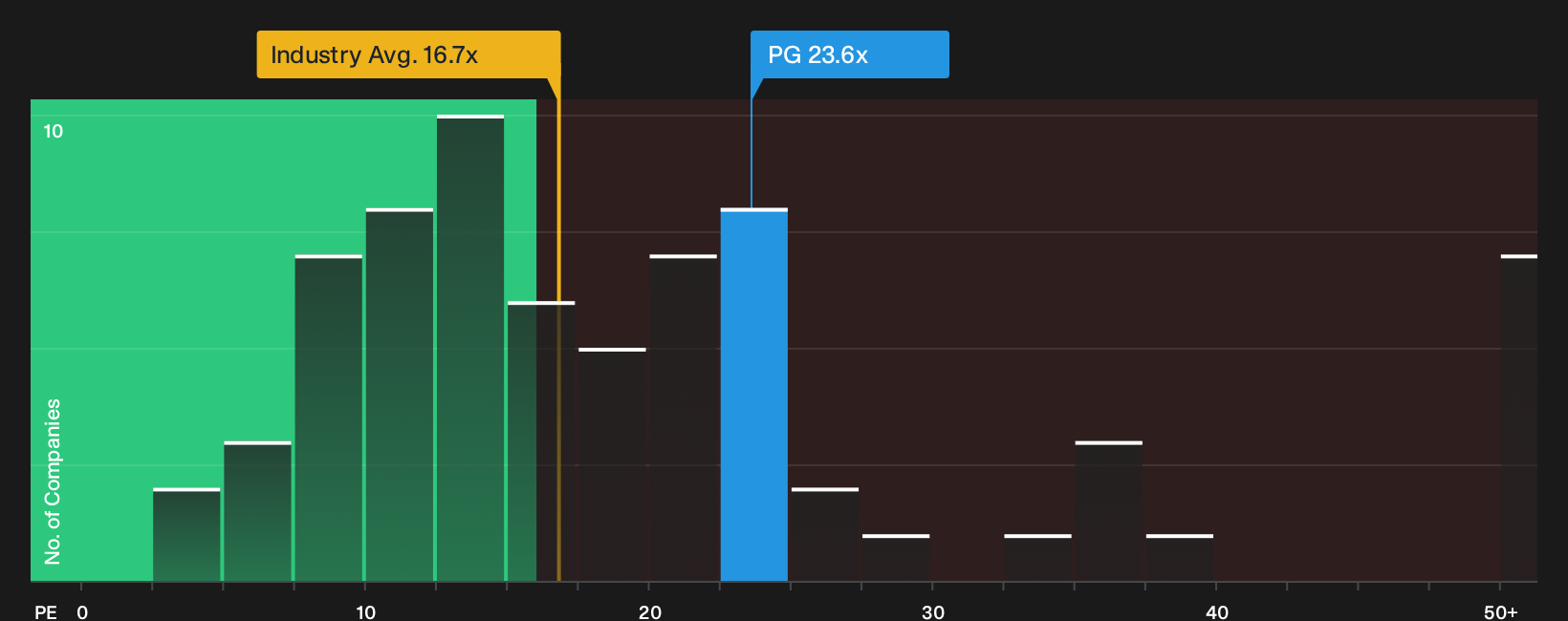
The user narrative pins Procter & Gamble at about $107.52, which frames the current $159.92 price as stretched. Our P/E based work points in a different direction. The stock trades on 23.6x earnings, while peers sit near 27.4x and the fair ratio suggests 26.3x. This implies the market is already pricing in less risk than that community model assumes.
That split leaves a simple question for investors: Is the crowd overestimating downside, or is the market underestimating it?
See what the numbers say about this price — find out in our valuation breakdown.
Next Steps
Mixed messages on Procter & Gamble's value story so far. Act while the data is fresh and weigh both sides with the 3 key rewards and 2 important warning signs.
Looking for more Procter & Gamble style ideas?
If Procter & Gamble fits your preference for resilient compounding, you can use the same process to hunt for fresh opportunities before the crowd catches on.
- Target steadier growth with a focus on quality and value by scanning a curated 29 high quality undervalued stocks that already meet strict fundamental checks.
- Prioritise resilience and sleep better at night by sorting through a 30 resilient stocks with low risk scores built around stronger balance sheets and gentler volatility profiles.
- Hunt for tomorrow's leaders today by filtering a 21 high quality undiscovered gems backed by robust financials but still off most investors' radar.
Have feedback on this article? Concerned about the content? Get in touch with us directly. Alternatively, email editorial-team@simplywallst.com