


EN
Michael Burry Called It ‘One of the More Common Frauds.’ Oracle Stock Is Down 45% Since.
Last November, Michael Burry took aim at Big Tech’s accounting. In a post on X, the “Big Short” investor called stretching the useful life of assets “one of the more common frauds of the modern era.” When a company says its servers will last longer, it spreads their cost over more years, so profits look bigger. Burry argued that AI chips go out of date fast, yet hyperscalers were spreading the cost over five to six years. He named Oracle (ORCL) and Meta (META) in particular, saying their earnings would be overstated by 26.9% and 20.8% by 2028.
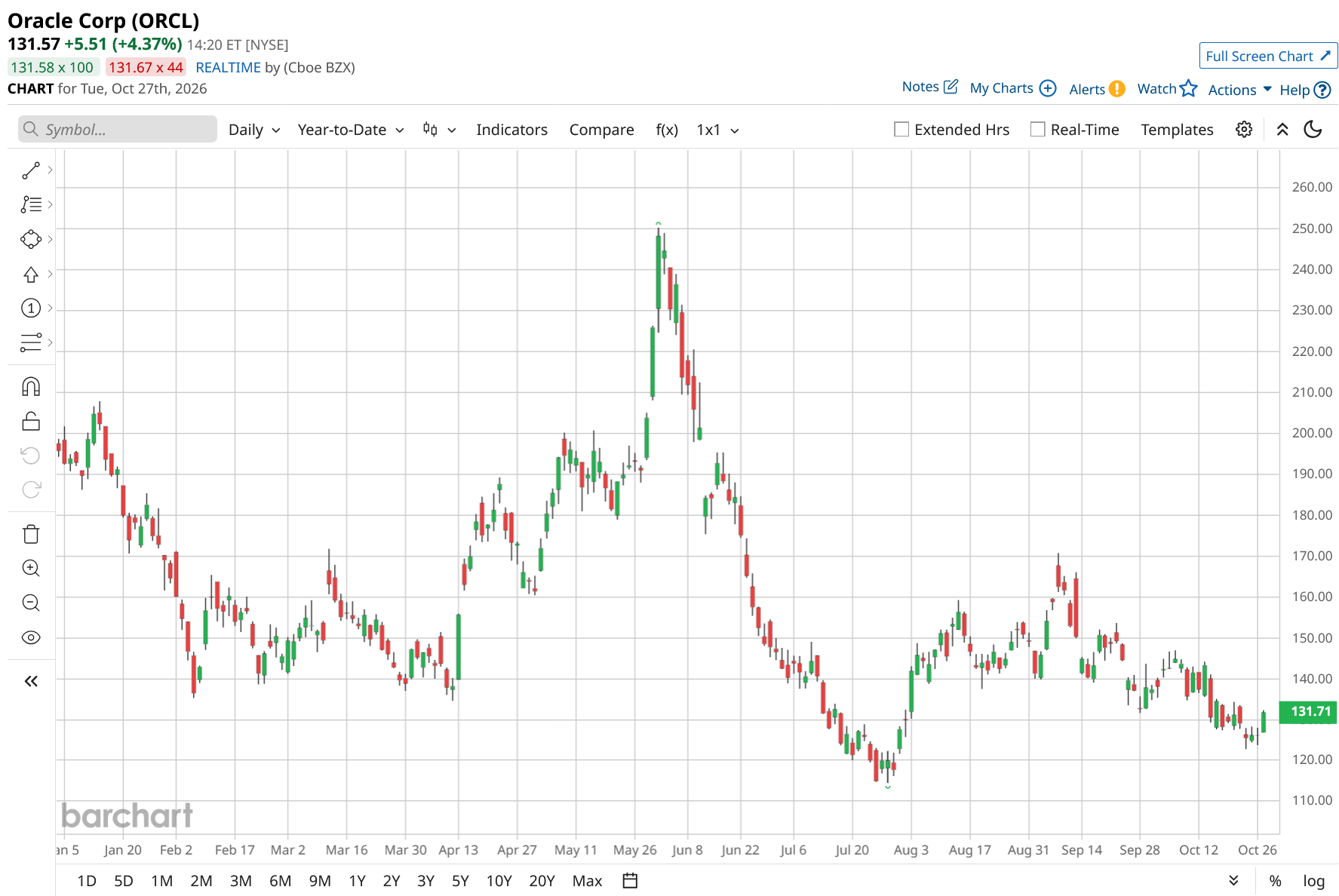
Since then, Oracle has fallen roughly 45%, from $237.65 to around $131. Meta, Nvidia (NVDA), and Palantir (PLTR) have all held up far better. In July, Microsoft (MSFT) also extended the useful life of its data centers and office buildings from 15 to 25 years. Its CFO said the change would only slightly boost operating income, though. Burry still spoke against this too. Michael Burry Stock Tracker, a popular account on X, summed it up in a post titled: “Breaking: Michael Burry exposes how Microsoft is making its spending look smaller.” Burry argued the change would shift some future data center leases out of reported capex, making Microsoft's spending look smaller than it really is.
Why Oracle Took the Hit
Oracle did have its moment. The stock climbed back above $240 earlier this year, but the rally didn’t last. I think the problem is the same as I’ve argued before: that every bit of growth for the company comes with a bigger bill. Its free cash flow was negative $23.7 billion in fiscal year 2026. This year, it expects to spend $90 billion to $95 billion on capex, close to the $100 billion surge I flagged before its June earnings. About half of its backlog also comes from one customer, OpenAI. In July, S&P cut Oracle’s credit rating to BBB-, just one step above junk. However the accounting looks, I believe that’s a lot of risk to carry.
About Oracle Stock
Oracle Corporation provides information technology-related products and services to enterprises through its main business segments: Cloud and License, Hardware, and Services. It also offers database technologies such as Oracle Database and MySQL, cloud infrastructure services, artificial intelligence, machine learning, and developer tools. The company is based in Austin, Texas, and was founded in June 1977 by Lawrence Joseph Ellison, Robert Nimrod Miner, and Edward A. Oates.
Over the last year, Oracle was down 53%, significantly underperforming the S&P 500’s ($SPX) gain of 12% during the same period. Similarly, on a year-to-date (YTD) basis, the stock lagged the S&P 500’s gain of 13%. The stock has been trading downward since June, hitting its 52-week low of $114. The stock was flat over the past five days. ORCL stock has struggled as investors question the cost of its AI expansion.
Oracle’s stock trades well below its historical norms. The forward price-to-earnings (P/E) of 15.50x sits about 30% below its 5-year average of 22.10x. Similarly, the forward price-to-sales (P/S) ratio of 4.23x is roughly 34% below its average. Analysts expect earnings to increase by a modest 7% this year, then accelerate to 32% to 44% through 2030. The timing of that jump sits in line with when the new data centers are expected to start paying off. If that happens, the P/E falls to around 8x by 2029. This is where Burry’s point really matters, though. If depreciation is being understated, those future earnings could be smaller than they look. The balance sheet remains the biggest concern. Oracle carries $169 billion in debt and lease obligations against $37 billion in cash.
AI Cloud Demand Is Driving Growth
Oracle reported its first-quarter fiscal 2027 earnings on Sept. 10. Quarterly revenue was a record $19.3 billion, up 30% year-over-year (YoY). Cloud infrastructure revenue for Q1 was $7.4 billion, up 121%. This all translated to a strong increase in the company’s non-GAAP EPS, reaching $1.92 for the quarter. The company continued to spend, with capex reaching $28 billion, leading to a negative free cash flow of $5 billion.
Looking forward, the company expects growth in total revenues of between 30% and 34% for the second quarter. In non-GAAP EPS, the company expects between $1.85 and $1.93. For the full year, the company raised its guidance to at least $90 million in total revenues. Deutsche Bank analyst Brad Zelnick asked how Oracle could reduce its spending over the next two years while competitors continue investing. CEO Mike Sicilia Magouyrk said Oracle’s capital spending should be considered separately from its ability to grow the business. CFO Doug Maxson added that the company has not yet provided a timeline for when free cash flow will turn positive.
What Do Analysts Expect for ORCL Stock?
A majority of Wall Street analysts covering ORCL stock are strongly optimistic that it could bounce back. Goldman Sachs lowered its price target from $240 to $206 but maintained a “Buy” rating. Oracle’s Oct. 29 Investor Day comes as investors pay closer attention to AI infrastructure spending. Strong growth in its remaining performance obligations and a high fiscal 2027 revenue target support its long-term outlook. Similarly, Barclays also reiterated a “Buy” rating with a price target of $252.
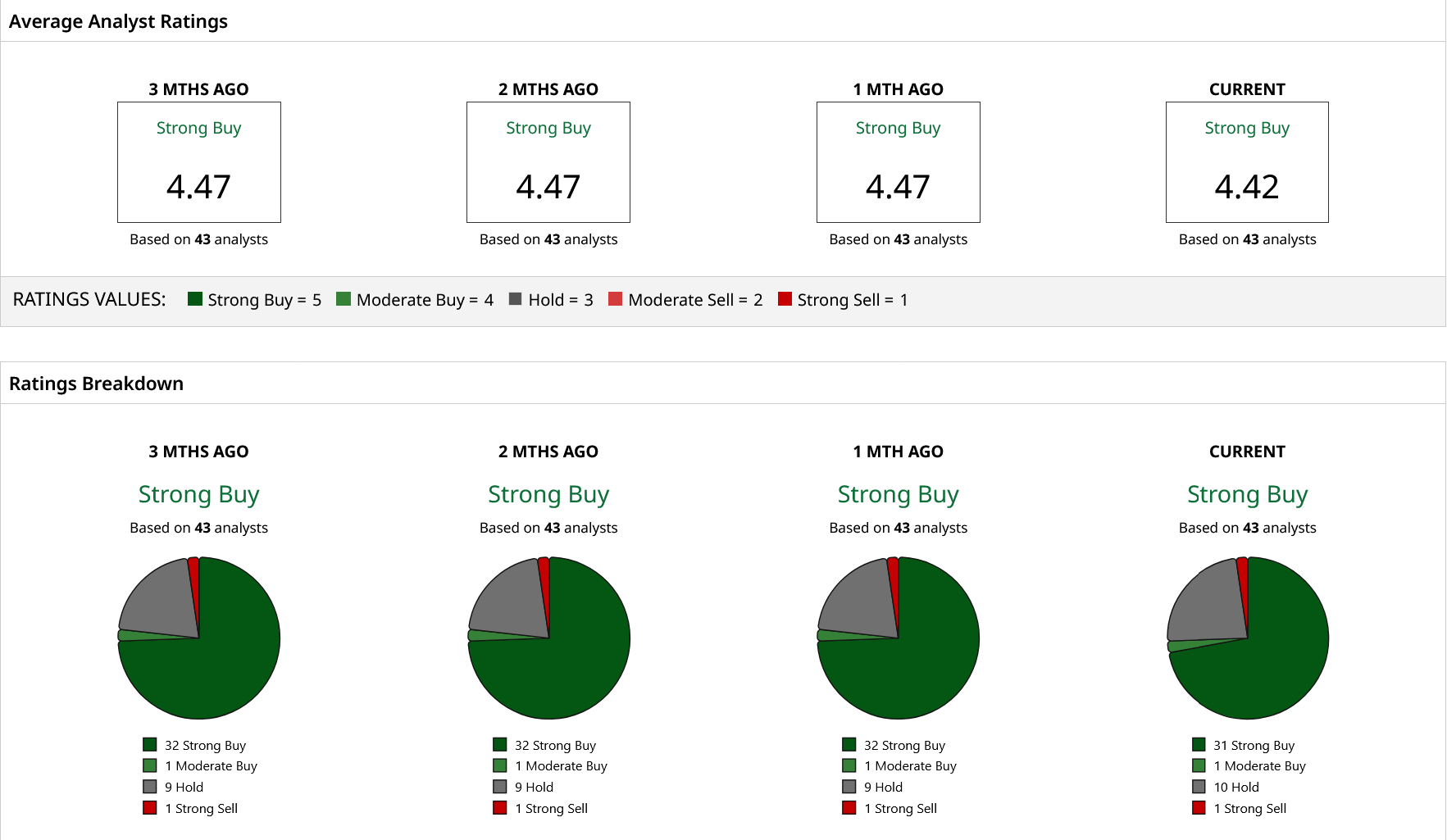
On Wall Street, around 31 analysts of the 43 covering ORCL stock rate it a “Strong Buy,” while one says it is a “Moderate Buy,” 10 rate it a “Hold,” and one says it is a “Strong Sell.” The average target price is $240.66, which points to a 83% potential gain. Some even see it reaching $400, a possible 204% increase from current levels.
On the date of publication, Jabran Kundi did not have (either directly or indirectly) positions in any of the securities mentioned in this article. All information and data in this article is solely for informational purposes. For more information please view the Barchart Disclosure Policy here.