


EN
How Investors Are Reacting To Descartes Systems Group (TSX:DSG) WEL Client Win
- In October 2026, Descartes Systems Group announced that WEL Companies adopted its cloud broker transportation management system integrated with CARRIER1 Vault to coordinate shipments using both WEL’s own fleet and external carriers.
- This win showcases how Descartes’ connected TMS and digital document workflows can deepen broker reliance on its platform, supporting recurring logistics software usage across freight networks.
- We will now look at how Descartes Systems Group’s investment narrative is affected by deeper broker integration through the WEL deployment.
Descartes Systems Group Investment Narrative Recap
To own Descartes Systems Group, you need to believe recurring logistics software will remain in demand as trade rules get more complex and shippers seek tighter control of data. The WEL deployment fits this view because it keeps more shipment lifecycle activity inside Descartes’ cloud tools rather than in email and spreadsheets.
The key short term catalyst is continued adoption of its transportation and ecommerce platforms that can support the current revenue and earnings growth forecasts. The biggest risk remains softer or choppy freight activity and competitive pressure, which could limit transactional volumes. This WEL news looks encouraging but not transformational on its own.
The WEL broker TMS and CARRIER1 Vault rollout directly links to Descartes Systems Group’s push into digital transformation of freight and automation. This project uses the firm’s cloud broker TMS across order entry, load coverage, carrier acceptance and dispatch, with digital documents flowing back into a single system.
For you as an investor, this kind of embedded workflow matters more than a one off logo win. It supports the recurring revenue story that underpins the DCF work indicating value above the current share price, while still sitting against the familiar risks of freight volume softness, acquisition dependence and rising competition.
How The WEL Deal Lines Up With Street Assumptions
Descartes Systems Group's tighter broker integration at WEL lines up with what analysts are already baking into their models. Current projections call for revenue to rise by 11.3% per year over the next three years, with profit margins expected to move from 22.5% today to 27.4% by 2029 as more workflows sit inside its own software stack.
On the earnings side, the consensus view points to profit climbing from $163.8 million today to $275.4 million by 2029, which is about a 68% increase. That forecast implies analysts expect the business to compound its recurring economics from deployments like WEL, while also absorbing modest share count growth of 0.28% a year without heavy dilution.
Valuation expectations are anchored on those 2029 numbers. To meet the current analyst price targets, investors would need to assume earnings of $275.4 million on roughly $1.0b of revenue in 2029, with the stock trading on a P/E of 37.0x at that point compared with about 37.4x today.
Analysts are assuming Descartes Systems Group's revenue will grow by 11.3% annually over the next 3 years, with earnings rising from $163.8 million today to $275.4 million by 2029, which is roughly a 68% increase.
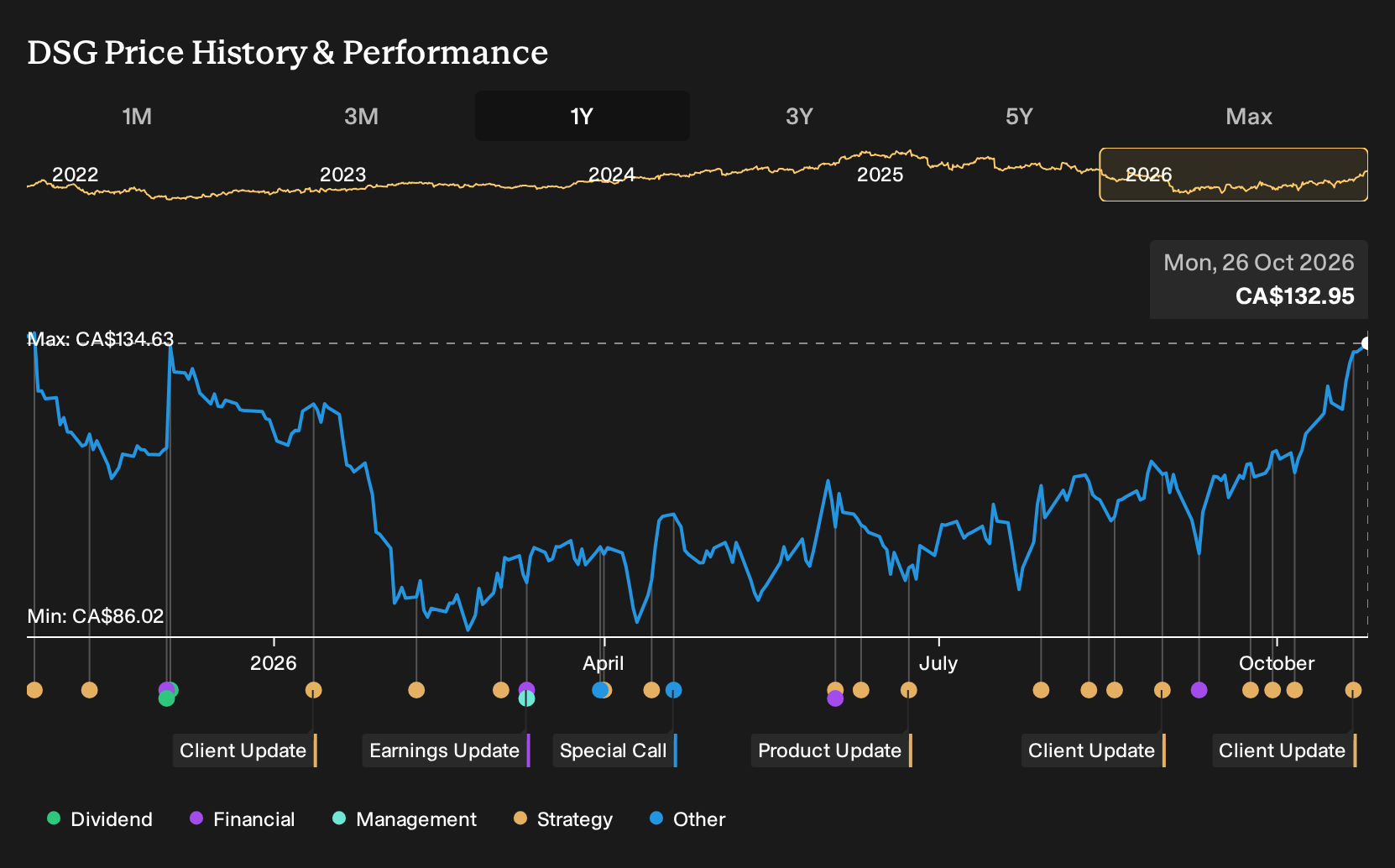
Uncover why Descartes Systems Group's fair value indicates a potential 4% downside to its current price, suggesting a premium that may not be sustainable.
Exploring Other Perspectives
Three fair value estimates from the Simply Wall St Community cluster between US$128.28 and US$159.75, so retail opinions already span more than US$30 per share before the WEL news. Compare those views with the risks around freight volume softness and acquisition dependence, then decide which scenario you find more convincing.
Explore 2 other Descartes Systems Group fair value estimates, including one that suggests there could be as much as 20% potential upside from the current price.
The Verdict Is Yours
Don't just follow the ticker. Dig into the data and build a conviction that's truly your own.
- A great starting point for your Descartes Systems Group research is our analysis highlighting 3 key rewards and 1 important warning sign that could impact your investment decision.
- See our latest analysis for Descartes Systems Group. The report includes a comprehensive fundamental analysis summarized in a single visual, the Snowflake, making it easy to evaluate Descartes Systems Group's overall financial health at a glance.
Looking For More Investment Ideas Beyond Descartes Systems Group?
Once you have formed a view on Descartes Systems Group, it can help to compare that thesis with other opportunities that share similar qualities in balance sheet strength, value or resilience. The Simply Wall St Screener gives you curated starting points rather than an endless list of tickers.
- If capital preservation is high on your list, start with companies screened for resilience and lower risk profiles through 8 resilient stocks with low risk scores.
- For investors focused on quality at a reasonable price, weigh Descartes Systems Group against a curated set of 3 high quality undervalued stocks that pair solid fundamentals with potential mispricing.
- If you want to widen the search to lesser known opportunities, scan a set of 9 high quality undiscovered gems that combine strong financials with limited market attention.
Have feedback on this article? Concerned about the content? Get in touch with us directly. Alternatively, email editorial-team@simplywallst.com