


EN
How Investors May Respond To Sarepta Therapeutics (SRPT) DM1 Therapy Progress
- Sarepta Therapeutics recently reported preclinical data for SRP-1003 in myotonic dystrophy type 1, showing direct, dose dependent reduction of pathogenic DMPK transcripts in both nuclear and cytoplasmic compartments and correction of mis splicing in cell and mouse models.
- The work positions SRP-1003 as a potential nucleus active siRNA within Sarepta Therapeutics broader RNA and gene therapy platform, which could be relevant for how the business extends beyond Duchenne as the ongoing Phase 1/2 trial in adults with DM1 advances.
- We will now look at how Sarepta Therapeutics broader investment narrative could be influenced by SRP-1003's nuclear target engagement profile.
Sarepta Therapeutics Investment Narrative Recap
The big belief for Sarepta Therapeutics is that the Duchenne portfolio and gene therapy cash flows can keep funding high cost RNA and gene therapy research while the siRNA platform turns into a second pillar. SRP 1003’s nuclear activity story supports that platform angle, but it does not change the near term focus on ELEVIDYS execution and exon skipping durability.
For the next year or so, the main catalyst is still delivery on ELEVIDYS safety management and throughput, alongside clean siRNA readouts that justify the spend. The key risk remains any further serious ELEVIDYS safety issue or prolonged infusion bottlenecks, which could weigh on revenue and reduce Sarepta Therapeutics room to keep self funding that pipeline.
The SRP 1003 update lines up most closely with the earlier catalyst around siRNA progress in DM1 and the expectation of more multiple ascending dose data into 2027. Nuclear knockdown and mis splicing correction give more mechanistic backing to that thesis, which matters when the Street already models declining revenue over the next three years.
For a holder, this ties directly into the question of how fast Sarepta Therapeutics can broaden beyond Duchenne while coping with competitive exon skipping pressure and a heavy R&D bill. If ELEVIDYS risk management, SRP 1001 in FSHD and SRP 1003 in DM1 all move steadily, the business mix could shift toward a more diversified gene and RNA therapy portfolio.
Sarepta Therapeutics' current analyst narrative points to US$1.3b in revenue and US$36.4 million in earnings by 2029, with revenue modeled to decline 13.0% per year from here and earnings moving from a loss of US$136.7 million today to that US$36.4 million figure, an increase of roughly US$173 million over the period.
Uncover how Sarepta Therapeutics' fair value indicates a 21% potential upside to its current price that may not last much longer.
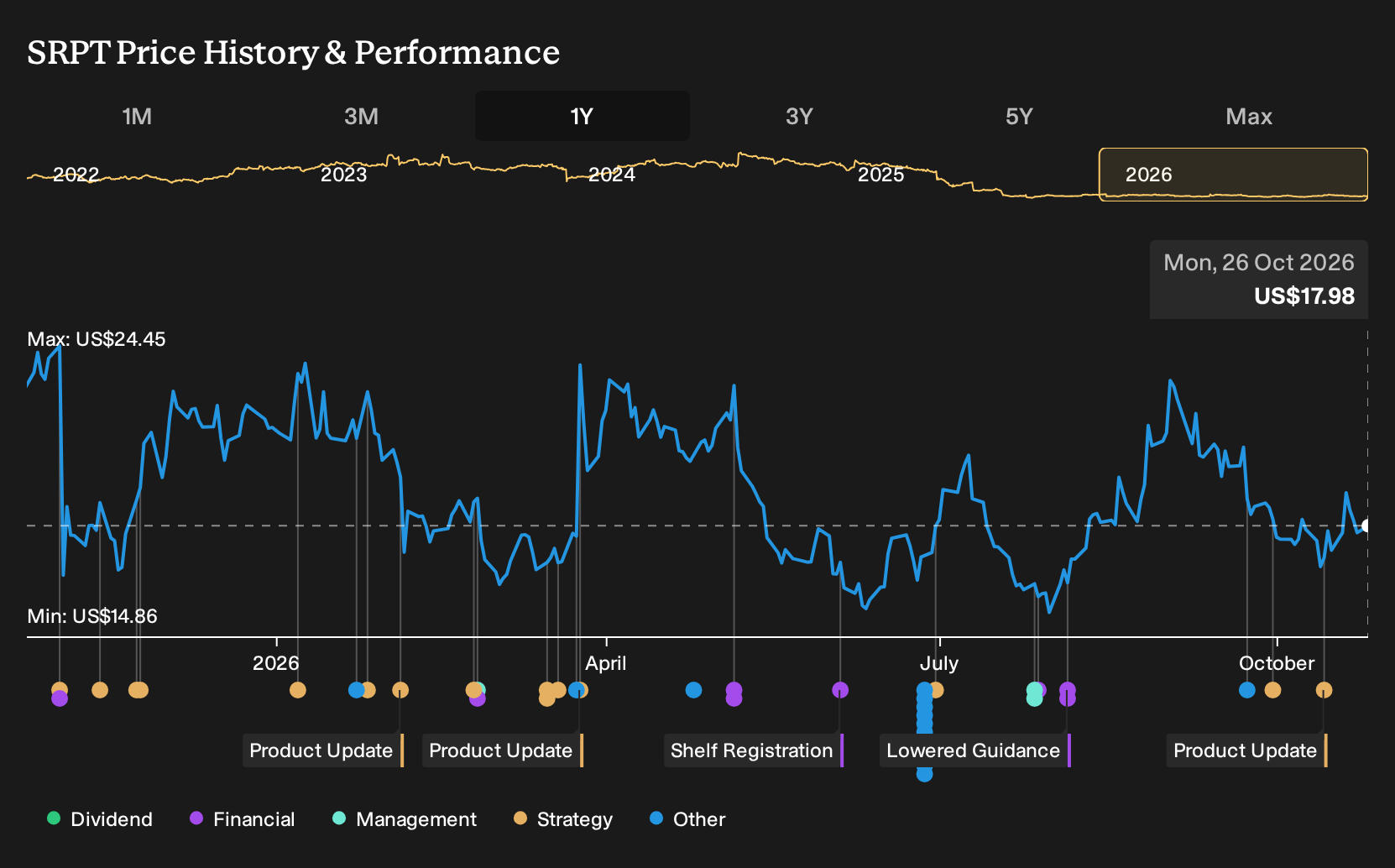
Exploring Other Perspectives
One alternate view puts ELEVIDYS demand risk front and center rather than SRP 1003. The more optimistic analysts were already penciling in about US$1.4b of revenue and US$159.6 million of earnings by 2029, far above the consensus US$1.3b and US$36.4 million. Those forecasts came before this SRP 1003 data, so you should expect opinions to shift as people reassess both stories side by side.
Explore 3 other Sarepta Therapeutics fair value estimates, including one that suggests as much as 941% potential upside from the current price.
Form Your Own Verdict
Disagree with existing narratives? Extraordinary investment returns rarely come from following the herd, so go with your instincts.
- A great starting point for your Sarepta Therapeutics research is our analysis highlighting 2 key rewards and 1 important warning sign that could impact your investment decision.
- See our latest analysis for Sarepta Therapeutics. The report includes a comprehensive fundamental analysis summarized in a single visual, the Snowflake, making it easy to evaluate Sarepta Therapeutics' overall financial health at a glance.
Looking For More Investment Ideas Beyond Sarepta Therapeutics?
If SRP 1003 has you rethinking how Sarepta Therapeutics fits into your biotech exposure, it can help to line it up against other opportunities with clear filters on quality, balance sheet strength, and risk.
- Prioritize balance sheet strength and financial resilience, then scan a list of solid balance sheet and fundamentals (24 results) that can help you find businesses with the backing to keep investing through tough cycles.
- Focus on potential mispricing by looking through a 29 high quality undervalued stocks that highlights financially sound companies the market may be overlooking.
- Dial down portfolio stress by reviewing a 30 resilient stocks with low risk scores that surfaces businesses with more measured risk profiles and steadier fundamentals.
Have feedback on this article? Concerned about the content? Get in touch with us directly. Alternatively, email editorial-team@simplywallst.com