


EN
Shell And 2 Other British Undervalued Stocks
European gas prices have jumped to a four year high and the UK faces some of the steepest energy costs in the region, so reliable cash generation suddenly matters a lot more than hype. When inflation and bills bite, companies whose share prices lag their underlying cash flows can create quiet opportunities. This article looks at three undervalued UK stocks where current cash flow estimates suggest more value on the table than the market is pricing in.
The three stocks below are just a starting sample, with the full screen surfacing 25 more UK listed businesses where discounted cash flow estimates suggest a similar gap between current pricing and underlying cash generation potential.
If you want to move beyond this short list and focus on your own highest conviction ideas, head straight into the Undervalued Stocks Based On Cash Flows screener to identify, filter and analyze companies where projected cash flows and market valuations look out of sync.
Shell (LSE:SHEL)
Shell is a global energy group that earns most of its money from traditional oil, gas and chemicals activities, with Marketing at about US$135b of revenue and Chemicals and Products close to US$132b, while Renewables and Energy Solutions adds roughly US$42b and the wider business carries a market value near £230.2b.
Shell plays into this cash flow focused screen because it combines a large conventional energy engine with a growing low carbon arm that is designed to produce steadier, contract based income over time. That mix of long life assets and newer projects gives the valuation debate extra bite.
"With an LNG portfolio exceeding 60 million tons and unparalleled trading capabilities, Shell is the company that benefits most from the volatility in the global gas market."
The real test for Shell’s cash flow story may come from how one less visible pressure on future margins and capital returns ultimately resolves.
Those shifting pressures are exactly why reading the full narrative for Shell can help you see how Shell’s cash engine, transition spend and valuation may be decoupling from the headline story.
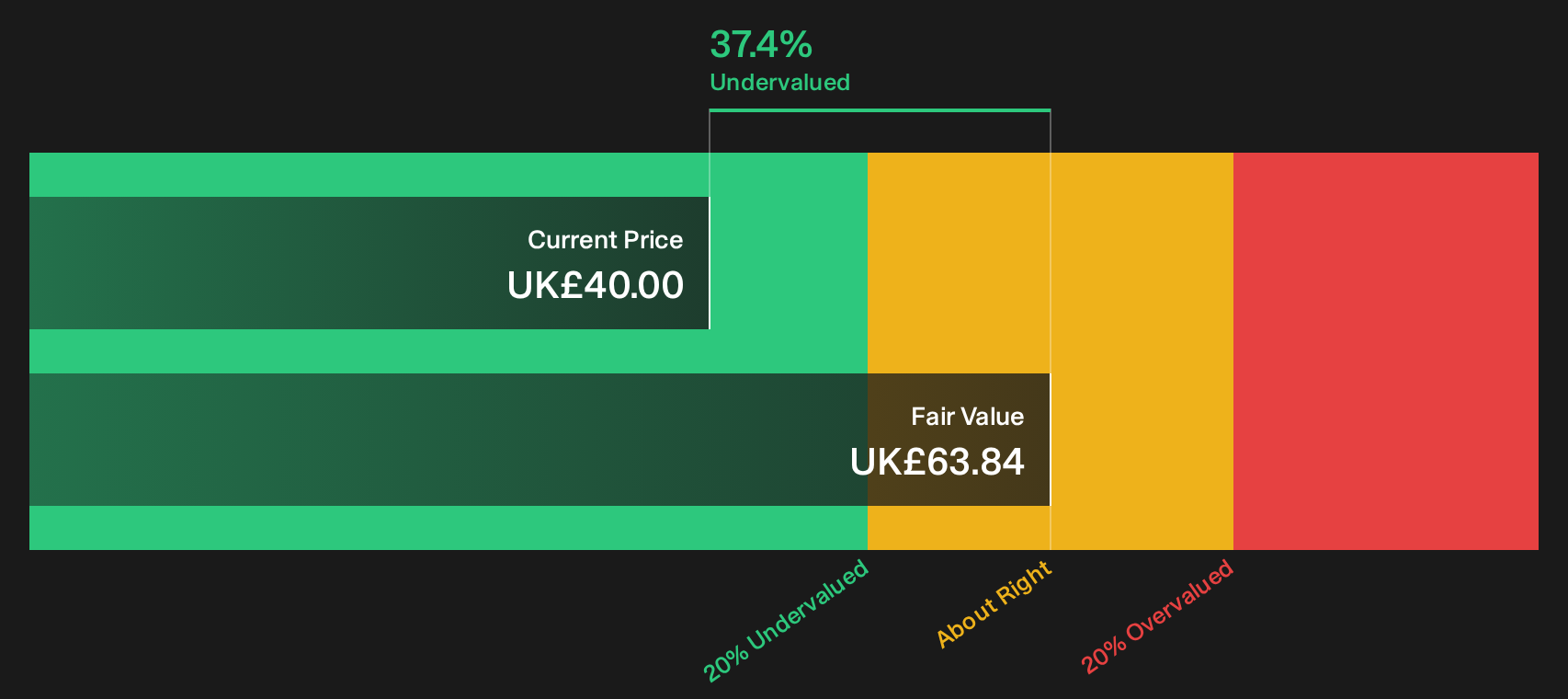
Premier Foods (LSE:PFD)
Premier Foods leans on a broad stable of ambient grocery brands like Mr Kipling, Ambrosia, Batchelors and Sharwood’s that help support recurring cash flow, which is exactly the sort of branded earnings stream that underpins its place in a cash flow focused undervaluation screen.
Premier Foods manufactures and sells branded and own label food across Grocery and Sweet Treats, generating about £860 million and £315 million respectively, with a market cap near £1.7 billion.
For investors hunting cash backed value, Premier Foods offers a different flavour of opportunity, as management channels more investment into the branded engine that powers its cash generation.
"Planned step up in annual CapEx to a range of £55 to £60m in FY27, directed at automated cake lines, insourced sauce capacity, new process plants and energy projects such as efficient boilers and solar arrays, is intended to lower unit costs and improve factory recovery which can support gross margin and trading profit progression."
The real swing factor for margins and free cash flow could hinge on how effectively one less visible shift in the sales mix plays out.
How that mix shift lands is exactly what the full narrative for Premier Foods unpacks, showing where Premier Foods’ cash story could be accelerating or quietly stalling next.

Smith & Nephew (LSE:SN.)
Smith & Nephew develops medical devices used in knee and hip replacements, sports medicine procedures and advanced wound care, with Orthopaedics’ implant and revision work closely aligned to the screener’s focus on steady cash flows. It generated about US$2.5b from Orthopaedics, US$2.0b from Sports Medicine & ENT and US$1.8b from Advanced Wound Management, and carries a market value near £9.7b.
Smith & Nephew matters here because its implant and revision portfolio can create repeat procedure income that suits a discounted cash flow lens, and management is leaning into technologies that aim to stretch the life of that earnings stream.
"Acceleration in new product innovation, such as expanded robotic-assisted surgery (CORI, CORIOGRAPH), new implants (CATALYSTEM Hip, TRIGEN MAX Tibia Nailing), and significantly increased contributions from recent product launches (75% of H1 growth from products <5 years old), positions the company to capture greater market share and sustain higher long-term revenue growth as global demand for advanced orthopaedic and minimally invasive solutions rises."
The real tension for future cash flows rests on how one less visible shift in pricing power and reimbursement terms ultimately plays out.
That pricing power question is exactly where the full narrative for Smith & Nephew pulls everything together, mapping how Smith & Nephew’s cash engine could be accelerating while headline worries still mask it.

Seeking Fresh Alternatives Beyond These Picks?
Fresh opportunities can move from quiet to crowded fast as capital chases the next breakout and slow movers get caught chasing momentum. Scan newer ideas while it matters and get in early.
- Spot steadier payers before yields get compressed by income hunters using the curated 5 dividend fortresses that focus on robust payouts and financial resilience.
- Ride structural demand for electricity upgrades with the targeted 42 power grid technology and infrastructure stocks featuring businesses tied to grid technology, infrastructure builds and long cycle investment themes.
- Target companies building the backbone of AI and automation through the hand picked 55 AI infrastructure stocks where data centers, chips and networking capacity drive the story.
Have feedback on this article? Concerned about the content? Get in touch with us directly. Alternatively, email editorial-team@simplywallst.com