


EN
Whirlpool (NYSE:WHR) misses Q3 2026 revenue estimates, stock drops

Home appliances manufacturer Whirlpool (NYSE:WHR) fell short of the market’s revenue expectations in Q3 2026, with revenue falling 8.8% year on year to $3.68 billion. The company’s full-year revenue guidance of $14.5 billion at the midpoint came in 2.1% below analysts’ consensus estimates. Its non-GAAP loss of $0.21 per share was significantly below analysts’ consensus estimates.
For more on Whirlpool, read our free full research report.
Whirlpool (WHR) Q3 2026 highlights:
- Revenue $3.68 billion vs S&P analysts’ consensus estimates of $3.91 billion (8.8% year-on-year decline, 5.9% miss)
- Adjusted EPS -$0.21 vs S&P analysts’ consensus estimates of $1.01 (significant miss)
- Revenue guidance The company lowered its revenue guidance for the full year to $14.5 billion at the midpoint from $15 billion, a 3.3% decrease
- Adjusted EPS guidance Management lowered its full-year adjusted EPS guidance to -$1.30 at the midpoint
- Operating margin 0.1%, down from 5.1% in the same quarter last year
- Free cash flow $2.19 billion, up from -$52 million in the same quarter last year
- Market capitalization $1.83 billion
Revenue growth
Reviewing a company’s long-term revenue performance reveals insights into its quality. Any business can deliver a good quarter or two, but many enduring ones grow for years. Over the last five years, Whirlpool’s demand was weak and its revenue declined by 7.9% per year. That underwhelming result points to poor business quality.
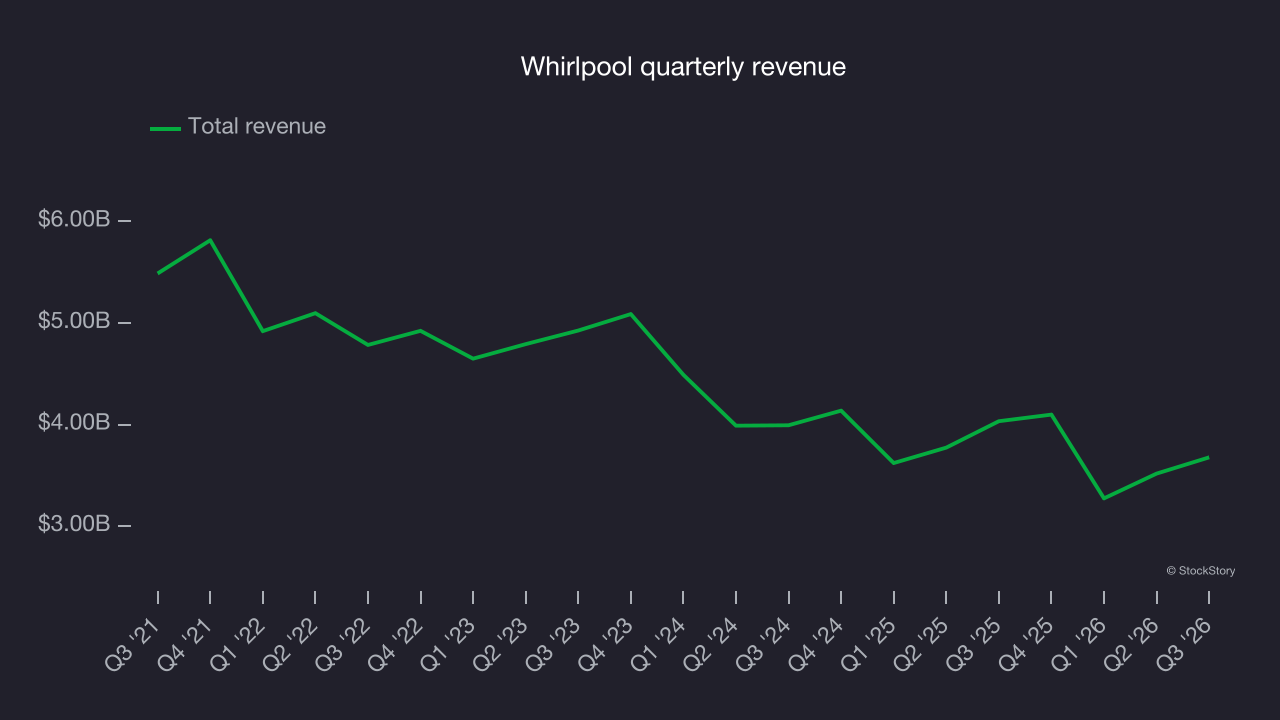
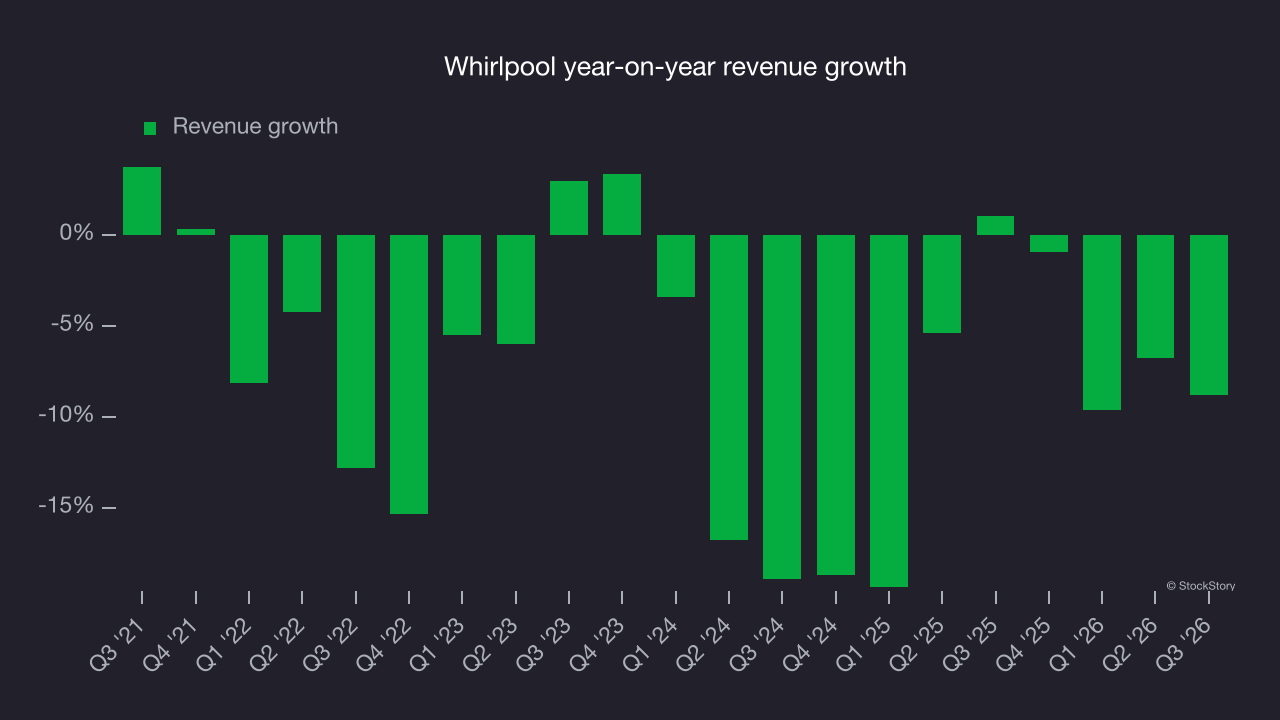
This quarter, Whirlpool missed Wall Street’s consensus estimates and reported a disappointing 8.8% year-on-year revenue decline, generating $3.68 billion of revenue.
Looking ahead, sell-side analysts expect revenue to grow 3.4% over the next 12 months, according to S&P. While this projection indicates its newer products and services will fuel better top-line performance, it is still below average for the sector.
Operating margin
Whirlpool was profitable over the last five years but held back by its large cost base. Its average operating margin of 1.8% was weak for an industrials business. That outcome is unsurprising given its low gross margin baseline.
Whirlpool’s operating margin decreased by 1.3 percentage points over the last five years. That poor performance shows that costs were rising and it couldn’t pass them on to its customers.
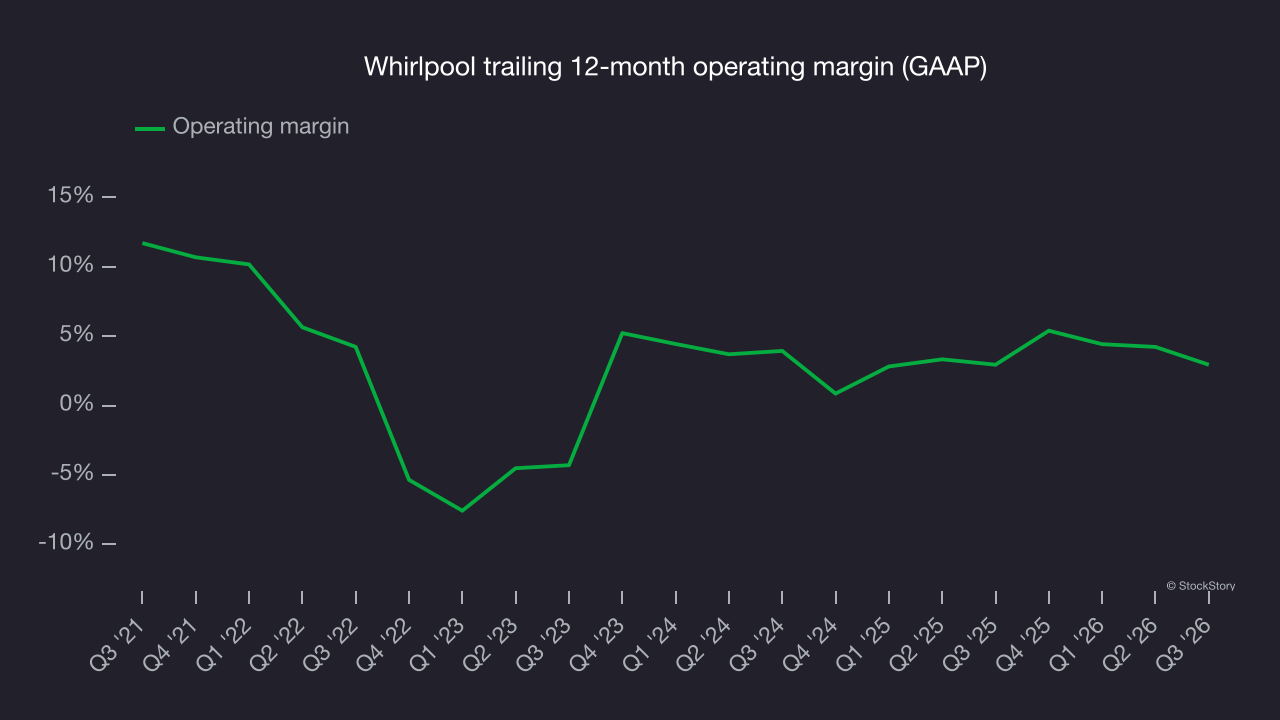
In Q3, Whirlpool’s breakeven margin was 0.1%, down 5 percentage points year on year. The steeper decline in operating margin than in gross margin suggests reduced efficiency as expenses such as marketing, R&D and administrative overhead increased.
Earnings per share
Long-term changes in earnings per share (EPS) matter for the same reason as long-term revenue growth. Compared to revenue, however, EPS highlights whether a company’s growth is profitable.
Whirlpool’s EPS declined by 66.2% annually over the last five years, more than its revenue. This indicates the company struggled because its fixed cost base made it difficult to adjust to shrinking demand.
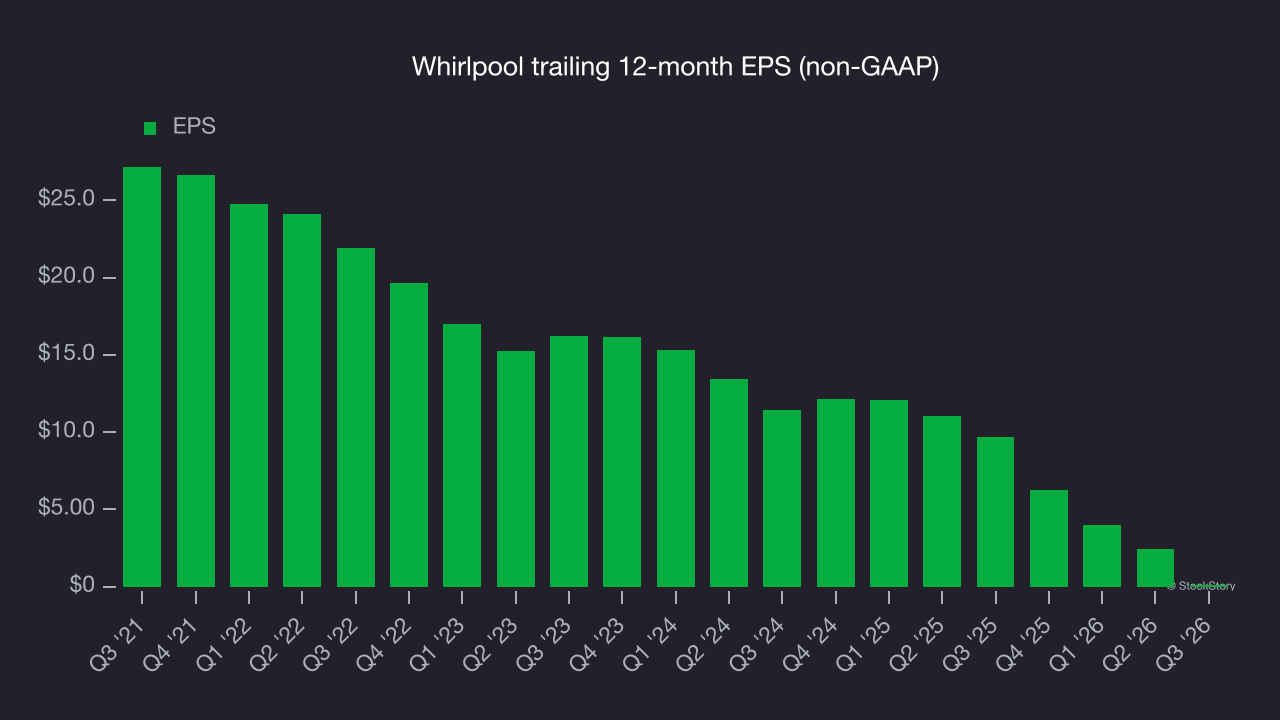
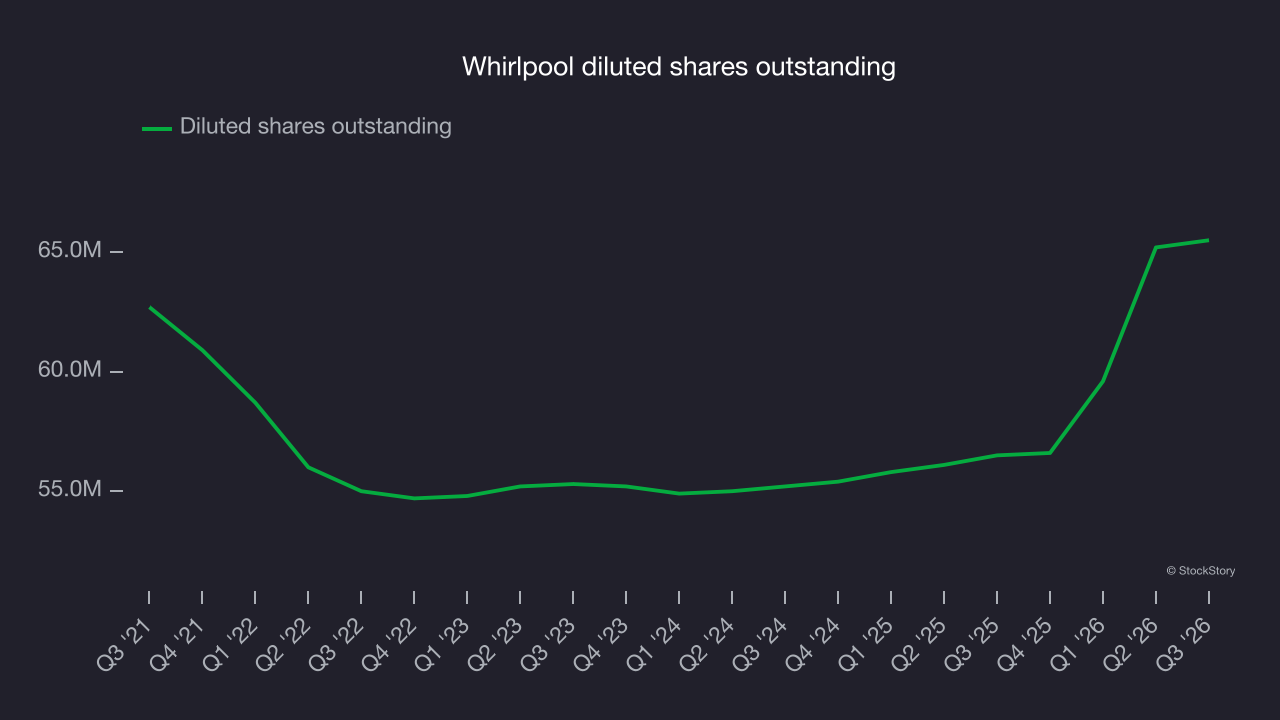
As with revenue, examining EPS over a shorter period can reveal changes in the business.
For Whirlpool, its two-year annual EPS declines of 89.8% show it’s continued to underperform. The results were poor across both periods.
In Q3, Whirlpool reported adjusted EPS of negative $0.21, down from $2.09 in the same quarter last year. This result missed analysts’ consensus estimates. Over the next 12 months, Wall Street expects Whirlpool’s full-year EPS to grow 1,861% from $0.12 to $2.35, according to S&P.
Key takeaways from Whirlpool’s Q3 results
Whirlpool’s quarter offered few positives: Revenue fell short of Wall Street’s consensus estimates, and full-year EPS guidance also missed expectations. That made for a weaker quarter overall. Shares tumbled 9% to $24.07 immediately after the results.
Whirlpool’s earnings report left more to be desired. To assess whether this quarter has created an opportunity to buy the stock, consider the bigger picture of valuation, business quality and the latest earnings. For more on Whirlpool, read the full research report here (it’s free).