


EN
Missed Vesuvius' Run? What Holders Had To Believe
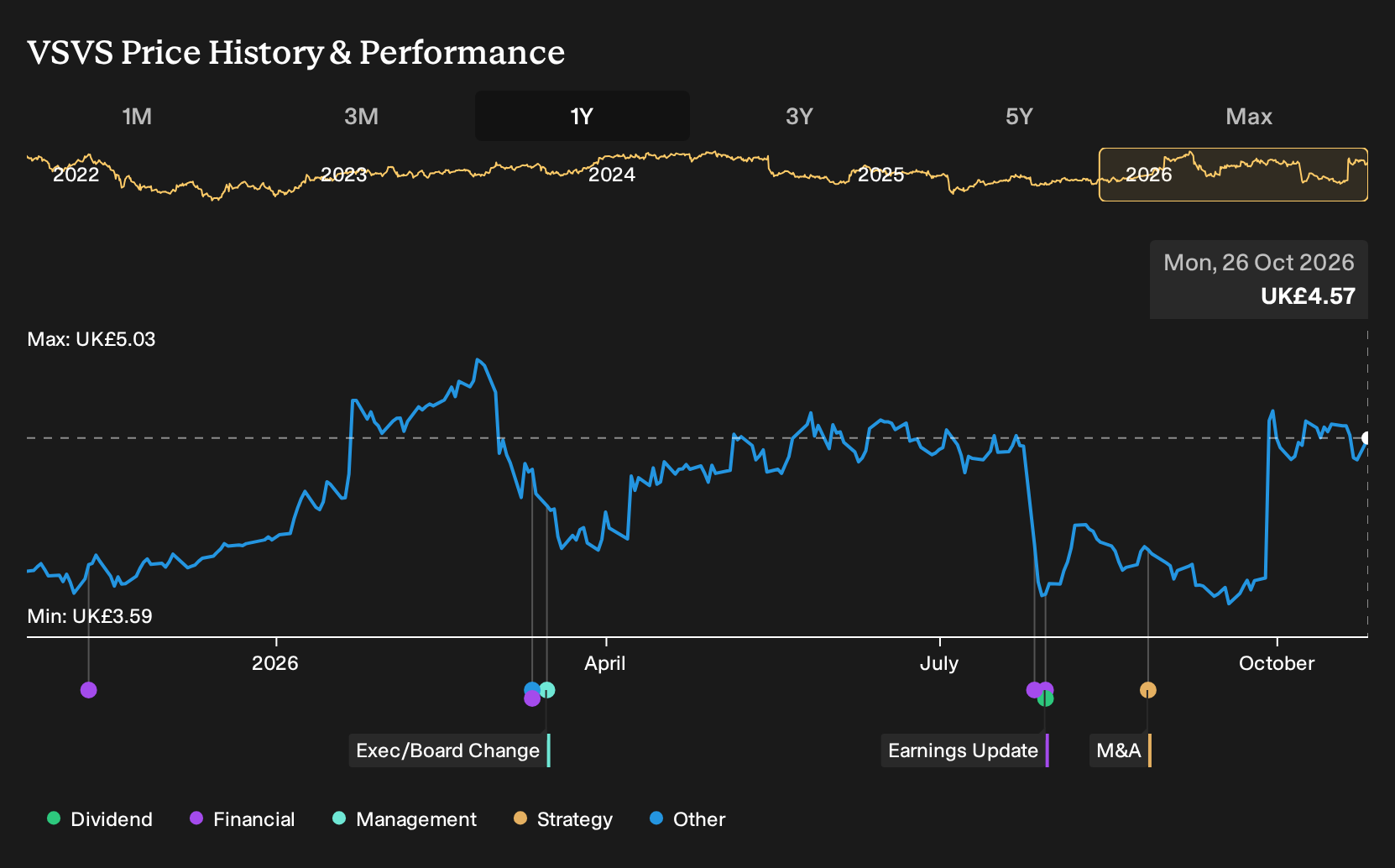
If you had seen Vesuvius quietly report higher first half revenue but a much thinner net margin, then watched large investors like Dimensional Fund Advisors, Man Group and Pentwater disclose sizeable positions, curiosity would be natural. Holding Vesuvius over the past year would have returned 27.3%, including dividends. If you were deciding back on 26 October 2025, what did you need to believe about India, decarbonization and steel demand for that outcome to feel reasonable?
Vesuvius has already moved. Pinpoint other ways to investigate the theme among 94 robotics and automation stocks.
The Argument You Would Have Been Weighing Up On Vesuvius
The shares cost £3.78 at the start of the period. Anyone studying Vesuvius then had to decide whether the price already reflected India’s momentum and the push for cleaner steel, or whether those forces were being overestimated.
The bullish story pointed to a Fair Value of £4.38, a notional upside price based on strong India growth, higher margin local operations and rising sales of technology-driven products such as automation and robotics.
The cautious view anchored on a Fair Value of £3.3, built on worries that faster adoption of electric arc furnaces and stricter decarbonization rules could steadily shrink demand for Vesuvius’ traditional steel products.
What The Evidence Did To The Vesuvius Argument
The clearest test of the Vesuvius story came from its H1 2026 report. Revenue was £922.9m against £907.5m a year earlier, while net income excluding extras was £16.9m versus £30.9m and margin moved from 3.4% to 1.8%. That pattern, higher sales but thinner profitability, leaned toward the cautious case on decarbonization and product mix.
The lesson is simple. When a thesis hangs on better margins from cleaner technology or faster growth regions, track net income and net margin directly against those claims, not just the top line.
What Vesuvius' Recent Run Already Assumes
Vesuvius now trades at £4.57, after a 27.3% gain over the past year. The selected Narrative’s Fair Value sits below that level, which implies a view that the current quote already bakes in a lot of good news.
The Narrative leans on execution. A buyer today effectively banks on footprint changes, cost savings and robotics-led products offsetting wage inflation and pricing pressure. How does that assumption stack up against the risk that footprint rationalisation and MMS integration deliver slower or smaller margin benefits than hoped?
"The main thing that has to go right is that Vesuvius completes its planned footprint rationalisation, cost savings and integration of the MMS crucible business so that recurring savings and foundry profits reach the levels management is targeting. The current valuation implies that Vesuvius shares already price in successful execution on structural cost savings, recovery in steel production outside China and further profit contribution from new products and robotics."
That disagreement has a full argument behind it. → Uncover the lower Fair Value this Narrative argues for
From Vesuvius To Power Flows
Vesuvius pulls you toward steel, heat and industrial demand. Just beside it, another bottleneck quietly shapes the same story.
Every electric arc furnace, like every AI-heavy plant, needs dependable electricity. That requirement stretches from generation equipment out to the high-voltage grid.
Another business focuses on hardware and software that keep that power steady. It works on turbines, transformers, grid gear and control systems for long-lived assets.
As electrification and data strain networks, its role can evolve. Cash flows may depend less on volume swings and more on servicing and upgrades.
The case is on the record, with the assumptions it rests on. → See the Narrative that values this company 56% above its price
Have feedback on this article? Concerned about the content? Get in touch with us directly. Alternatively, email editorial-team@simplywallst.com