


EN
Is RadNet (RDNT) Undervalued Or Is Its Rich P/E Already Priced In?
RadNet (RDNT) is back on investor radar after fresh analysis highlighted a trailing 12‑month free cash flow margin of 2.7% in the red, along with a 7.8% annual drop in earnings per share.
Recent trading shows RadNet shares edging higher in the short term, with a 7 day share price return of 1.5% and a 90 day move of 11.3%. However, the 1 year total shareholder return has declined 13.8%, even after a very large 3 year total shareholder return of about 2.6x and a 5 year total shareholder return of a little over 2.1x. This suggests long term holders have already seen substantial gains while near term momentum is more muted.
Scan beyond RadNet and compare its premium P/E and cash flow profile with a curated set of 34 healthcare AI stocks that are also tying AI into real-world healthcare services.
RadNet trades at a steep discount to both analyst targets and one estimate of fair value, yet it carries a rich P/E and weak free cash flow. Is the market’s caution misplaced, or is it simply catching up to the story?
Most Popular Narrative: 26% Undervalued
RadNet closed at $70.34 while the most followed narrative pegs fair value closer to $94.63. This frames today’s discount as a question of whether its AI heavy model can eventually turn into stronger margins and cash generation.
The key requirement is that RadNet converts its heavy AI and digital health investment, including acquisitions and joint ventures with health systems, into sustainably higher margins and free cash flow despite ongoing labor and capital cost pressures.
The plan to grow DeepHealth annual recurring revenue from US$105.5 million to more than US$140 million by the end of 2026, with a rising share from external customers and a stated path toward EBITDA margins above 20%, points to a larger base of recurring, higher margin software revenue.
See why 9 investors see RadNet as 26% undervalued.
Result: Fair Value of $94.63 (UNDERVALUED)
Still, the RadNet story can break if AI and digital health spending keeps pressuring free cash flow or if new imaging capacity remains underused.
Find out about the key risks to this RadNet narrative.
Another View: What Multiples Say About RadNet
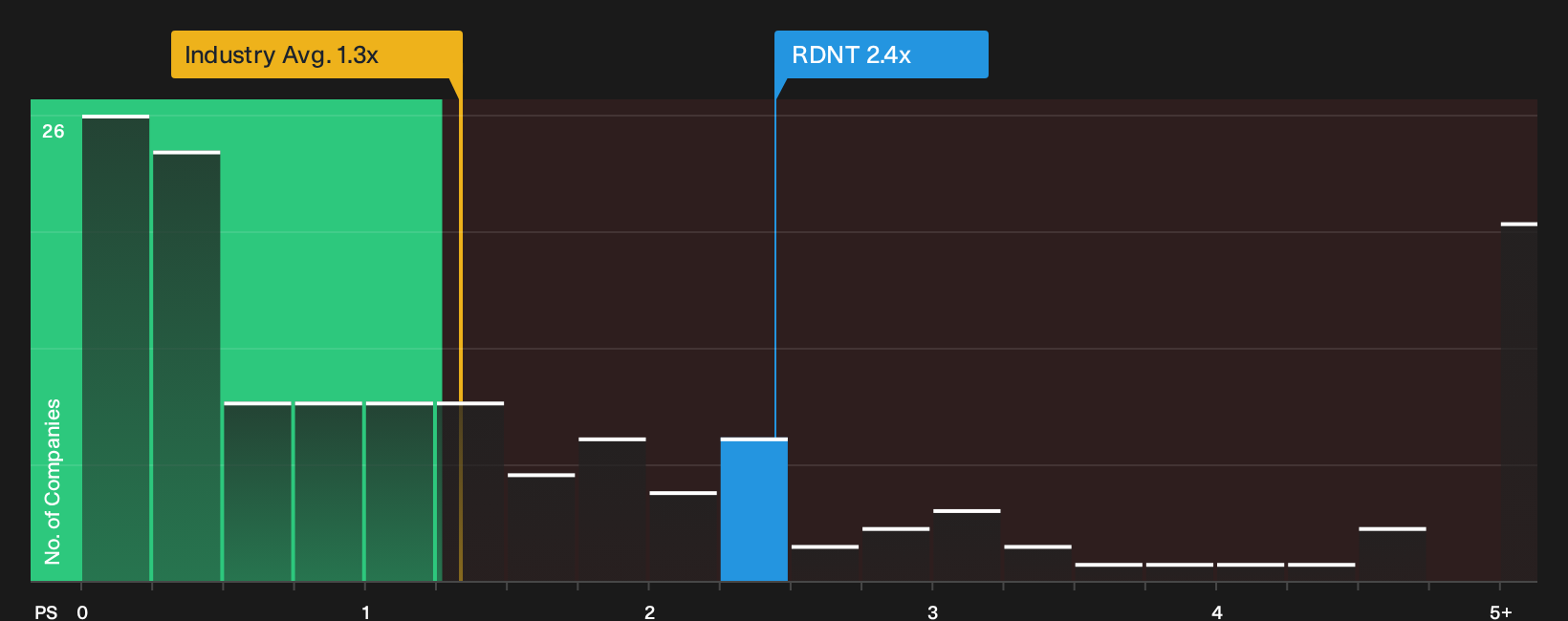
The story looks different once you swap cash flow models for a simple sales multiple. RadNet trades on a P/S of 2.4x, which is higher than both the US Healthcare industry at 1.3x and an estimated fair ratio of 1.1x. That richer tag can point to upside already priced in, or to investors overpaying for AI potential.
Before leaning too heavily on the narrative fair value, it is worth asking whether that gap in sales multiples signals extra risk if sentiment cools, or a premium the market is comfortable with if RadNet hits its software and imaging targets.
See what the numbers say about this price — find out in our valuation breakdown.
Next Steps
Mixed signals around RadNet often create more questions than answers. Move quickly, review the underlying data, and weigh the 3 key rewards and 1 important warning sign.
Looking for more ideas beyond RadNet?
If RadNet has you thinking harder about valuation, do not stop there. Cast a wider net with data backed shortlists that surface opportunities you might otherwise miss.
- Target stronger value by scanning companies that combine quality fundamentals with attractive pricing through the 28 high quality undervalued stocks.
- Prioritise resilience by sorting for businesses with healthier finances using the list of solid balance sheet and fundamentals (24 results).
- Hunt for underfollowed potential by reviewing a curated set of 21 high quality undiscovered gems.
Have feedback on this article? Concerned about the content? Get in touch with us directly. Alternatively, email editorial-team@simplywallst.com