


EN
Here's What We Like About Nareru Group's (TSE:9163) Upcoming Dividend
Some investors rely on dividends for growing their wealth, and if you're one of those dividend sleuths, you might be intrigued to know that Nareru Group Inc. (TSE:9163) is about to go ex-dividend in just 2 days. The ex-dividend date is commonly two business days before the record date, which is the cut-off date for shareholders to be present on the company's books to be eligible for a dividend payment. The ex-dividend date is of consequence because whenever a stock is bought or sold, the trade can take two business days or more to settle. Accordingly, Nareru Group investors that purchase the stock on or after the 29th of October will not receive the dividend, which will be paid on the 15th of January.
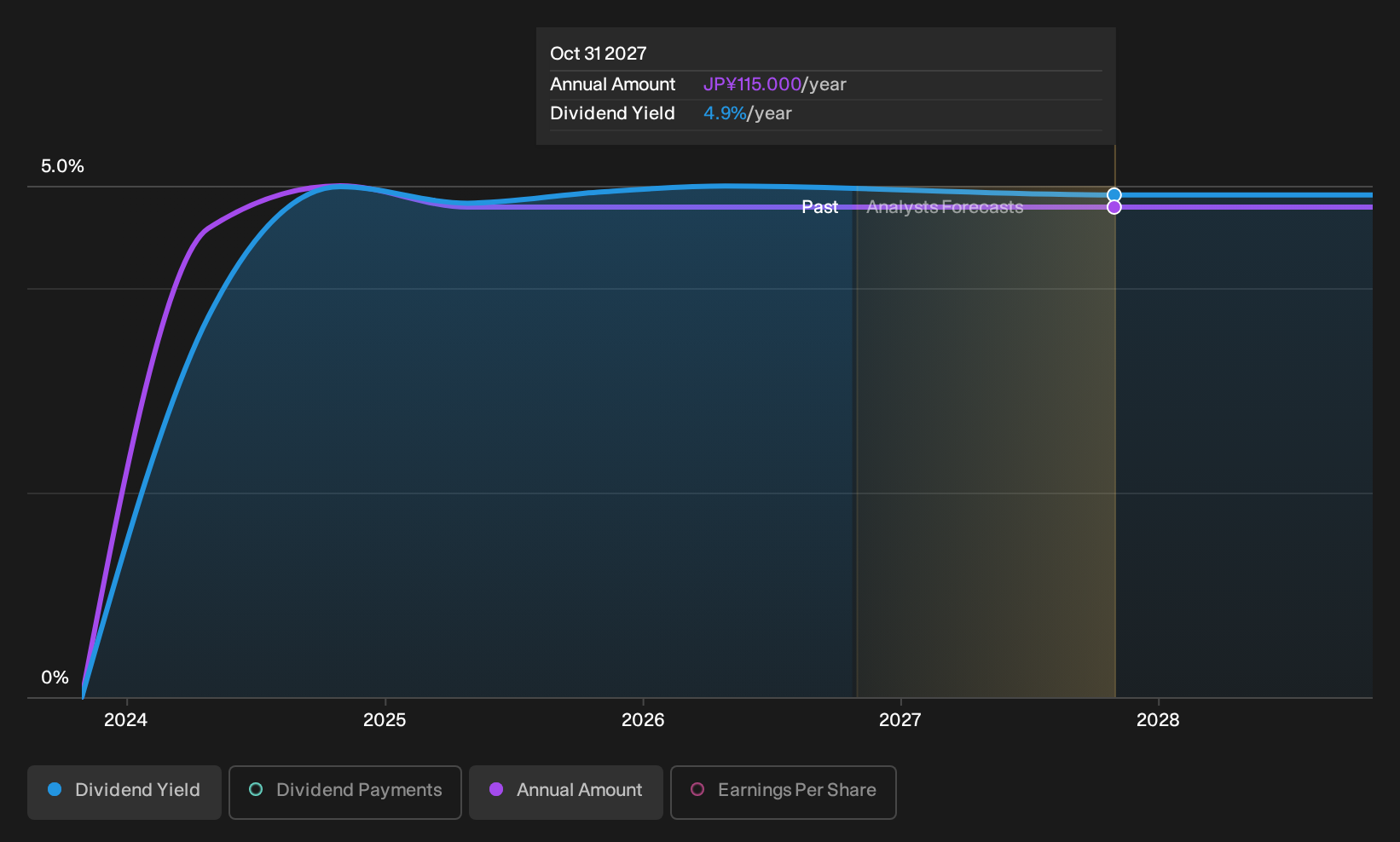
The company's next dividend payment will be JP¥60.00 per share, on the back of last year when the company paid a total of JP¥115 to shareholders. Looking at the last 12 months of distributions, Nareru Group has a trailing yield of approximately 4.9% on its current stock price of JP¥2342.00. Dividends are a major contributor to investment returns for long term holders, but only if the dividend continues to be paid. So we need to investigate whether Nareru Group can afford its dividend, and if the dividend could grow.
Dividends are typically paid from company earnings. If a company pays more in dividends than it earned in profit, then the dividend could be unsustainable. Nareru Group paid out 50% of its earnings to investors last year, a normal payout level for most businesses. Yet cash flow is typically more important than profit for assessing dividend sustainability, so we should always check if the company generated enough cash to afford its dividend. Thankfully its dividend payments took up just 48% of the free cash flow it generated, which is a comfortable payout ratio.
It's positive to see that Nareru Group's dividend is covered by both profits and cash flow, since this is generally a sign that the dividend is sustainable, and a lower payout ratio usually suggests a greater margin of safety before the dividend gets cut.
Check out our latest analysis for Nareru Group
Click here to see how much of its profit Nareru Group paid out over the last 12 months.
Have Earnings And Dividends Been Growing?
Businesses with strong growth prospects usually make the best dividend payers, because it's easier to grow dividends when earnings per share are improving. If earnings fall far enough, the company could be forced to cut its dividend. For this reason, we're glad to see Nareru Group's earnings per share have risen 12% per annum over the last five years. Nareru Group is paying out a bit over half its earnings, which suggests the company is striking a balance between reinvesting in growth, and paying dividends. Given the quick rate of earnings per share growth and current level of payout, there may be a chance of further dividend increases in the future.
The main way most investors will assess a company's dividend prospects is by checking the historical rate of dividend growth. In the past three years, Nareru Group has increased its dividend at approximately 1.5% a year on average. Earnings per share have been growing much quicker than dividends, potentially because Nareru Group is keeping back more of its profits to grow the business.
The Bottom Line
Is Nareru Group worth buying for its dividend? We like Nareru Group's growing earnings per share and the fact that - while its payout ratio is around average - it paid out a lower percentage of its cash flow. There's a lot to like about Nareru Group, and we would prioritise taking a closer look at it.
Want to learn more about Nareru Group's dividend performance? Check out this visualisation of its historical revenue and earnings growth.
A common investing mistake is buying the first interesting stock you see. Here you can find a full list of high-yield dividend stocks.
Have feedback on this article? Concerned about the content? Get in touch with us directly. Alternatively, email editorial-team (at) simplywallst.com.