


EN
Is Licensing Overhaul Altering The Investment Case For Warner Music Group Stock?
- Warner Music Group has combined its recorded music and publishing synch operations under Ron Broitman as president of global synch, aiming to create a single, streamlined route for licensing its catalogs.
- This consolidation concentrates licensing decisions and client access in one organization. This structure could influence how efficiently Warner Music Group monetizes its catalog across film, TV, advertising, and gaming.
- Investors may watch how Warner Music Group's unified global synch leadership affects the broader narrative around its margins.
Scan how Warner Music Group's latest synch overhaul compares with other rights driven plays by lining up potential peers through the 21 high quality undiscovered gems.
Warner Music Group Investment Narrative Recap
For Warner Music Group, the core belief hinges on recorded music, publishing and catalog income compounding steadily through streaming, new formats and better monetization tools. An investor has to trust that cost programs, AI tools and catalog deals translate into more stable margins and cash. The unified synch team reads as operational fine tuning rather than a major shift to that thesis.
In the near term, the main swing factor is whether earnings growth in the mid teens and margin targets hold up against legal, labor and debt related pressures. The biggest risk remains that heavy catalog and technology spending, funded with meaningful leverage, does not consistently improve free cash flow or returns on capital.
The most relevant development here is Warner Music Group putting Ron Broitman in charge of a combined global synch unit spanning recorded music and publishing. This directly touches one of the clearer potential catalysts. Better execution in licensing can feed into the multi year cost and margin plan if it reduces friction for film, TV, ads and gaming partners.
Centralized synch decisions also intersect with the push into AI tools and new digital formats. A single gatekeeper can help apply consistent rules around AI licensing, but any missteps or disputes could raise compliance costs or slow the rollout of new products. For an investor, this synch reset sits somewhere between operational housekeeping and a live test of how well management can execute on monetizing a large catalog within existing risk constraints.
Warner Music Group's current analyst story points to US$8.6b in revenue and US$1.3b in earnings by 2029, based on forecasts that imply 5.4% yearly revenue growth and an earnings increase of roughly 2x from US$665.0m today.
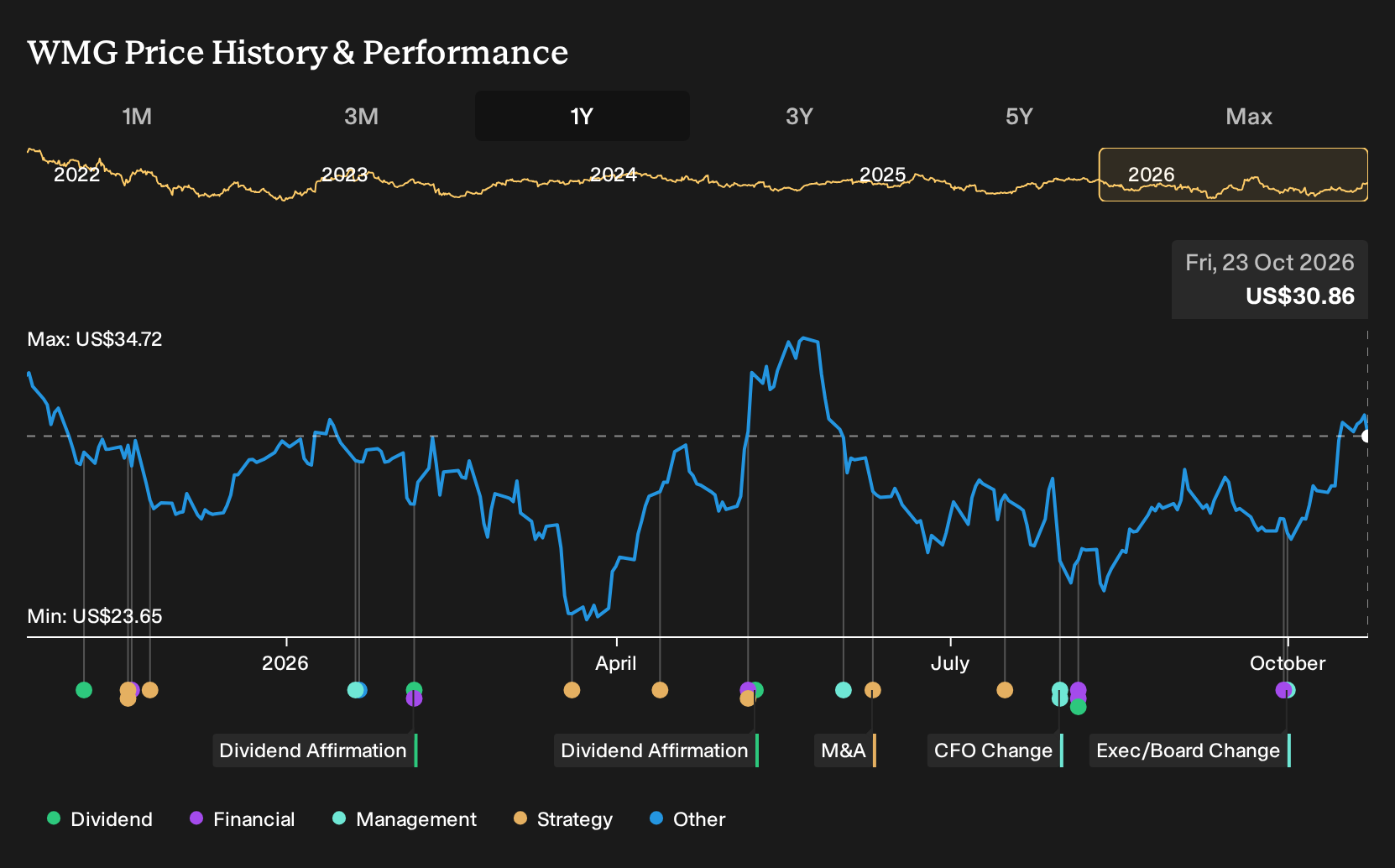
Uncover why Warner Music Group's fair value indicates a 23% potential upside to its current price, which could close faster than many investors expect.
Exploring Other Perspectives
Some bullish analysts focus on AI driven licensing as the real swing factor for Warner Music Group rather than synch retooling. Before this reorganization, the most optimistic group was modeling US$8.4b of revenue and US$1.2b of earnings by 2029. You can treat this synch move as a fresh datapoint that could reshape those expectations in either direction.
Explore 3 other Warner Music Group fair value estimates, including one that suggests as much as 41% upside from the current price.
Form Your Own Verdict
Disagree with existing narratives? Extraordinary investment returns rarely come from following the herd, so trust your own analysis.
- A great starting point for your Warner Music Group research is our analysis highlighting 4 key rewards and 3 important warning signs that could impact your investment decision.
- See our latest analysis for Warner Music Group. The report includes a comprehensive fundamental analysis summarized in a single visual, the Snowflake, making it easy to evaluate Warner Music Group's overall financial health at a glance.
Looking for more investment ideas beyond Warner Music Group?
If the Warner Music Group story has sharpened your thinking but you want a wider opportunity set, cast the net across other stocks that fit clear, data driven filters using the Simply Wall St Screener.
- For investors who want quality on sale, start with companies that screen as both financially strong and priced below their estimated worth through the 29 high quality undervalued stocks.
- If capital preservation ranks high on your list, focus on resilient businesses that carry lower risk profiles by scanning the 30 resilient stocks with low risk scores.
- Income focused portfolios may benefit from companies with robust payout profiles and higher yields, which you can track using the 5 dividend fortresses.
Have feedback on this article? Concerned about the content? Get in touch with us directly. Alternatively, email editorial-team@simplywallst.com