


EN
How Investors Are Reacting To TowneBank (TOWN) Rising Costs And Slower Growth
- TowneBank, a community-focused financial institution, has seen concerns emerge as its multi-year revenue expansion and earnings per share trends trail banking peers while operating expenses move higher.
- The business currently trades around a forward price-to-book ratio of 1.1x, which highlights how efficiently management converts its asset base into profits.
- The focus now will be on how TowneBank's investment narrative holds up as slower revenue progress and rising costs reshape expectations for efficiency.
Compare TowneBank's slower progress and rising costs with a curated list of solid balance sheet and fundamentals (24 results) to see how other financial institutions stack up on efficiency and resilience.
What Is TowneBank's Investment Narrative?
For TowneBank to make sense in a portfolio, an investor has to be comfortable with a slower growth story that leans on stability, diversified fee income and disciplined lending rather than rapid expansion. The business spans traditional banking, mortgage, insurance and resort property management, so execution comes down to keeping credit quality tight, controlling operating costs and defending pricing on loans and deposits. The recent cautionary tone around TowneBank largely reinforces an existing concern that revenue trends are softer while expenses are doing more of the moving, rather than introducing a new shock.
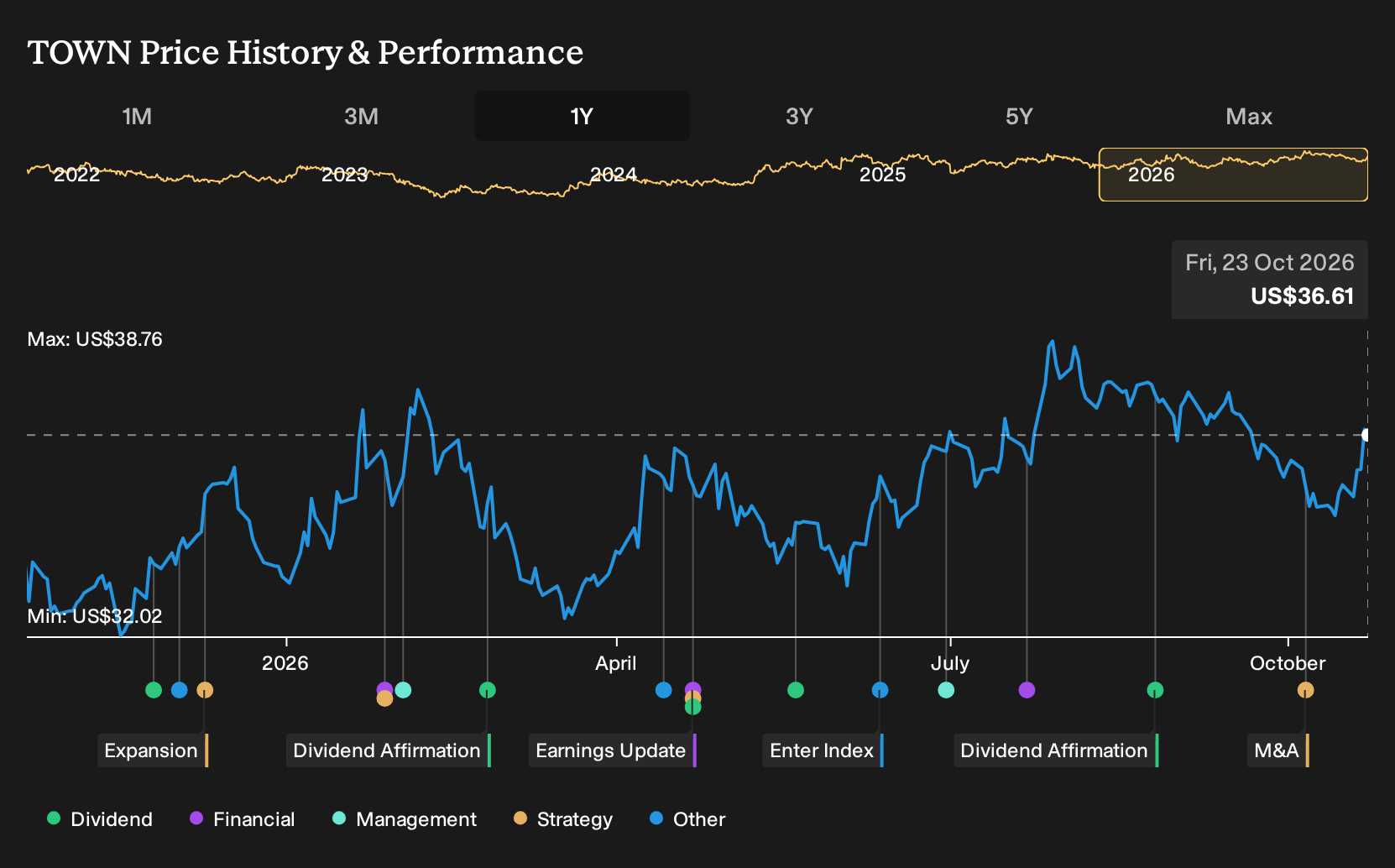
In the short term, the key swing factors are clear. Management needs to prove it can protect net profit margins, which currently sit at 28.6%, if top line revenue is expected to decline around 2.1% per year over the next few years. The stock’s P/E of 10.5x and forward P/B of roughly 1.1x already reflect some of the worry about efficiency and growth, even as TowneBank continues to pay a 3.06% dividend and carries what is described as high quality earnings. The recent analysis urging caution sharpens the focus on whether that balance between income, cost control and shareholder payouts is sustainable.
Even so, there is a quieter issue around TowneBank that only really jumps out once you look closely at ...
There's only one way to know the right time to buy, sell or hold TowneBank. Head to Simply Wall St's company report for the latest analysis of TowneBank's Fair Value.
Exploring Other Perspectives
Two members of the Simply Wall St Community currently peg TowneBank’s fair value in a tight band between US$39.53 and US$40, which shows how closely aligned some private investors are even when opinions can widely differ. Those views pre date the recent caution around slower revenue progress and rising costs, so you may want to weigh them against fresh risks and seek out more community perspectives before deciding how TowneBank fits into your own plan.
Explore another TowneBank fair value estimate, including one that suggests as much as 9% upside from the current price.
Reach Your Own Conclusion
Don't just follow the ticker. Dig into the data and build a conviction that's truly your own.
- A great starting point for your TowneBank research is our analysis highlighting 5 key rewards and 2 important warning signs that could impact your investment decision.
- See our latest analysis for TowneBank. The report includes a comprehensive fundamental analysis summarized in a single visual, the Snowflake, making it easy to evaluate TowneBank's overall financial health at a glance.
Looking For More Investment Ideas Beyond TowneBank?
Once you have a view on TowneBank, it can help to compare that thesis with other opportunities that share similar qualities or offer a different balance of risk and reward. The Simply Wall St Screener lets you do that in a structured way so you can narrow the universe to stocks that actually fit your plan.
- For investors who want income backed by stronger balance sheets, start with a curated set of 5 dividend fortresses that pair higher yields with more robust fundamentals.
- If capital preservation sits higher on your list, check out a 30 resilient stocks with low risk scores that screens for businesses with more resilient financial profiles.
- To widen the opportunity set beyond TowneBank, scan a 21 high quality undiscovered gems that focuses on quality companies the market may not be paying as much attention to yet.
Have feedback on this article? Concerned about the content? Get in touch with us directly. Alternatively, email editorial-team@simplywallst.com