


EN
GF Securities: The pessimism in A-shares has been fully interpreted, and a rebound from the overrun decline is expected to begin
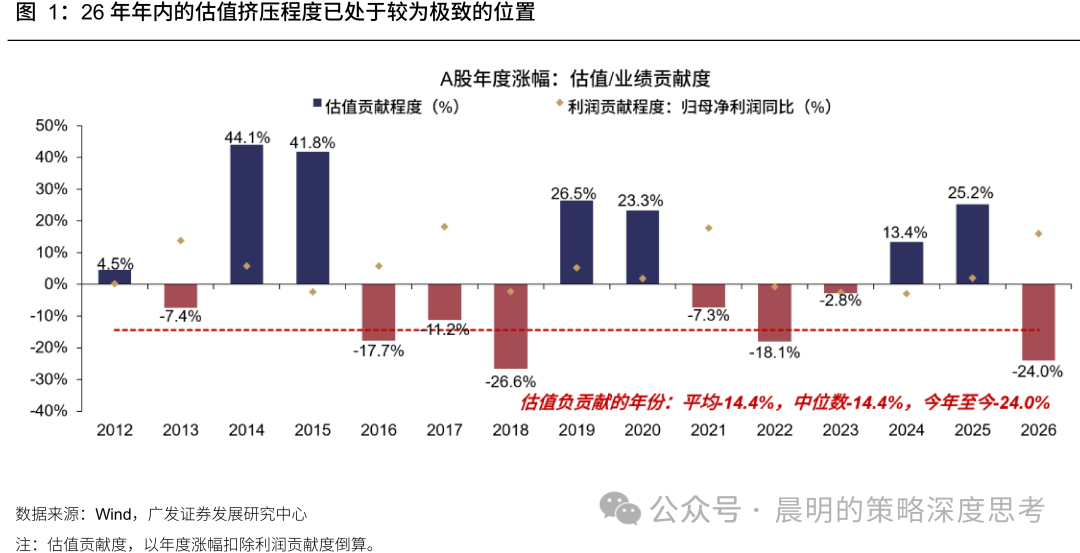
The Zhitong Finance App learned that GF Securities released a research report saying that the net profit of A-shares is forecast to increase by more than 15% in 2026, but the valuation contribution is -24%. The degree of valuation squeeze is rare in history. It exceeds the average level of negative valuation contributions of about -14% in the past, and also exceeds the valuation squeeze in the years of double-digit profit growth (2013, 2017, 2021). As of October 16, the short-term sentiment index of major indices fell to a historical freezing point of 0%. The GEM index deviated downward by more than 10% from the 20-day EMA for the 5th time, and historically all rebounded in response to an overfall. In terms of the lifting of the ban, the peak historical impact of the lifting of the A-share ban in December was limited. Hong Kong stocks may be impacted in the fourth quarter by the trend of unbanning models, GPUs, etc. from the end of 2026 to the beginning of 2027.
The main views of GF Securities are as follows:
1. The net profit of A-shares is predicted to increase by more than 15% in '26, but the valuation contribution is -24%. Comparisons in multiple dimensions are rare in history.
① In years when historical valuations were squeezed, the average valuation negative contribution was about -14%, which was significantly exceeded this year;
② Referring to years where profits contributed more than double digits (13, 17, 21), this year's valuation squeeze is already the biggest level in history;
③ Even considering 24-25 years of continuous valuation increases, there are many cases in history where valuation came first and performance caught up. After 2 consecutive years of valuation in the past, if performance relay was achieved, the valuation squeeze for that year was within 10% (for example, 14-15 year advance valuation, 16-17 performance release + slight decline in valuation, 19-20 advance valuation, 21-21 performance release plus slight decline in valuation).
In other words, considering this year's profit forecast, the market's short-term pessimism about pricing non-performance factors (discount rate, risk appetite) is already quite adequate.
2. The increase in the valuation of the “AI Industry Chain” in 24-25 was also fully offset in '26.
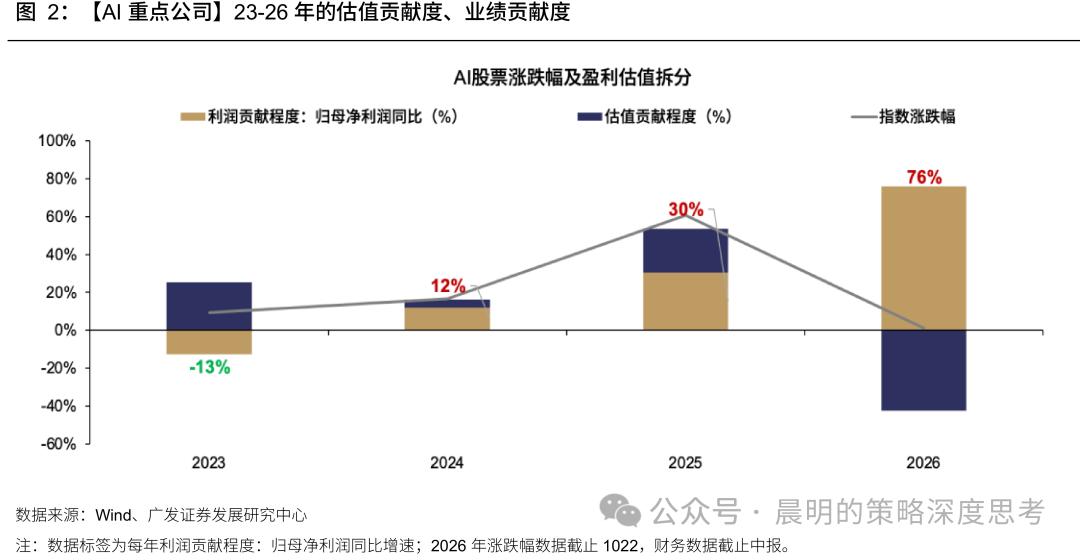
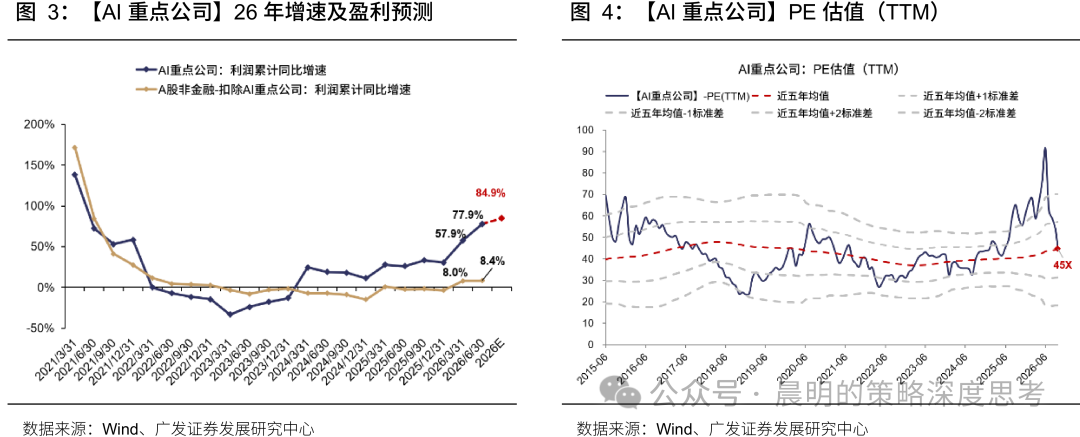
As can be seen in the figure below, in 23-25, A-share [AI Key Companies] mainly contributed positively to valuation; in 24-25, performance contributions were also gradually released.
The net profit growth rate of the “AI Key Company” in the mid-year report in '26 was about 76%, and the expected growth rate for the whole year rose further to 85%; however, based on stock price performance, the negative contribution to the 26-year valuation was more than 40%.
This shows that the extent of the decline in AI industry chain valuations this year has already overshadowed the 24-25 year valuation increase. That is, the increase in stock prices for three consecutive years from 24-26 was basically entirely due to performance, and the market did not mention valuations.
This position also indicates that the market's industrial expectations for 27-28 have fallen to a very low level.
3. As of Friday 10.16, the short-term sentiment indicators for major indices fell to the 0% quantile.
As of last Friday (10.16), the short-term sentiment indicators for Wind All A, GEM Index, and Science and Technology Innovation Board all fell to a historical freezing point of nearly 0%. Historically, falling to the lower quantile of 0% corresponds to a higher win rate when the index rebounds in the short term.
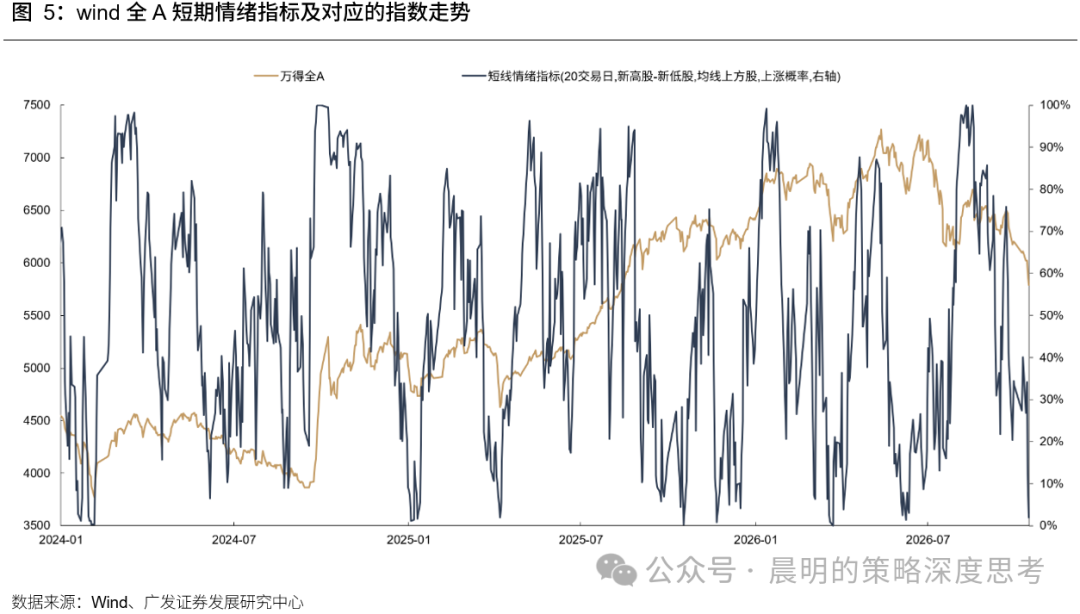
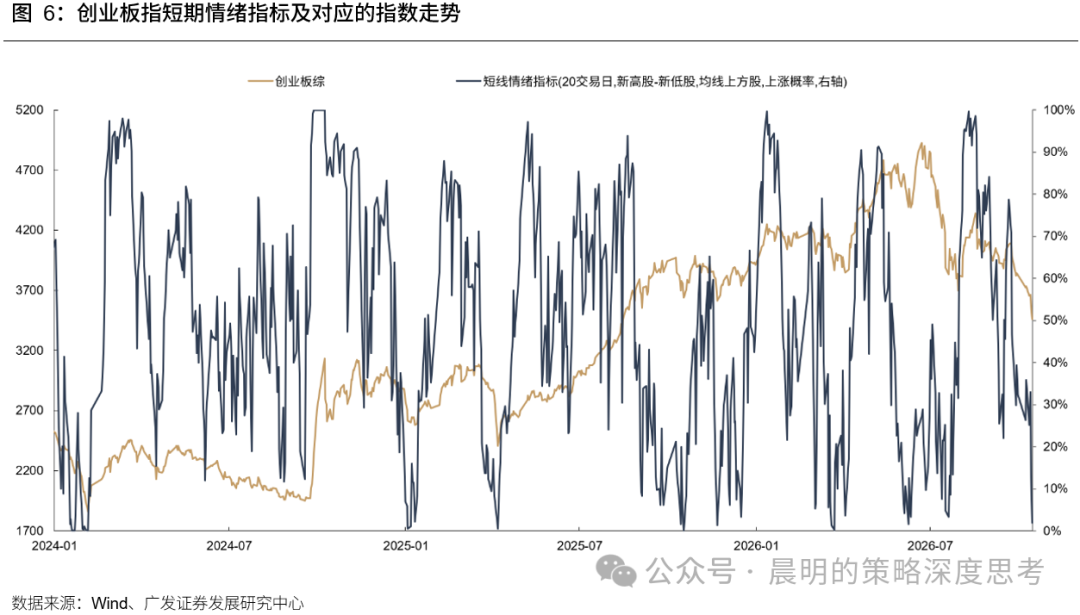
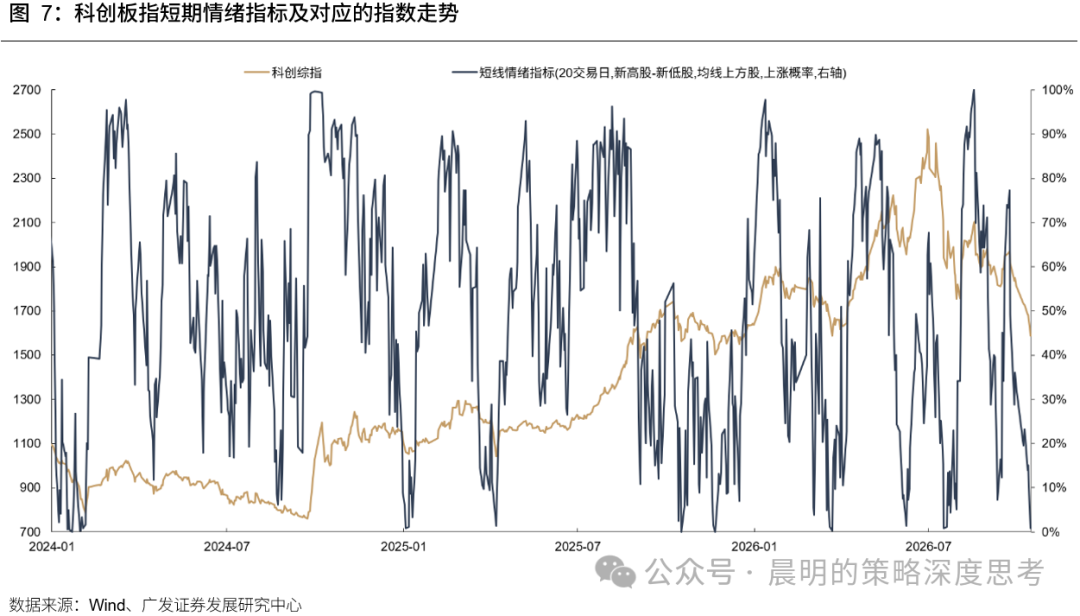
4. Since the collapse in '16, the GEM index deviated sharply downward and reached more than -10% for the 5th time this week.
After falling below -10% of the EMA 4 times in history, they all correspond to short-term overfall rebounds: rebound of 94 days in March '21, rebounded 27.6%; rebounded 48 days and rebounded 32% in April '22; continued to rise until October after hitting a signal in April '25; and rebounded on July 15, with a margin of 9.8%.
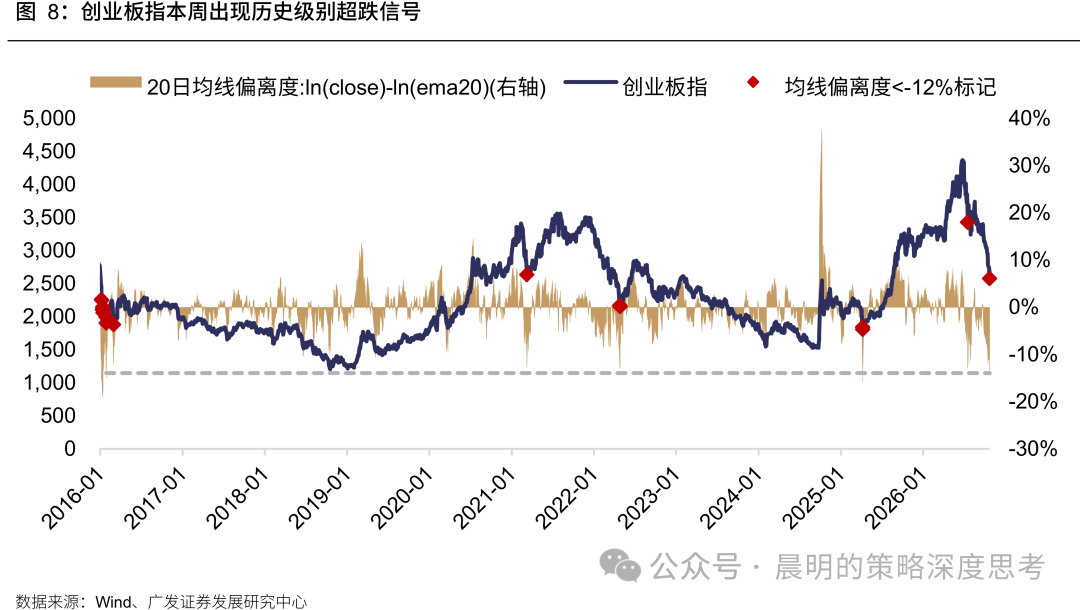
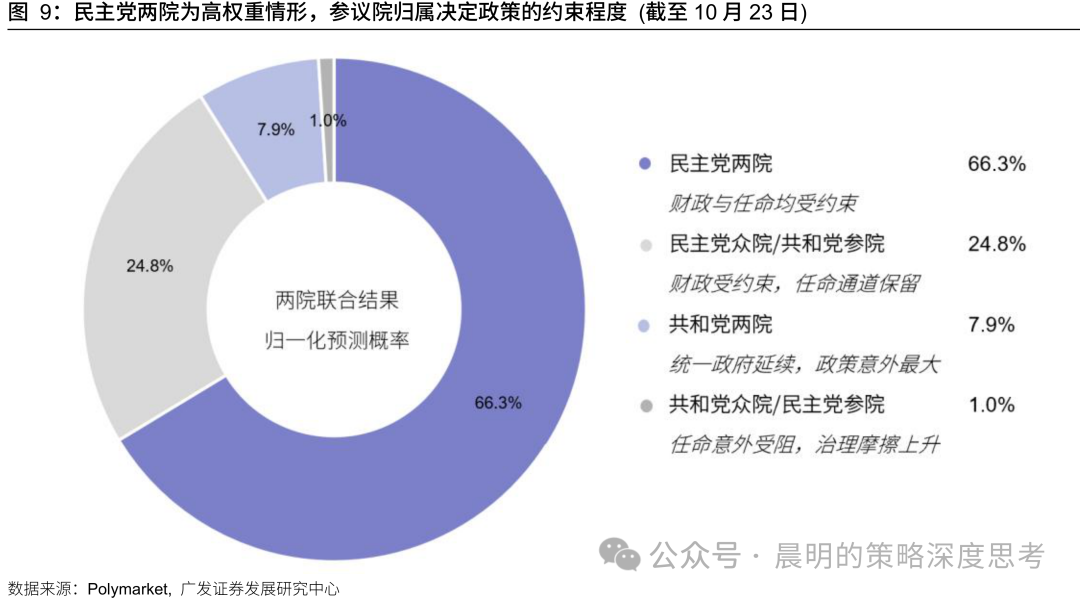
5. The above indicators show that market pessimism has been interpreted to the extreme in the short term, and it is expected that it will start an overfalling rebound in the future; however, how long the rebound will take and how much it can rebound will also depend on the verification of the November-December signal
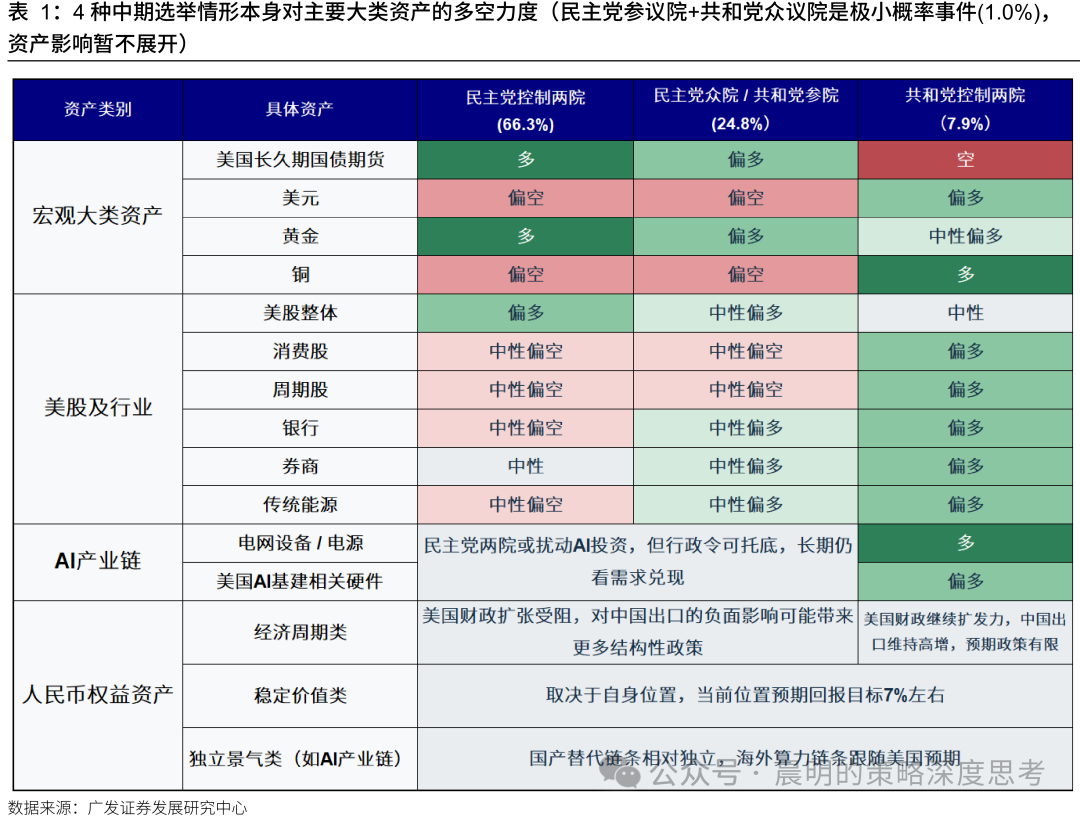
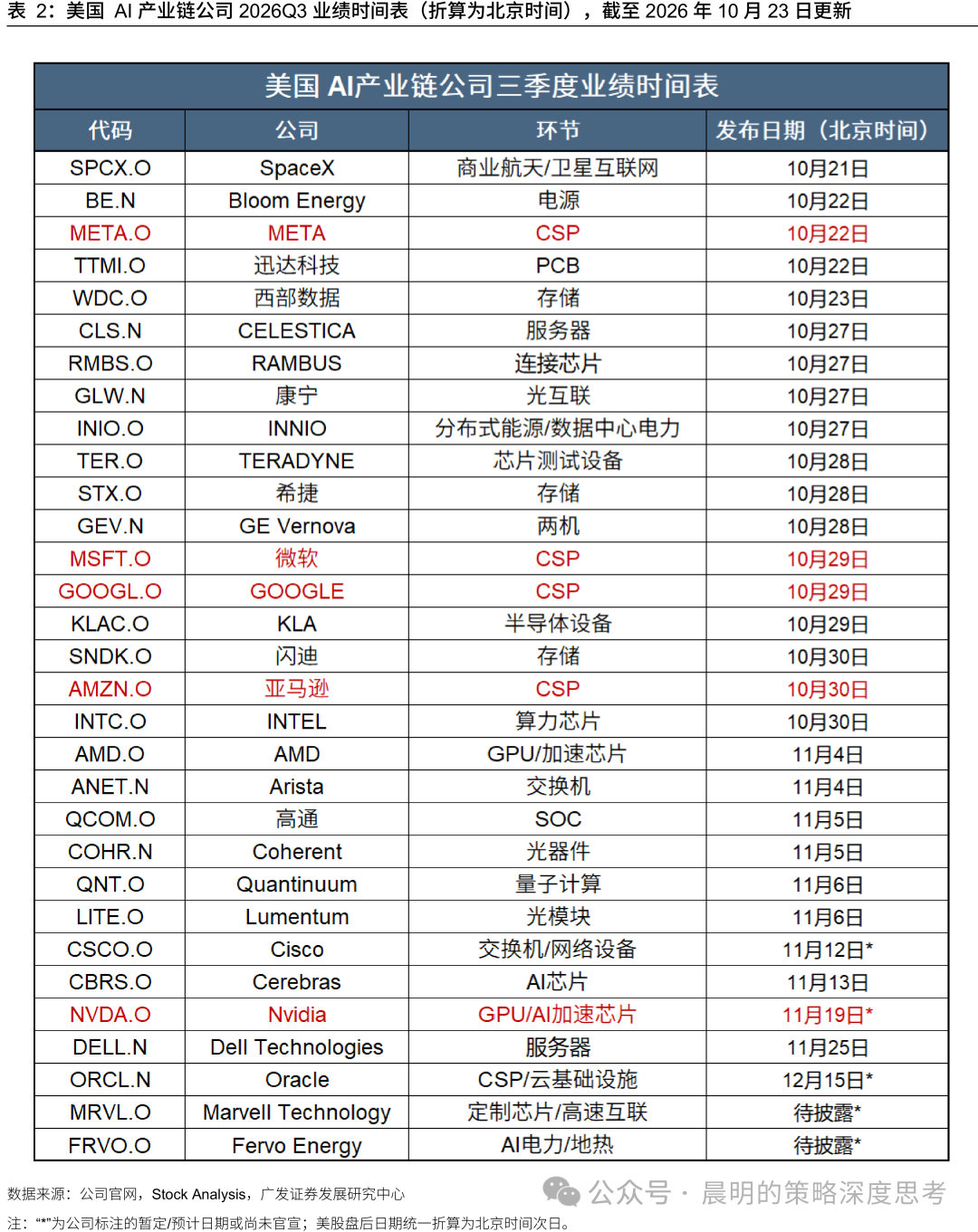
The impact of the US midterm election situation on major asset classes, as well as global catalytic events in the AI industry chain and the US stock earnings window.
Second, how does the pressure to lift the ban on A-shares and Hong Kong stocks affect the market?
1. As far as A-shares are concerned, there was a peak in the lifting of the ban in December '26, but the historical impact on the stock market was limited.
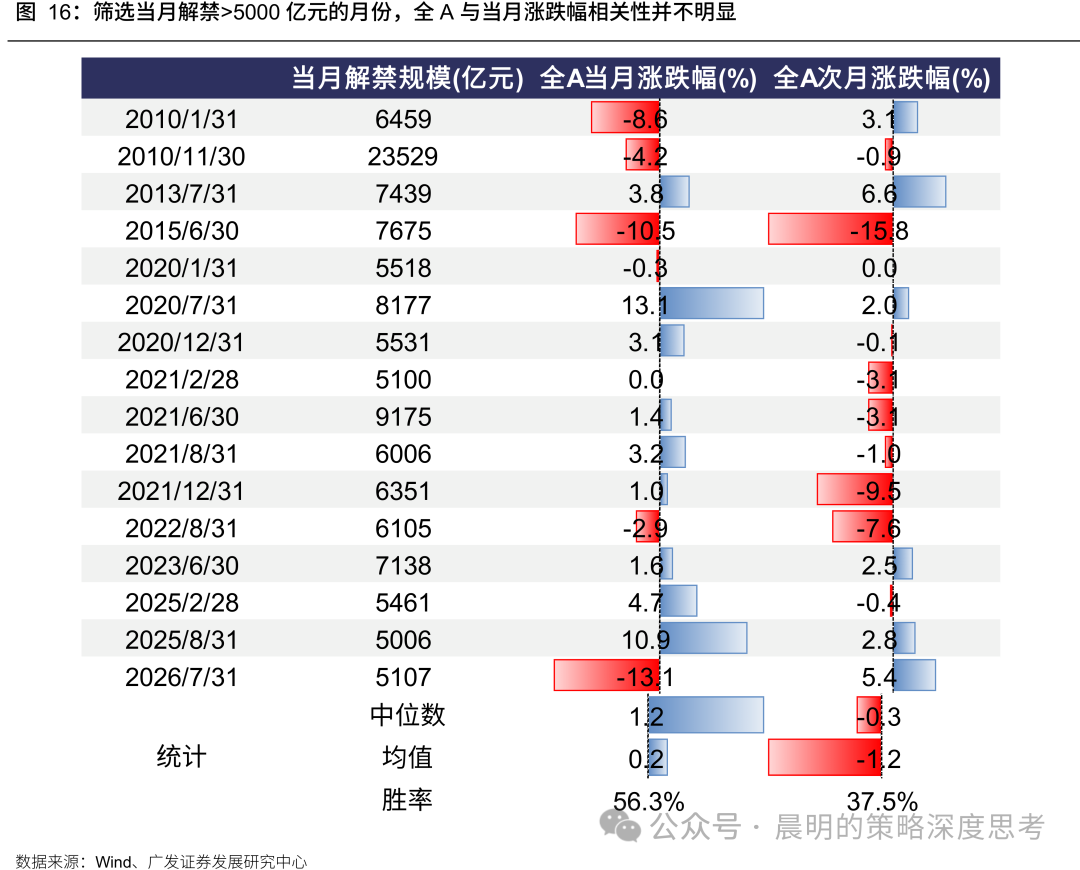
Judging from the statistical results of A-shares since 2010, the transmission chain of “lifting the ban → reducing holdings → all A is impacted” is not obvious.
① High cancellation often corresponds to high holdings reduction. There is a high correlation between the scale of cancellation of the ban in the current month and the net reduction of all A holdings in the current month/next month;
② However, a high lift does not necessarily correspond to a drop in all A. There was no correlation between the high level of lifting the ban in the same month and the weak market performance in the following month.
③ If you further filter out the months where the ban was lifted > 500 billion yuan: the full A performance in that month was not affected, but there is a 56% chance of an increase; the next month will be affected to a certain extent, with a 38% win rate.
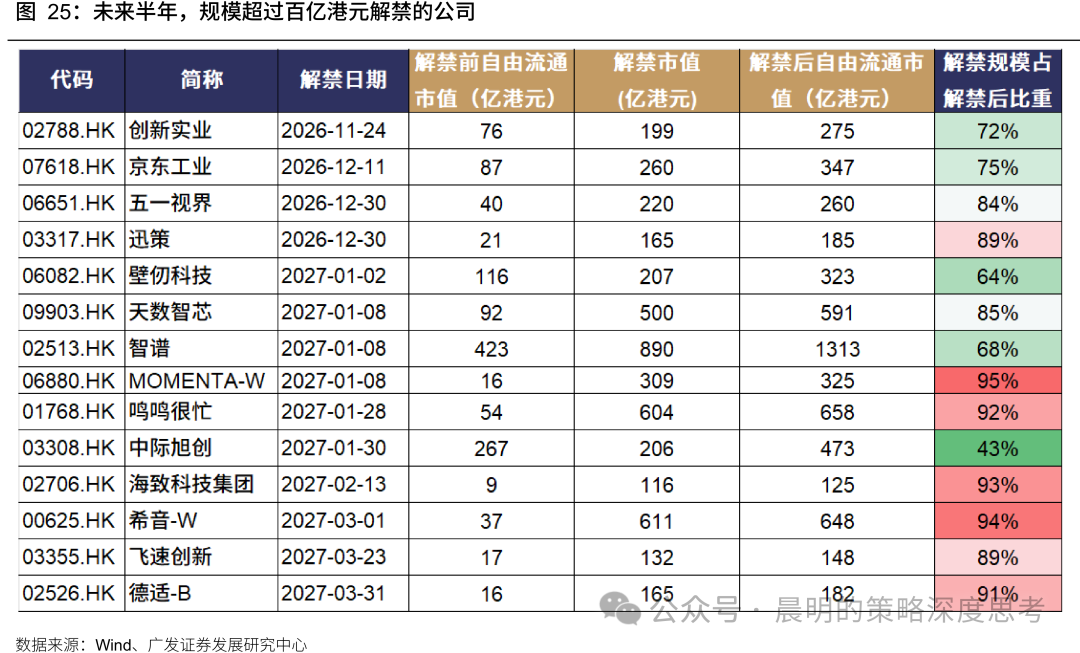
2. As far as Hong Kong stocks are concerned, Hong Kong stocks in the fourth quarter may be shocked by the mood before the large-scale lifting of the ban.
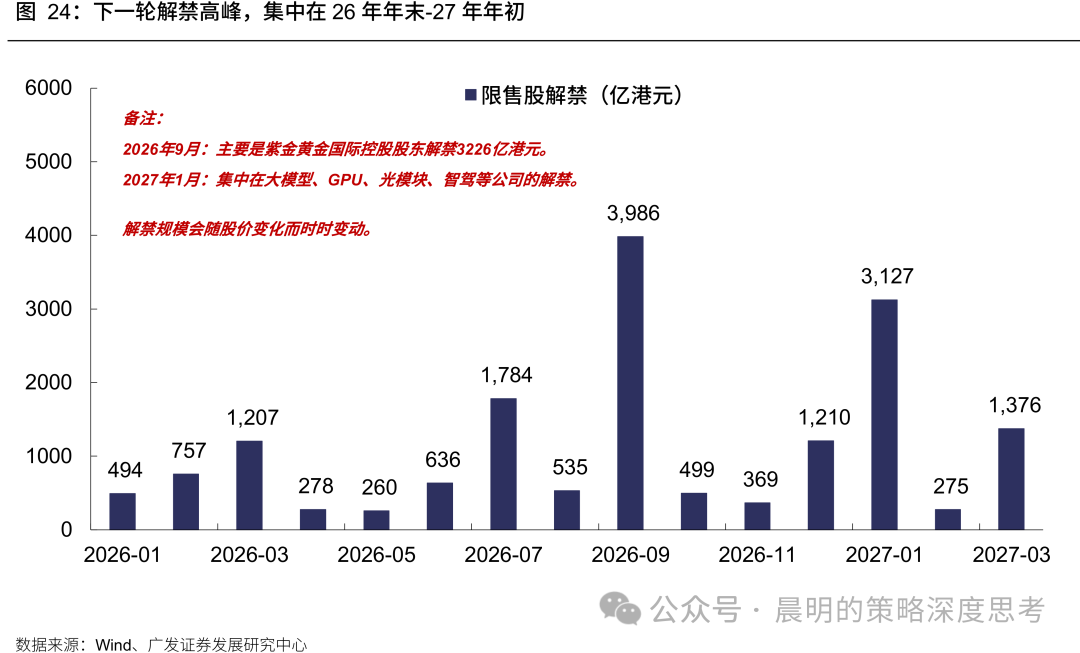
(1) There is a correlation between the large-scale lifting of the ban and the decline in Hong Kong stocks. It usually falls the most before the ban is lifted; it will not necessarily rebound after the ban is lifted, but it will be at a phased bottom; dividend stocks are less affected by the lifting of the ban.
(2) The next wave of ban lifting will be from the end of 2026 to the beginning of 2027. It will focus on the lifting of the ban on companies such as big models, GPUs, optical modules, smart driving, etc., which may have an emotional impact on Hong Kong stocks in the fourth quarter.
Risk warning: The geopolitical conflict exceeded expectations, causing upward pressure on global inflation to exceed expectations; overseas inflation and the resilience of the US economy made global liquidity enter the austerity cycle faster; steady domestic growth fell short of expectations, causing economic recovery to weaken and risk appetite to decline, etc.