


EN
Income Investors Should Know That Gakujo Co., Ltd. (TSE:2301) Goes Ex-Dividend Soon
Gakujo Co., Ltd. (TSE:2301) is about to trade ex-dividend in the next four days. The ex-dividend date is usually set to be two business days before the record date, which is the cut-off date on which you must be present on the company's books as a shareholder in order to receive the dividend. The ex-dividend date is important because any transaction on a stock needs to have been settled before the record date in order to be eligible for a dividend. This means that investors who purchase Gakujo's shares on or after the 29th of October will not receive the dividend, which will be paid on the 26th of January.
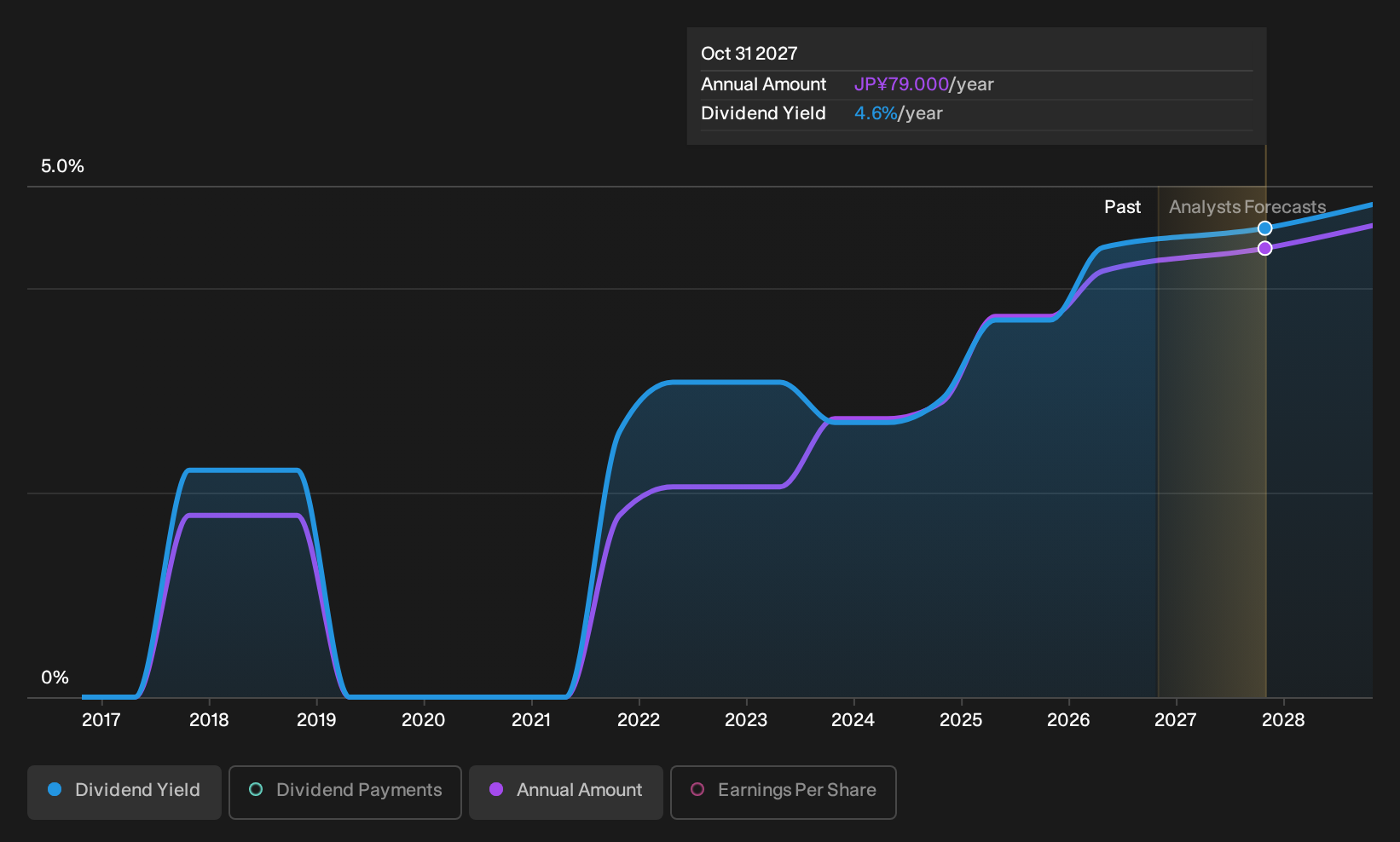
The company's next dividend payment will be JP¥38.00 per share, and in the last 12 months, the company paid a total of JP¥76.00 per share. Calculating the last year's worth of payments shows that Gakujo has a trailing yield of 4.4% on the current share price of JP¥1723.00. Dividends are an important source of income to many shareholders, but the health of the business is crucial to maintaining those dividends. So we need to investigate whether Gakujo can afford its dividend, and if the dividend could grow.
If a company pays out more in dividends than it earned, then the dividend might become unsustainable - hardly an ideal situation. Gakujo paid out a comfortable 50% of its profit last year. Yet cash flows are even more important than profits for assessing a dividend, so we need to see if the company generated enough cash to pay its distribution. Over the last year it paid out 71% of its free cash flow as dividends, within the usual range for most companies.
It's positive to see that Gakujo's dividend is covered by both profits and cash flow, since this is generally a sign that the dividend is sustainable, and a lower payout ratio usually suggests a greater margin of safety before the dividend gets cut.
Check out our latest analysis for Gakujo
Click here to see how much of its profit Gakujo paid out over the last 12 months.
Have Earnings And Dividends Been Growing?
Companies with consistently growing earnings per share generally make the best dividend stocks, as they usually find it easier to grow dividends per share. If earnings decline and the company is forced to cut its dividend, investors could watch the value of their investment go up in smoke. This is why it's a relief to see Gakujo earnings per share are up 2.9% per annum over the last three years. Earnings per share growth has been slim, and the company is already paying out a majority of its earnings. While there is some room to both increase the payout ratio and reinvest in the business, generally the higher a payout ratio goes, the lower a company's prospects for future growth.
The main way most investors will assess a company's dividend prospects is by checking the historical rate of dividend growth. Since the start of our data, nine years ago, Gakujo has lifted its dividend by approximately 10% a year on average. We're glad to see dividends rising alongside earnings over a number of years, which may be a sign the company intends to share the growth with shareholders.
The Bottom Line
Should investors buy Gakujo for the upcoming dividend? Earnings per share growth has been modest, and it's interesting that Gakujo is paying out less than half of its earnings and more than half its cash flow to shareholders in the form of dividends. Overall, it's not a bad combination, but we feel that there are likely more attractive dividend prospects out there.
Curious about whether Gakujo has been able to consistently generate growth? Here's a chart of its historical revenue and earnings growth.
A common investing mistake is buying the first interesting stock you see. Here you can find a full list of high-yield dividend stocks.
Have feedback on this article? Concerned about the content? Get in touch with us directly. Alternatively, email editorial-team (at) simplywallst.com.