


EN
THC Drink Rules Put Molson Coors Stock And Alcohol Shares In Focus
THC drinks are colliding with Washington rulemaking, and the fallout could reshape how money flows across US alcohol producers long after December’s cap kicks in. A category estimated above US$1b in size now faces strict limits, while brewers and distillers lobby to protect their turf and possibly their future sales mix. This piece walks through that story and introduces three large alcohol stocks directly exposed to the same shock investors are watching unfold.
The three US alcohol producers below are just a starter pack, while the full screen flags 13 more large-cap brewers, distillers, and wine groups with equally detailed stories that are not covered in this article.
If you want to go straight to the source, head into the US Alcohol Producers screener to identify, filter, and analyze your own highest-conviction ideas from the broader universe of listed US alcohol producers.
Molson Coors Beverage (TAP)
Molson Coors Beverage fits the US Alcohol Producers theme as a large brewer whose core beer and malt portfolio keeps it tied directly to US drinking habits, while its newer beverage lines add extra angles that THC rule changes could make more valuable.
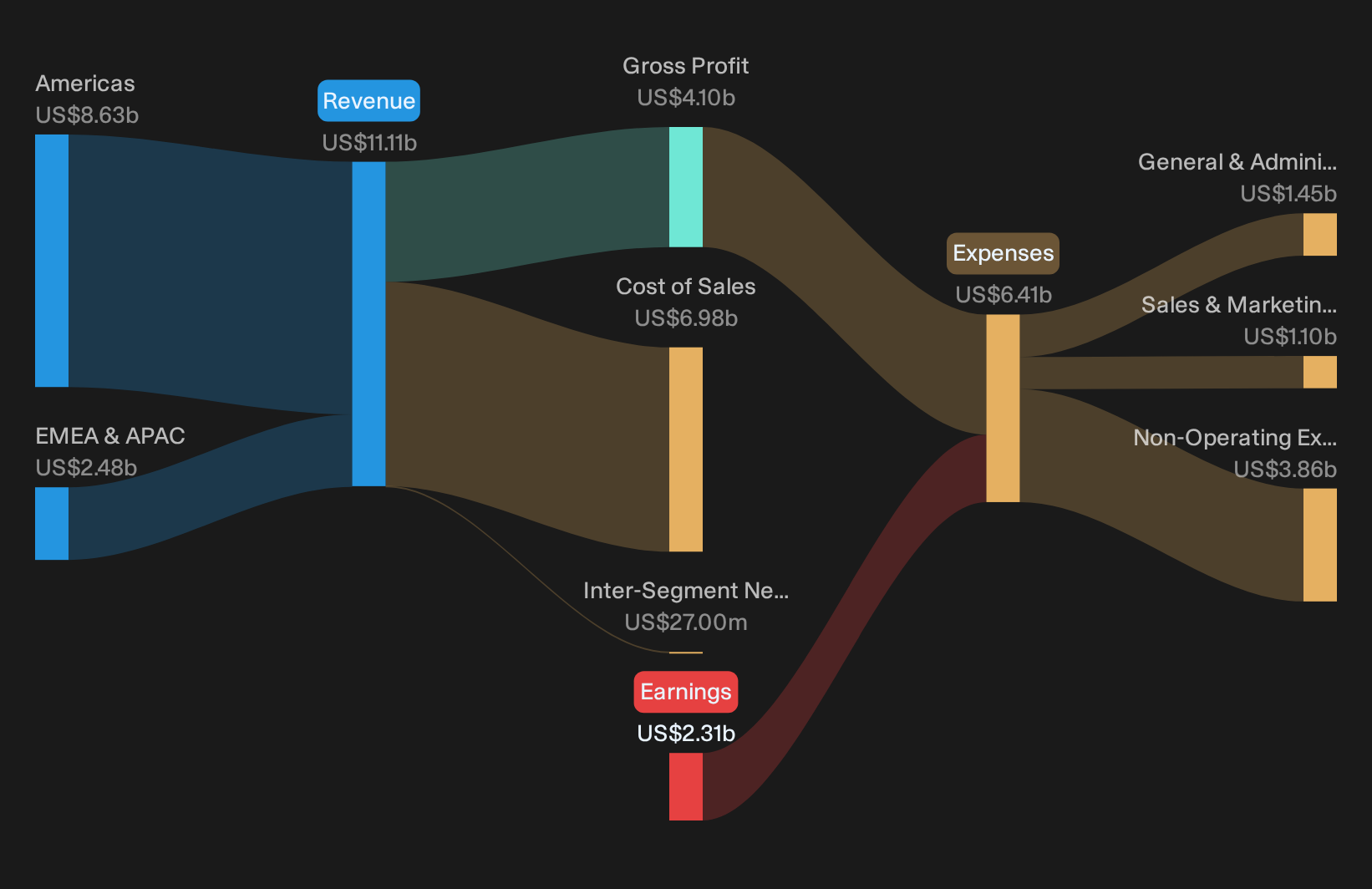
Molson Coors Beverage produces beer, flavored malt beverages, spirits, ready to drink and non alcoholic drinks worldwide, with around US$8.6b of revenue from the Americas and US$2.5b from EMEA & APAC, and a market value near US$7.8b.
"Molson Coors Beverage is pushing further into above premium, beyond beer and non alcoholic products, with beyond beer already near 10% of sales and Fever Tree and Monaco each tracking toward 1% to 2% of net sales revenue. This could shift the mix toward higher margin revenue over time."
What really matters next is how one pressure point inside the cost base interacts with that evolving product mix to shape future earnings power.
To see how that cost pressure could interact with mix shifts into above premium and beyond beer, read the full narrative for Molson Coors Beverage for what might be accelerating in the background.
Constellation Brands (STZ)
Constellation Brands is one of the larger anchors in the US Alcohol Producers theme, with a broad beer, wine, and spirits portfolio that leans directly into traditional drinking occasions just as THC beverages face tighter rules.
Constellation Brands produces, imports, markets, and sells beer, wine, and spirits across several countries, generating about US$8.5b from beer and US$716 million from wine and spirits, and carries a market value near US$23.5b.
"Constellation Brands is moving from heavy brewery buildout toward an operator mindset, and the company has already booked more than US$600 million of cost savings in procurement, logistics and operations. These savings can keep supporting net margins as further annual efficiency programs flow through earnings."
What really moves the story from here is how one stubborn cost and pricing squeeze shapes where those efficiency gains ultimately show up in earnings.
That tug of war between costs and pricing is exactly what sits behind the full narrative for Constellation Brands, where the full story tracks how those forces could be quietly accelerating or stalling earnings power.

Boston Beer Company (SAM)
Boston Beer Company plugs directly into the US Alcohol Producers theme through its Samuel Adams roots and a broad lineup of beers, hard seltzers, ciders, spirits based ready to drink drinks and other flavored beverages that compete for the same fridge and bar space as THC drinks.
Boston Beer Company produces and sells alcoholic drinks primarily in the US across retail and on premise channels, and its shares carry a market value of about US$2.0b.
For investors watching how THC rules could reshape US drinking habits, Boston Beer Company offers a pure play on beer and beyond beer products that already live in the same coolers and on the same menus as many hemp based competitors.
"Further portfolio shift toward higher priced beyond beer brands, as Sun Cruiser grows toward roughly a US$0.5b retail brand with revenue per case around 25 to 30% above Twisted Tea and strong on premise traction, could keep lifting revenue mix and gross margins."
What happens to those improving margins if a single cost pressure or volume headwind interrupts the carefully balanced shift in Boston Beer Company’s portfolio?
If that risk hits, you want to know whether Boston Beer’s margin story is merely pausing or quietly accelerating. That is exactly what the full narrative for Boston Beer Company reveals.

Seeking Alternatives Before Momentum Flies
Fresh ideas move first. The best setups often gain breakout momentum while most investors are still watching. Scan these curated lists before the crowd and act now.
- Spot resilient compounding potential before it gets fully priced by filtering for companies in the 30 resilient stocks with low risk scores that still fly under most investors’ radar.
- Chase early-cycle yield opportunities by zeroing in on the 5 dividend fortresses that combine hefty income potential with disciplined balance sheets while it still matters.
- Track under the radar growth stories riding AI adoption by focusing on the 39 profitable AI stocks that aren't just burning cash before that momentum gets fully caught in the headlines.
Have feedback on this article? Concerned about the content? Get in touch with us directly. Alternatively, email editorial-team@simplywallst.com