


EN
What Investors Overlooked Before Indian Energy Exchange Slid
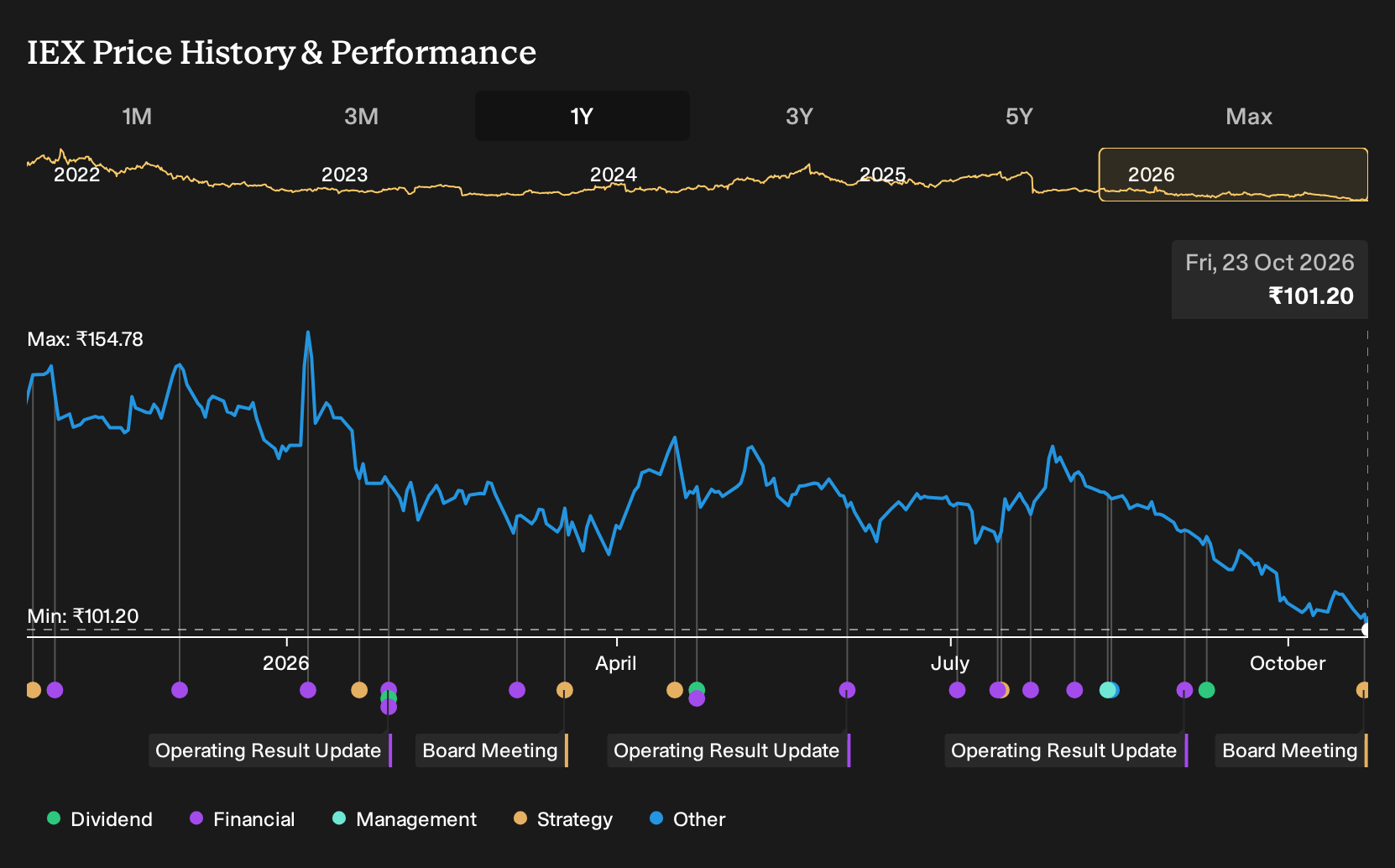
Indian Energy Exchange entered this period with regulators pushing toward mandatory market coupling and analysts split between growth stories and margin pressure concerns. For Indian Energy Exchange shareholders, the loss over the past year was 29.3%, including dividends. That result sits alongside fresh quarterly numbers showing higher revenue, higher profit, and a slightly stronger net margin. If you had bought on the back of that earlier optimism, what exactly did you think would matter most for this business?
If the move has made Indian Energy Exchange harder to judge, start where the gap is still open and scan 192 high quality undervalued stocks.
The Two Stories Investors Were Really Arguing About
The shares cost ₹145 at the start of the period, and anyone looking at Indian Energy Exchange then was effectively choosing between two very different but plausible stories.
On the optimistic side, the bull camp saw a Fair Value of ₹161. This was a price implied by its own assumptions, built on India’s energy transition and an assumed 6% annual power demand increase through 2032, which would feed more trading on the platform.
The cautious camp pointed to a Fair Value of ₹99. This was again just an output of its scenario, centred on mandatory market coupling eroding IEX’s price discovery advantage and putting sustained pressure on fees and earnings stability.
What The Results Changed For Indian Energy Exchange
The clearest fresh fact was financial. Indian Energy Exchange reported Q1 2027 revenue of ₹2,028.094m and net income of ₹1,347.567m, with net margin at 66.4% versus 65.5% a year earlier. Higher revenue, higher profit and a slightly stronger margin all leaned toward the optimistic volume and profitability story, although only over a single quarter.
The key lesson is about what you choose to monitor. The whole argument hinged on whether Indian Energy Exchange could defend profitability as rules evolved. For a different stock, track net margin and segment revenue against each side’s claims before trusting any long term narrative.
What You Would Be Paying For In Indian Energy Exchange Today
Indian Energy Exchange now trades at ₹101, down 29.3% over the past year, while the selected Narrative’s Fair Value sits above that level based on its own assumptions.
The thesis rests on multi commodity breadth and fee rich products. For the fall to appear as an opportunity rather than a warning, a buyer would need confidence that policy and product expansion really convert into sustained, high exchange volumes.
"The refreshed thesis on Indian Energy Exchange shifts the focus from broad volume and market share expectations to a more specific view that future growth potential is tied to new product verticals, fee rich environmental markets, and tighter cost control supported by deeper client integration and technology."
One Narrative has put a figure on that disagreement. → See the Narrative with its higher Fair Value, assumptions and all
Looking One Step Beyond IEX
Indian Energy Exchange lives on transaction flow. Every trade is a small toll.
Payment networks work on a similar idea, with each swipe or online checkout carrying a tiny fee.
One global operator has built that into a broad platform, helping banks and merchants move money, fight fraud, and analyse spending.
The link is simple. If you like toll-bridge economics at Indian Energy Exchange, you might study how that payments toll model scales worldwide.
That argument has a Narrative and a number behind it. → See the company one Narrative values 20% above its price
Have feedback on this article? Concerned about the content? Get in touch with us directly. Alternatively, email editorial-team@simplywallst.com