


EN
The Bet RS Group Holders Made
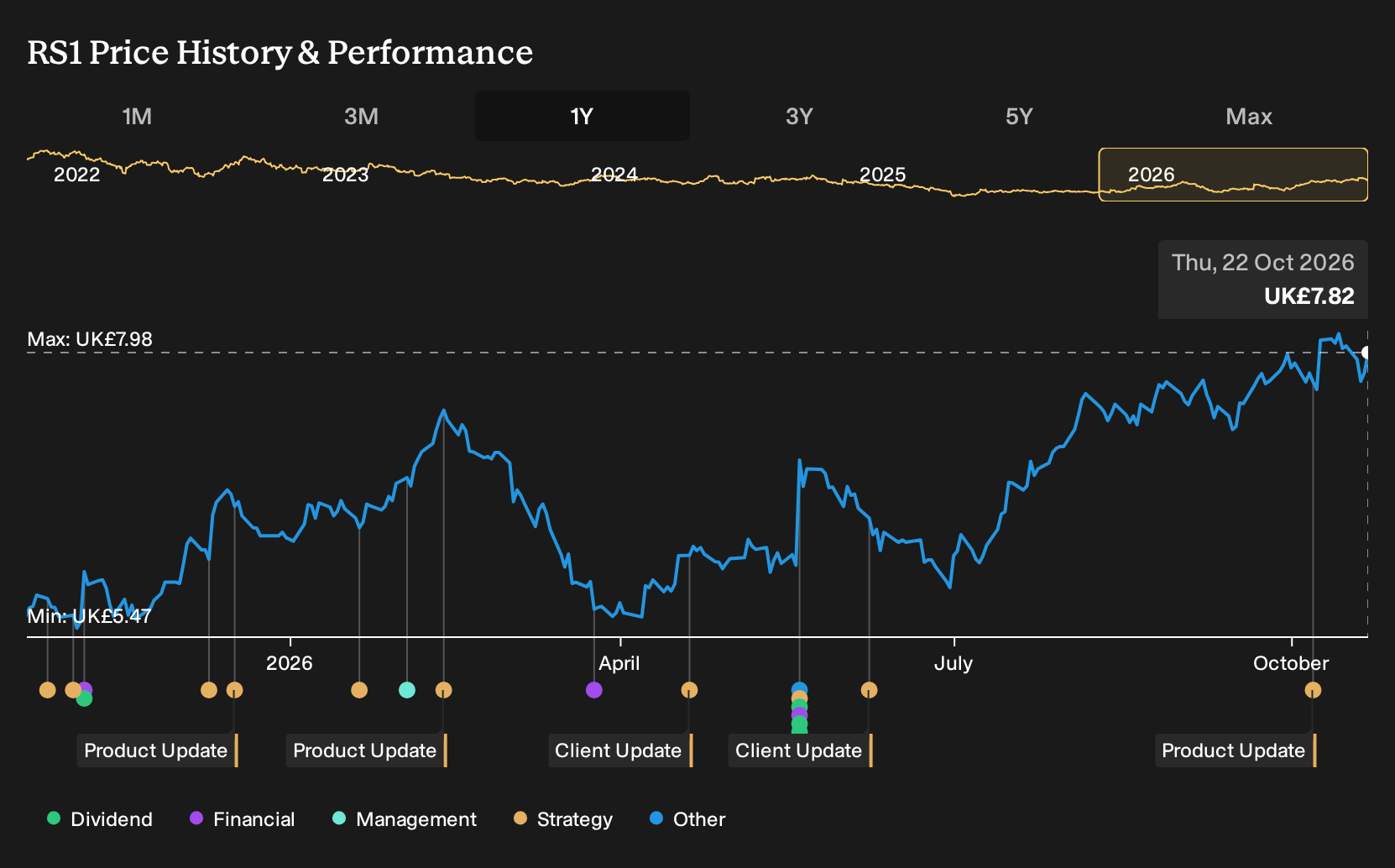
If you only glanced at RS Group’s slightly higher net margin and modestly stronger profit in the latest half year, the share price outcome might come as a surprise. Holding RS Group over the past year would have returned 43.6%, including dividends. If you had been weighing the bullish digital commerce story against fears of margin pressure back in October 2025, what exactly in the record would have justified taking that risk?
RS Group has already moved. Pinpoint other ways to investigate the theme among 95 robotics and automation stocks.
The Two RS Group Stories Investors Had To Weigh
The shares cost £5.64 at the start of the period, and you had to decide which RS Group story felt more realistic.
The optimistic narrative pointed to a Fair Value of £7. This was a rough guide to what that scenario implied for the share price, built on Distrelec integration, AI-powered digital commerce and RS PRO expansion supporting higher margins and operating leverage.
The cautious view anchored on a Fair Value of £4.8 and highlighted the risk that digital procurement, direct sales from manufacturers and rising tech and compliance costs would squeeze the traditional distribution model and compress margins.
What The RS Group Results Actually Tested
The clearest fresh fact was RS Group’s reported performance. Revenue reached £1,478.3m in H2 2026 versus £1,462.3m in H2 2025, while net income moved from £75.3m to £79m. Net margin shifted from 5.1% to 5.3%. That pattern offered some support to the optimistic profitability story, although the modest changes meant the cautious case on margin pressure was not settled.
The useful takeaway is simple. When a story hinges on higher profitability, focus on net margin and absolute earnings in later filings, and test whether they move in the direction the original thesis required.
What RS Group's Price Already Builds In
RS Group now trades at £7.82, well above the level where this Narrative’s Fair Value estimate sits, according to the selected Narrative. The gap reflects a view that the market already credits a lot of success to the digital commerce and RS PRO story.
The Narrative’s core question is whether RS Group can turn higher technology spending, own brand growth and solutions work into lasting margin gains. A buyer at today’s price is effectively assuming that digital conversion, mix shift and cost efficiency all land. That raises the question of how this squares with the risk that heavier OpEx keeps earnings tight.
"The main requirement is that RS Group converts its digital, RS PRO and solutions push into sustained like-for-like revenue growth and higher margins while absorbing ongoing technology and OpEx investment. The numbers imply the share price already factors in successful execution on digital growth, mix shift and cost reduction, leaving limited room for disappointment if cyclical end markets or self-chosen investment spend weigh on earnings."
Not everyone reads the same price the same way. → See the lower figure this Narrative lands on, and how it gets there
RS Group And The Power Behind It
You have looked at RS Group’s digital and automation angle. There is another piece of essential infrastructure one step away.
All those robots, drives and control systems ultimately need dependable electricity. Data-heavy factories and warehouses rely on grids that can handle far higher, less predictable demand.
Another industrial player focuses on building and upgrading the turbines, transformers and grid gear that keep that power flowing.
Its long service relationships and grid software tie it tightly to customers’ energy systems.
The open question is how your automation thesis changes when electricity itself becomes the scarce asset.
The case is on the record, with the assumptions it rests on. → See the Narrative that values this company 53% above its price
Have feedback on this article? Concerned about the content? Get in touch with us directly. Alternatively, email editorial-team@simplywallst.com