
- PRICING
- LIVE QUOTES
- LEARN
- HELP


EN
Netflix Cut Its 2026 Ad Forecast by $300 Million. Don’t Hit the Exit Just Yet.
Netflix's (NFLX) advertising business was on track to rake in $3 billion this year, but the company is now dialing back its target to $2.7 billion for reasons that might surprise investors. This unexpected twist comes as Netflix focuses on upgrading the technology powering its ad platform, a move that could unlock even greater growth in the future. At first, a lower advertising forecast might look like bad news for Netflix stock, which fell 5.3% yesterday as investors reacted to the setback. Advertising is expected to be one of its next big growth drivers. However, the company’s third quarter revealed an entirely different story.
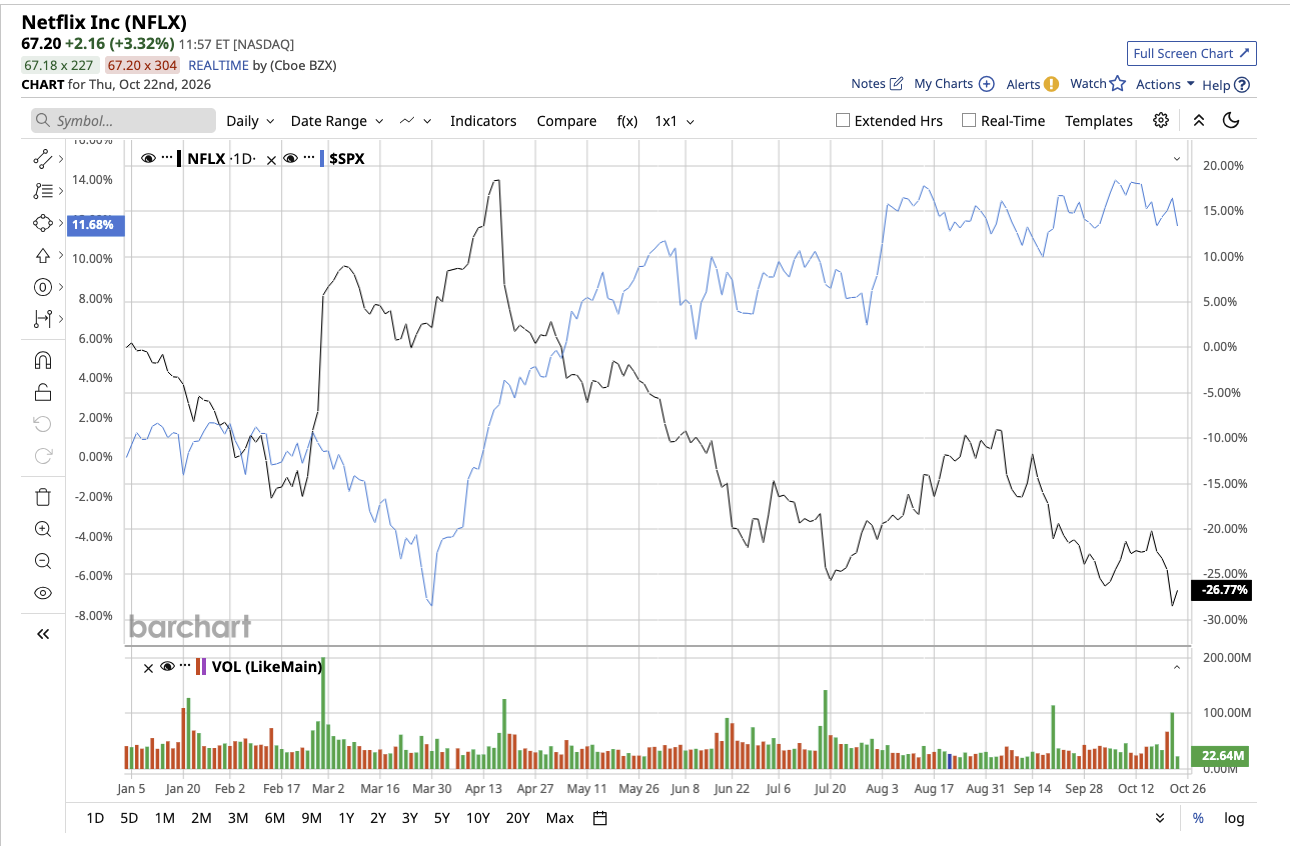
NFLX stock is down 28.5% so far this year, but here’s why you should not give up on it yet.
Subscription Revenue Is Doing More of the Heavy Lifting
Netflix's advertising downgrade did not derail its overall revenue outlook. Management still expects 2026 revenue of $51.1 billion, 13% growth year-over-year (YoY). Subscription revenue has performed better than anticipated, helping offset the slower advertising rollout. Despite the market’s reaction, the company did not report a collapse in advertising demand but just a delay in bringing new advertising capabilities to market.
And Netflix’s third-quarter earnings show its ability to handle this setback. Revenue increased 12% YoY to $12.9 billion, while operating income climbed 37% to $4.5 billion. Operating margin reached 34.6%, up from 28.2% a year ago, and earnings per share increased 49% to $0.87 from $0.59.
Netflix has an established subscription business, which remains more than capable of generating strong revenue and profits while its newer revenue stream develops.
Netflix Has Two Ways to Grow Advertising Revenue
Netflix expects its advertising revenue to grow by more than 80% in 2026, even though it lowered its forecast from $3 billion to $2.7 billion. Co-CEO Greg Peters said advertisers are still interested, but building Netflix’s own ad technology and working with outside partners is taking longer than planned. This delay could make it harder for Netflix to bring in more ad dollars, since advertisers need strong tools to reach audiences and track campaign performance.
Netflix can grow its advertising business in two main ways. First, it can do it by adding more users to its ad-supported plan. Second, it can increase revenue per member through better ad targeting, measurement, and sales. Currently, revenue per ad-supported member is still lower than for the ad-free plan, but management said the gap is narrowing. Netflix also wants to launch its advertising tier in 15 more countries in 2027, which could help it reach more viewers and attract more advertisers. The real test lies in whether these efforts will spark a surge in advertising revenue.
Q4 Will Test the Endurance of Its Core Business
Netflix expects Q4 revenue to reach $13.4 billion, up 12% YoY. Management plans to drive future revenue by expanding the subscriber base, adjusting subscription fees, and growing its advertising business. The company still expects more than 80% advertising growth in 2026. This forecast shows that Netflix still expects strong growth even as it deals with advertising delays.
The streaming giant expects its operating margin to fall slightly to 26%, down from 24.5% in the same period last year, mainly because of the recent workforce reductions. However, management forecasts a full-year operating margin of 31.5%, an increase from 29.5% in 2025. CFO Spence Neumann said the company is on track to grow revenue by double digits, increase profit margins, and generate more free cash flow in 2027. However, he did not share a specific forecast. Investors will need to wait for the Q4 earnings report to learn how much growth the company expects from subscriptions and advertising.
Don't Give Up on NFLX Stock Yet
For now, Netflix's core business is giving it breathing room. Even though the advertising forecast is lower, management hasn’t cut its full-year revenue target. Nonetheless, Netflix needs to show real results from its advertising plans and whether it can monetize its growing audience as effectively as it expects.
Investors might consider holding on to NFLX stock rather than rushing for the exit. Those who still believe in Netflix’s long-term growth story should watch its Q4 earnings to check whether subscription strength can offset the advertising slowdown before making their next move.
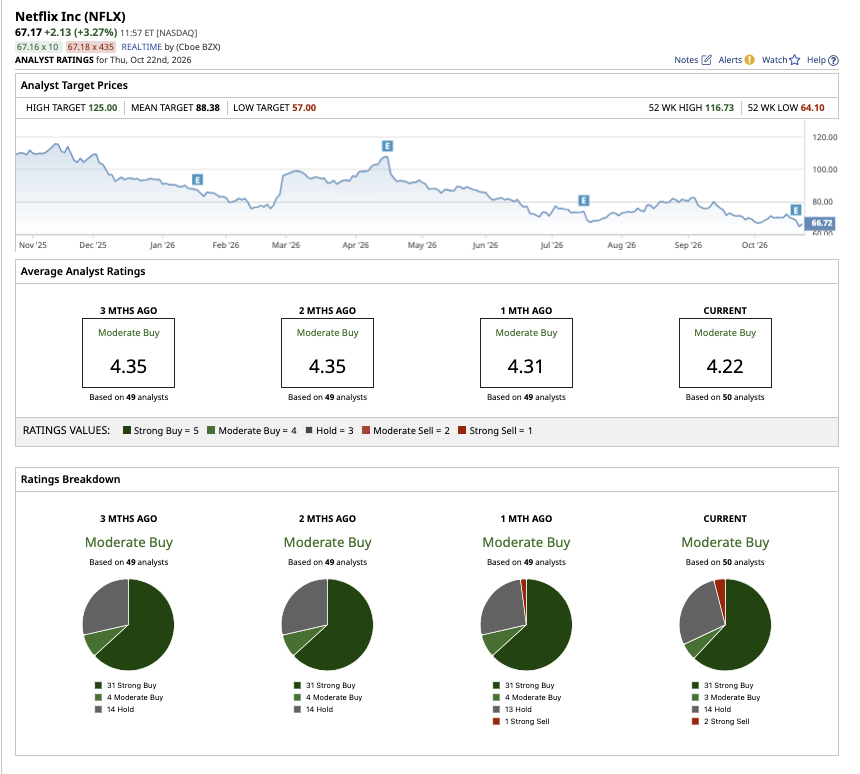
Analysts have not abandoned Netflix's long-term story. However, the company’s third-quarter 2026 results have made them more cautious. The main concern isn't that Netflix has stopped growing, but that future growth may be slower than investors hoped. Analysts are moderately bullish about NFLX stock. Of the 50 analysts covering the stock, 31 rate it a “Strong Buy,” three say it is a “Moderate Buy,” 14 rate it a “Hold,” and two say it is a “Strong Sell.” The average target price of the stock sits at $88.38, which is 31.6% above current levels. Plus, the Street-high estimate of $125 suggests a 86% upside.
On the date of publication, Sushree Mohanty did not have (either directly or indirectly) positions in any of the securities mentioned in this article. All information and data in this article is solely for informational purposes. For more information please view the Barchart Disclosure Policy here.