
- PRICING
- LIVE QUOTES
- LEARN
- HELP


EN
How Digital Assets Leadership At Standard Chartered (LSE:STAN) Has Changed Its Investment Story
- Standard Chartered has reshaped its leadership with Margaret Harwood-Jones becoming CEO, UK & Europe, while Ying Ying Tan steps up as Global Head of Securities Services and Global Head of Digital Assets, both roles effective from 15 October 2026.
- The consolidation of securities services and digital assets under Ying Ying Tan links custody, tokenisation and trading with the bank’s transaction services franchise, which could influence how Standard Chartered allocates capital, prioritises technology spend and manages operational complexity across traditional and digital markets.
- We now consider how Standard Chartered's investment narrative could be affected by concentrating digital assets leadership under Ying Ying Tan.
Scan how Standard Chartered’s leadership reshuffle compares with peers by weighing it up against 5 high quality undiscovered gems that could be quietly repositioning for the same traditional and digital finance crossover.
Standard Chartered Investment Narrative Recap
To own Standard Chartered, you need to be comfortable with a bank that leans heavily on Asia and emerging markets while trying to push deeper into digital finance. The short term hinge is still earnings delivery around net interest income and fee businesses, especially with an earnings update due on 28 October and expectations for lower year on year profit despite higher revenue.
The biggest near term risk remains pressure on margins and execution on large technology programs. The leadership reshuffle around UK and Europe, securities services and digital assets looks important for long run positioning but does not materially change the immediate earnings catalyst or the existing risk profile around costs and credit.
The most relevant announcement here is Ying Ying Tan taking on the combined roles of Global Head of Securities Services and Global Head of Digital Assets. That move pulls together custody, fund services, clearing and tokenisation under one operational umbrella, which directly touches some of Standard Chartered's key fee pools and its digital asset build out.
For you as an investor, the question is whether this consolidation improves execution on the existing digital and transaction banking agenda or simply adds complexity. It could affect how efficiently the bank deploys technology spend and manages operational risk around new products, which links back to the core catalysts of cost control, digital income growth and the risk of delays in big transformation projects.
Standard Chartered's current analyst narrative points to revenue of US$26.2b and earnings of US$7.1b by 2029, built on assumed yearly top line expansion of 8.0% and an earnings step up of about US$2.2b from US$4.9b today.
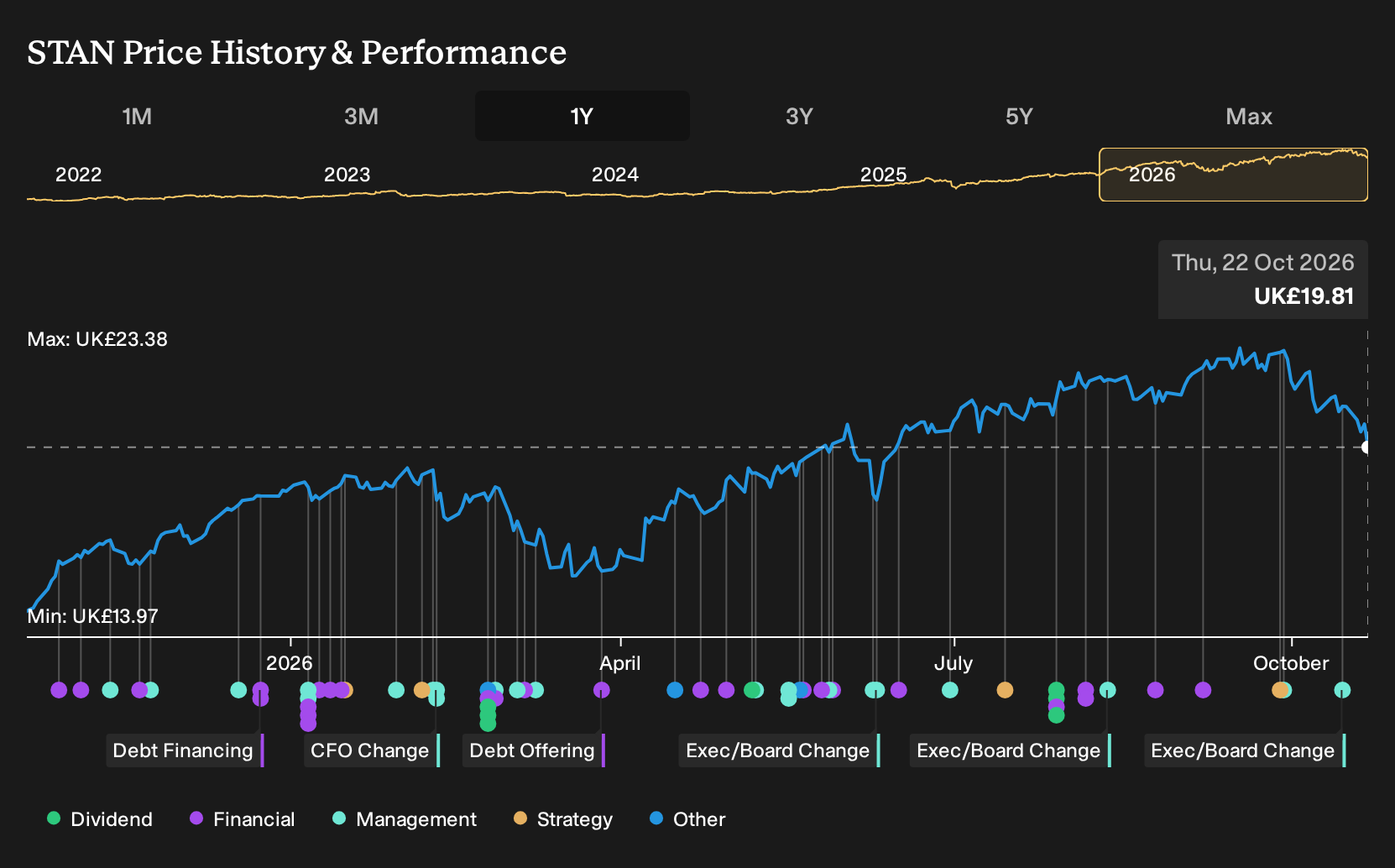
Uncover why Standard Chartered's fair value indicates a 24% potential upside to its current price before other investors start closing that gap.
Exploring Other Perspectives
One alternative angle focuses on execution risk rather than growth potential. The most cautious analysts already saw heavy spending on digital assets and AI at Standard Chartered as a margin drag, with revenue assumptions around US$26.0b and earnings near US$6.7b by 2029. This leadership shift could prompt those expectations to move again, in either direction. It therefore helps to look at several viewpoints before deciding what you think.
Explore another Standard Chartered fair value estimate, including one that suggests it could be worth just £24.50!
The Verdict Is Yours
Disagree with existing narratives? Extraordinary investment returns rarely come from following the herd, so go with your instincts.
- A great starting point for your Standard Chartered research is our analysis highlighting 3 key rewards and 3 important warning signs that could impact your investment decision.
- See our latest analysis for Standard Chartered. The report includes a comprehensive fundamental analysis summarized in a single visual, the Snowflake. This makes it easy to evaluate Standard Chartered's overall financial health at a glance.
Looking For More Investment Ideas Beyond Standard Chartered?
Once you have formed a view on Standard Chartered, it helps to widen the lens and compare it with other potential opportunities that fit different risk and return profiles. The Simply Wall St Screener lets you do that quickly by zeroing in on the specific traits you care about most.
- If capital preservation sits high on your list, start with companies that screen well on resilience and stability using the 4 resilient stocks with low risk scores.
- For investors who care about balance sheet strength and solid fundamentals, filter for robust financial positions with the list of solid balance sheet and fundamentals (9 results).
- Income focused investors can focus on steady cash returns by scanning for high yielding opportunities through the 4 dividend fortresses.
Have feedback on this article? Concerned about the content? Get in touch with us directly. Alternatively, email editorial-team@simplywallst.com