
- PRICING
- LIVE QUOTES
- LEARN
- HELP


EN
US Stock Market Today: S&P 500 Futures Slip On Weak Housing And Consumer Strain
The Morning Bull - US Market Morning Update Thursday, Oct, 22 2026
US stocks are set for a softer open, with futures pointing lower as housing signals weigh on sentiment. The key driver is fresh data showing another drop in US mortgage activity, which keeps the spotlight firmly on consumer resilience.
The average 30 year fixed mortgage rate eased to 7.41% for the week to October 16, the first pullback in 11 weeks. Even with that relief, total mortgage applications declined 5.3%, marking a seventh straight weekly fall and reinforcing a cautious tone around household demand.
Higher borrowing costs, even with a small rate dip, tend to curb refinancing and new purchase activity. That pressure often feeds through to construction, home related spending and parts of consumer credit, which can soften revenue expectations for companies tied to discretionary demand.
The open now hinges on a simple question: Does today’s modest rate relief mark the start of a more meaningful funding improvement, or do upcoming US jobless claims and PMI data confirm that tight financial conditions are still squeezing the consumer?
Stocks to Watch Before the Opening Bell
Alibaba Group Holding (BABA)
Alibaba Group Holding dropped 3.9% after Chinese regulators summoned major e commerce platforms and pushed for tighter product quality standards and stronger consumer protection. That meeting highlighted ongoing policy scrutiny of large internet platforms in China. Short term focus stays on whether any follow up rules change compliance costs or seller behavior on Alibaba’s marketplaces.
Tesla (TSLA)
Tesla is in focus after reports that it and Nvidia plan to invest a combined US$2.80b in Samsung Electro Mechanics to expand output of advanced semiconductor substrates. These materials support AI processors and high speed networking gear. For Tesla, the key question is how deeper access to cutting edge packaging technology feeds into its own computing and autonomous driving ambitions.
Southwest Airlines (LUV)
Southwest Airlines posted record Q3 2026 operating revenue and all time high unit revenue while also reporting margin expansion despite higher fuel costs. Management issued guidance for the current quarter and full year and outlined plans for a new Southwest Icon Lounge network starting in 2027. A Capital Markets Day on March 2, 2027, will update investors on its multi year financial framework.
Top Movers
- Skydance (SKYD) jumped 10.85% after John Malone flagged a potential multibillion dollar SpaceX partnership and content deal.
- Super Micro Computer (SMCI) gained 9.55% as raised revenue guidance and the new NVIDIA Vera CPU rack underscored strong AI demand.
- Zscaler (ZS) rose 7.84% after upbeat commentary on cybersecurity spend and AI related Zero Trust opportunities.

Top Losers
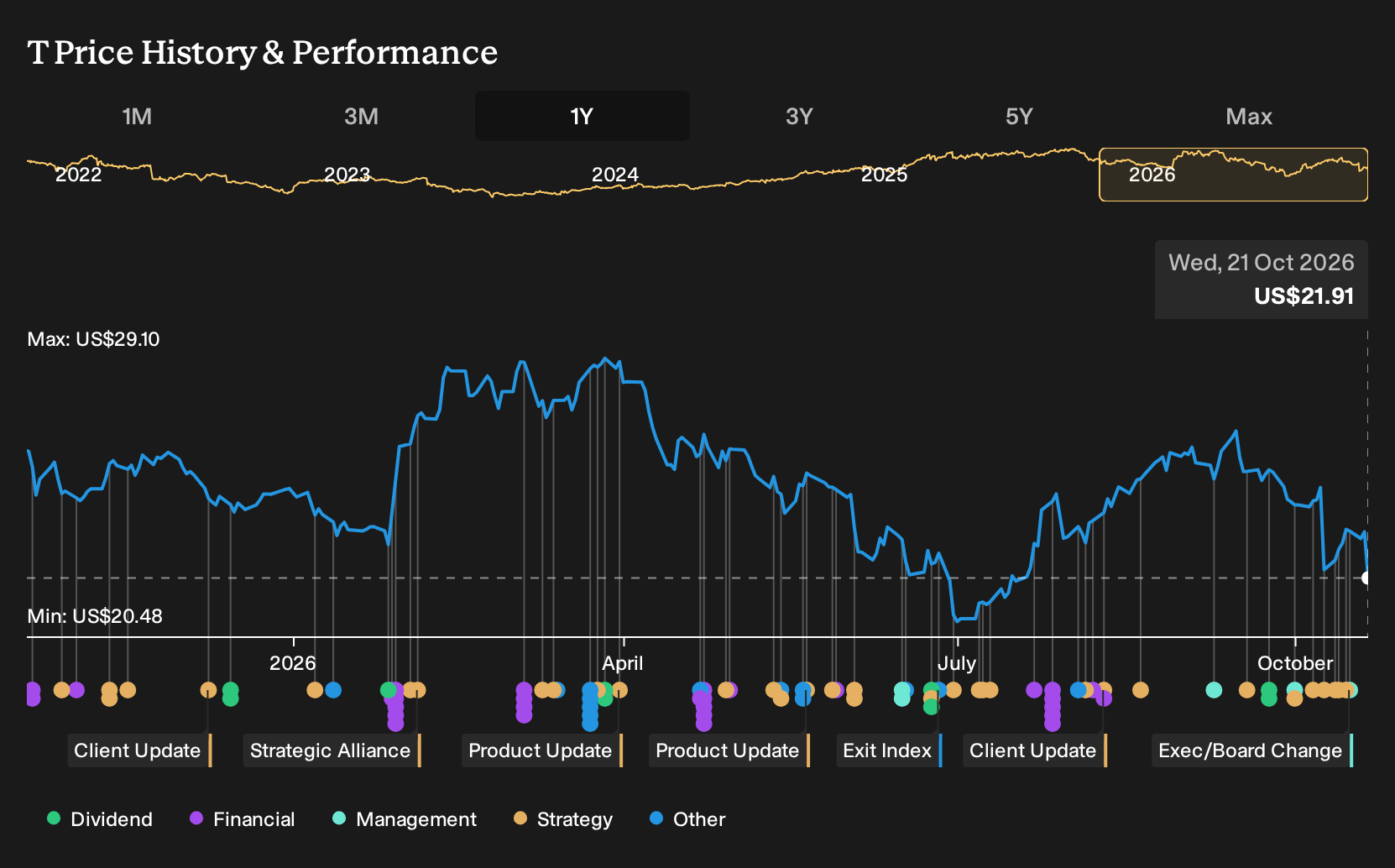
- AT&T (T) fell 6.45% as traders reacted to solid revenue, weaker postpaid phone additions, and softer profitability.
- Netflix (NFLX) declined 5.31% after a weak Q4 outlook, a lower 2026 ad forecast, a leadership shake up, and analyst downgrades.
- Expedia Group (EXPE) declined 5.03% as investors weighed concerns about growth, marketing efficiency, and competitive pressure on future earnings.
On The Radar
US markets are staring at a tight cluster of jobs, housing and inflation signals just ahead of a major Fed decision and a heavy stretch of mega cap earnings.
- US Initial Jobless Claims, Thu 22 Oct. The prior weekly reading was 199K with a 200K consensus this time. A figure meaningfully above that mark would point to softer hiring that can ease wage pressure and rate hike expectations.
- US S&P Global PMIs, Fri 23 Oct. Manufacturing and services flash readings for October follow prior prints of 55.9 and 58.8. Any clear break below those levels would flag cooler business activity that can pressure cyclical stocks while supporting bond demand.
- US Michigan Consumer Sentiment, Fri 23 Oct. The last reading was 48.1 with a 46.3 forecast. A stronger print would suggest households are still willing to spend despite higher mortgage costs, supporting earnings at broad consumer facing companies.
- Fed Interest Rate Decision, Wed 28 Oct. The policy rate currently sits at 4% with consensus for no change. This keeps attention on any guidance around how long borrowing costs stay elevated and what that implies for credit, housing and equity valuations.
- US GDP and PCE Inflation Pack, Thu 29 Oct. Q3 GDP growth is forecast at 3.1% and core PCE for September at 0.3% month on month. Readings above those levels would point to firmer demand that can keep Fed policy tighter for longer.
Sector & Industry Watch
Energy & Oil and Gas: Tight supply theme still in play
Energy and Oil and Gas have edged higher over the past week on top of strong 30 day and 1 year gains. A 3.061 million barrel weekly drop in US crude inventories points to a firmer supply and demand balance, which often supports cash generation for producers and pipeline groups.
If you hold energy ETFs or integrated companies, the next US crude and product inventory reports are the key check on whether this tighter backdrop is still holding.
Real Estate: Mortgage relief, but buyers still cautious
Real Estate is modestly up over seven days but weaker over the past month, which fits short rallies inside a tougher rate backdrop. The 30 year US mortgage rate ticked down to 7.41% for the week to October 16, although mortgage applications still fell 5.3% and have declined for seven straight weeks.
For REITs and home related holdings, today’s US initial jobless claims near the 200K consensus matter because any move in Treasury yields feeds straight into commercial and residential borrowing costs.
Tech & Semiconductors: AI demand strong, capex questions louder
Tech is slightly lower over the last week after a strong year to date run, and Semiconductors show a similar small weekly dip against very strong 1 year numbers. Headlines around Nvidia, CoreWeave and Lam Research underline how much current chip and hardware demand relies on financed AI data center buildouts.
If your portfolio leans on broad Tech or chip ETFs, focus on what Mega Cap earnings say about AI capex plans, since any pullback in data center spending can flow quickly into semiconductor and server order books.
Healthcare & Pharmaceuticals & Biotech: Trial news and deals keep money flowing
Healthcare has gained about 3.2% over the past seven days with solid 1 year performance, while Pharmaceuticals & Biotech are ahead roughly 3.6% for the week and strong on a 1 year view. Fresh drug trial updates, M&A such as Cencora’s US$2.4b deal for American Oncology Network, and new approvals from companies like Edwards Lifesciences and Merck keep attention on pipelines and products rather than day to day consumer demand.
Investors using Healthcare as a stabiliser should watch upcoming US PCE inflation, since a stickier reading can extend higher rate expectations and keep demand for sectors where earnings feel less tied to the economic cycle.
Consumer Discretionary & Automobiles: Short term bounce meets high rate reality
Consumer Discretionary is up about 2.6% over seven days while still down year to date and over 1 year, and Automobiles show a similar pattern with roughly a 4.0% weekly gain against weaker longer term returns. Tesla related headlines around Cybercabs, the Semi truck ramp, and new AI chip and substrate plans sit beside pressure from high borrowing costs and cautious household budgets.
If you own retailers, autos or travel stocks, link this sector closely to US jobless claims and Friday’s S&P Global PMIs, because any sign of softer hiring or activity lands directly on big ticket spending and credit sensitive purchases.
How To Act On Today's Market
With the 30 year US mortgage rate still at 7.41% and housing signals soft, you could start by checking this list of 31 resilient stocks with low risk scores, which aims to hold up when conditions stay tight.
Have feedback on this article? Concerned about the content? Get in touch with us directly. Alternatively, email editorial-team@simplywallst.com