
- PRICING
- LIVE QUOTES
- LEARN
- HELP


EN
As Netflix’s Slowdown Becomes More Palpable, I’m Still Not Giving Up on NFLX Stock
Netflix (NFLX) released its Q3 2026 earnings on Oct. 20, after the close of the market. The earnings and post-earnings price action were similar to what we saw in the first two quarters of the year, as Netflix beat on both the top line and the bottom line, but the forward guidance spooked investors, sending shares southward.
During its Q1 and Q2 earnings calls, Netflix did not raise annual revenue guidance despite the beat, which raised fears that the company anticipates a slowdown in the back half of the year. Now, despite a Q3 beat, it forecast annual revenues at $51.1 billion, toward the lower end of its previous guidance of $51 billion to $51.4 billion.
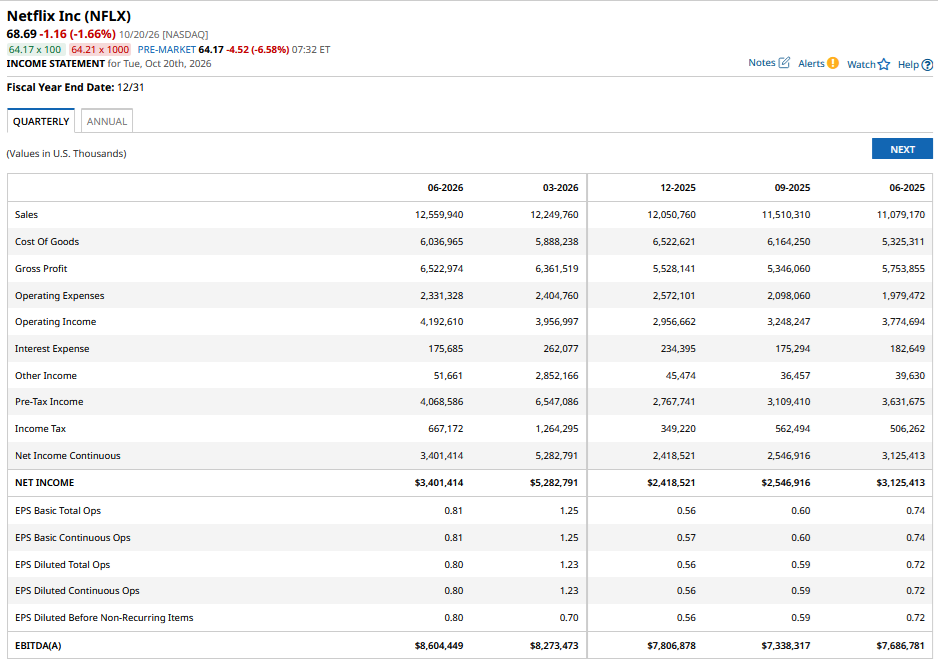
Netflix’s Revenue Growth Has Fallen to a Multi-Year Low
The company’s Q4 revenue guidance of $13.44 billion implies an 11.5% annual growth and fell short of estimates. Notably, Netflix’s revenue growth has fallen progressively each quarter this year, and its guidance implies further cooling in the final quarter. The company’s top-line growth has fallen to a three-year low despite the price hike earlier this year and incremental contribution from ad revenues.
Notably, Netflix’s ad business was growing at a stellar pace, with revenues more than doubling to $1.5 billion last year. The management previously forecast that the business is on track to double this year but has now lowered that number from $3 billion to $2.7 billion, blaming “slightly slower than expected rollout of some ad product capabilities.”
Netflix’s Slowdown Is Getting Palpable
Speaking at the recent Bloomberg's Screentime conference in Los Angeles, Netflix co-CEO Ted Sarandos warned of a slowdown and said, “Overall, we’re not growing as fast as I want us to, and we’re working on making that move faster.”
During the Q3 earnings call, Sarandos made a similar observation about the company’s U.S. business and said, “It's just not growing as fast as it could or as fast as we'd like.” While he highlighted growth in other markets like India, Japan, and Korea, the commentary over the U.S. market dampened sentiment. Not only is the U.S. the company’s biggest market, but it also has the highest average revenue per user.
Amid the slowdown, Netflix announced mass layoffs, cutting its workforce by about 6%. Among those it let go are its chief content officer, Bela Bajaria, and Dan Lin, head of films.
NFLX Sinks to 52-Week Lows
For six consecutive quarters, Netflix has fallen after the earnings release. The stock, which peaked in June 2025, is down nearly half from its record highs and fell to a fresh 52-week low yesterday.
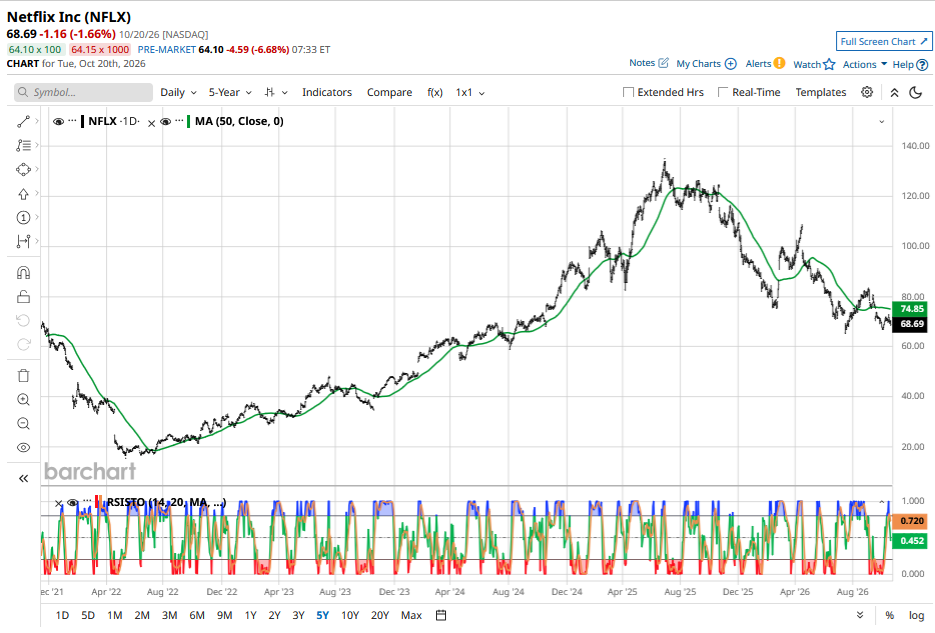
Slowdown concerns have been taking a toll on NFLX stock, and management hasn’t been able to reassure markets that the growth story remains intact despite falling engagement numbers.
How to Play NFLX Stock After the Crash?
I have been bullish on NFLX stock and have been buying the dips. My view about Netflix remains the same, and I am not giving up on the streamer despite the disappointing guidance. The company still expects to sustain double-digit revenue growth while expanding its margins and cash flows. According to Sarandos, Netflix aims to be the last service users cancel. I would add that for many, a Netflix subscription ranks quite low on the cancelation list. While Netflix’s engagement numbers have fallen, it remains a must-have for most members thanks to the enviable content library, original shows, and live events.
From a valuation perspective, Netflix trades at around 17x its expected 2027 earnings per share. The numbers look attractive, considering the double-digit revenue growth with expanding margins that Netflix aims to sustain over the foreseeable future. Overall, I remain invested in NFLX despite yet another post-earnings drawdown and won't panic sell the stock.
On the date of publication, Mohit Oberoi had a position in: NFLX . All information and data in this article is solely for informational purposes. For more information please view the Barchart Disclosure Policy here.