
- PRICING
- LIVE QUOTES
- LEARN
- HELP


EN
What Vodafone Group Holders Bought Into
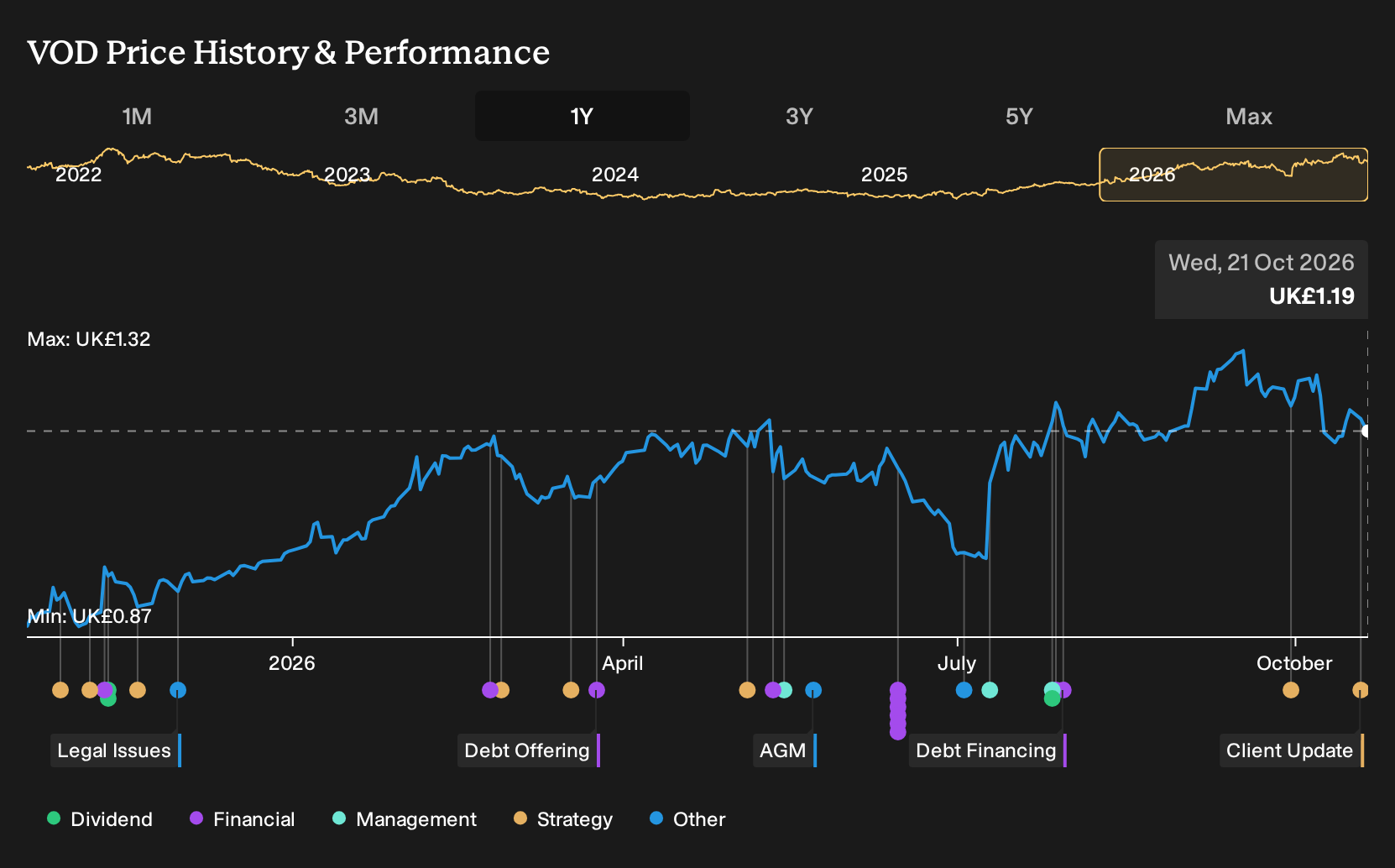
If you had bought Vodafone Group on 21 October 2025 and simply left it alone, the outcome might surprise you. Holding Vodafone Group over the past year would have returned 39.8%, including dividends. That result now sits beside a sharp split in June 2025 analyst views, from IoT and 5G optimism to worries about European regulation and legacy voice erosion. If you were weighing those opposing narratives then, which side of Vodafone’s future would have mattered most to you?
If the move has made Vodafone Group harder to judge, start where the gap is still open and scan 6 high quality undervalued stocks.
The Two Vodafone Group Stories Investors Had To Weigh
The shares cost £0.87 at the start of the period, and anyone looking at Vodafone Group then had to choose which story felt more convincing.
On the optimistic side, the bullish camp saw a Fair Value of £1.25, a price they felt the assumptions implied, based on IoT and 5G trends driving digital transformation. That view leaned on expectations for revenue to grow 6.1% a year and profit margins to move from a loss of 11.1% to a 6.7% gain by 2028.
The bearish view pointed to a Fair Value of £0.6, with falling revenue of 2.5% a year and rising European compliance costs as key concerns. In that scenario, legacy voice and SMS erosion, heavy 5G and fibre spending, and substantial debt all threatened Vodafone Group’s free cash flow.
What The Results Changed For The Vodafone Group Story
The clearest new fact for Vodafone Group came from its FY26 numbers. Revenue moved from €37,448m in H2 2025 to €40,461m in H2 2026, and the net loss narrowed, with net margin improving from a loss of 11.1% to a loss of 0.7%. That tilt in profitability supported the optimistic case, although the business was still not yet back to positive earnings.
The lesson is simple. When a bullish story leans on margin recovery, treat net margin as the key checkpoint. Track both the direction and whether the figure has actually crossed into profit before treating any turnaround story as proven at another company.
What Vodafone Group’s Price Already Assumes After A 40% Climb
Vodafone Group now trades at £1.19, after a 39.8% gain over the past year. The selected Narrative’s Fair Value sits below that level, which implies its authors see today’s quote as already baking in a lot of good news.
The argument hinges on Africa growth, VodafoneThree UK execution and German EBITDA pressure. A buyer today is effectively assuming sustained free cash flow progress, so the open question is how that assumption holds up if German pricing and TV pressures drag longer than expected.
"The main thing that has to go right is that Vodafone Group converts its portfolio reshaping, Africa growth platform, and VodafoneThree UK integration into sustained adjusted free cash flow expansion and delivery on its double digit midterm free cash flow ambition. The numbers imply that Vodafone Group's share price already reflects successful execution on UK synergies, Africa and Safaricom growth, portfolio simplification, leverage reduction, dividend progression, and improved ROIC, leaving limited room for disappointment."
One Narrative disagrees with today's price. → See where this Narrative says Vodafone Group should trade
Looking One Step Beyond Vodafone
Vodafone Group is one way to think about connectivity. You could also consider what happens when broadband demand rises in other markets.
Another large operator is leaning into fixed wireless and fibre broadband. It is trying to turn heavier data use into steadier service revenue.
Enterprise clients push a different need. They want private networks and high capacity links that can handle demanding AI workloads and long term contracts.
This peer is also working on major cost and efficiency programs. If those efforts hold together, its role in future connectivity could look very different.
That argument has a Narrative and a number behind it. → See the company one Narrative values 18% above its price
Have feedback on this article? Concerned about the content? Get in touch with us directly. Alternatively, email editorial-team@simplywallst.com