
- PRICING
- LIVE QUOTES
- LEARN
- HELP


EN
Hancock Whitney (HWC) Stock Slips Despite Q3 Earnings Margin Strength
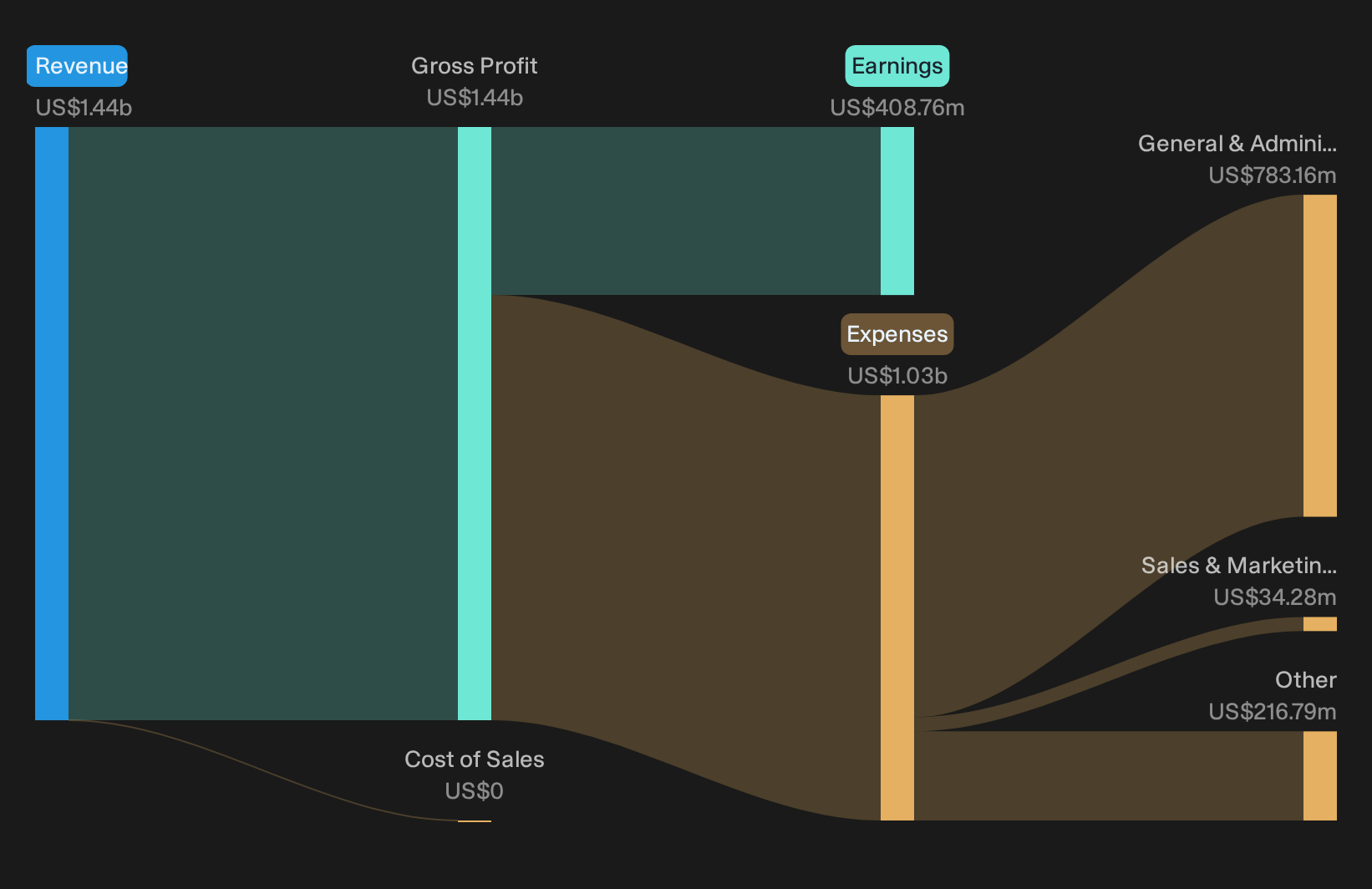
The Hancock Whitney stock slipped 2.5% to about US$72 after Q3 2026 results, even though the headline story was solid profitability. Basic earnings per share came in at US$1.37 on revenue of US$404 million, and net interest margin for the quarter printed at 3.61%. Traders reacted to the near term dip from last quarter’s earnings, while the longer horizon now depends on whether this margin profile and loan book of US$26.5b can support the multiyear earnings and valuation case investors have been building.
Love Hancock Whitney's 3.61% net interest margin but uneasy about how sensitive earnings can be to quarter by quarter shifts in that spread and a US$26.5b loan book? Benchmark it against banks screened for stronger balance sheets and consistent profitability in our list of solid balance sheet and fundamentals stocks (25 results).
Q3 2026 Earnings Summary
- Revenue (Q3 2026 vs. Q3 2025): US$404.0m vs. US$372.0m (up about 8.6%)
- Net Income (Excl. Extra Items, Q3 2026 vs. Q3 2025): US$109.8m vs. US$126.9m (down about 13.5%)
- Basic EPS (Q3 2026 vs. Q3 2025): US$1.37 vs. US$1.50 (down about 8.4%)
- Net Interest Margin (Q3 2026 vs. Q3 2025): 3.61% vs. 3.49% (up about 0.12 percentage points)
Ask Charlie what Hancock Whitney isn’t saying about its shrinking TCE.
Hancock Whitney: Bull Case Hinges On Hire Productivity
Optimists argue Hancock Whitney can convert its banker build out into durable loan and fee momentum rather than a short term bump.
"Hancock Whitney plans to continue its program of hiring revenue producing bankers, with 42 net new hires already in place by the first half of 2026 toward a goal of 50 additions for the year. This is already contributing a material share of new loan production and can support revenue and fee growth."
Q3 commentary that new bankers drove about 55% of year to date loan growth and 77% of quarterly loan expansion gives this claim hard backing. Excluding One Florida Bank, loans and deposits both rose at healthy annualized rates, while fee income held up. The validation is early but specific, not just a hiring headline.
Hancock Whitney: Bear Concerns On Efficiency And Growth Mix
The bear story focuses on whether weaker execution and efficiency scores turn banker hiring into expensive overhead instead of profitable growth.
"Loan growth relies heavily on the aggressive hiring program, including the 42 net new revenue producing bankers already added in the first half of 2026. If these hires do not continue to generate sufficient quality loan and fee business then revenue growth and earnings could fall short of expectations."
Recent external data showed sharp year over year drops in revenue and profit, plus soft efficiency rankings. Q3 helps counter that view with adjusted EPS up 17%, efficiency near 54.5% and adjusted PPNR higher, which all point to improving productivity. The slide in the share price after results shows investors still need more consistent quarters to treat this risk as reduced.
One Narrative disagrees with today's price. → See where this Narrative says Hancock Whitney should trade.
Hunt For Mispriced Earnings Power
Hancock Whitney’s mix of margin strength and share price softness shows how earnings stories and valuations can disconnect. The real opportunity is finding stocks that could be undervalued before the market adjusts its view.
- Company 1 - 34% below our estimate - uses a tight offshore vessel fleet and ongoing mergers to secure richer long-term service contracts.
- Company 2 - 33% below our estimate - shifts more of its digital customer base into secured and higher yielding credit while working to contain funding and risk costs.
- Company 3 - 26% below our estimate - scales injectable weight-loss and diabetes therapies as production capacity expands and an unapproved flagship drug moves through late-stage development.
Those are three of them. See the full list of 33 companies trading below our fair value estimates →
Have feedback on this article? Concerned about the content? Get in touch with us directly. Alternatively, email editorial-team@simplywallst.com