
- PRICING
- LIVE QUOTES
- LEARN
- HELP


EN
Dear Tesla Stock Fans, Mark Your Calendars for December 3
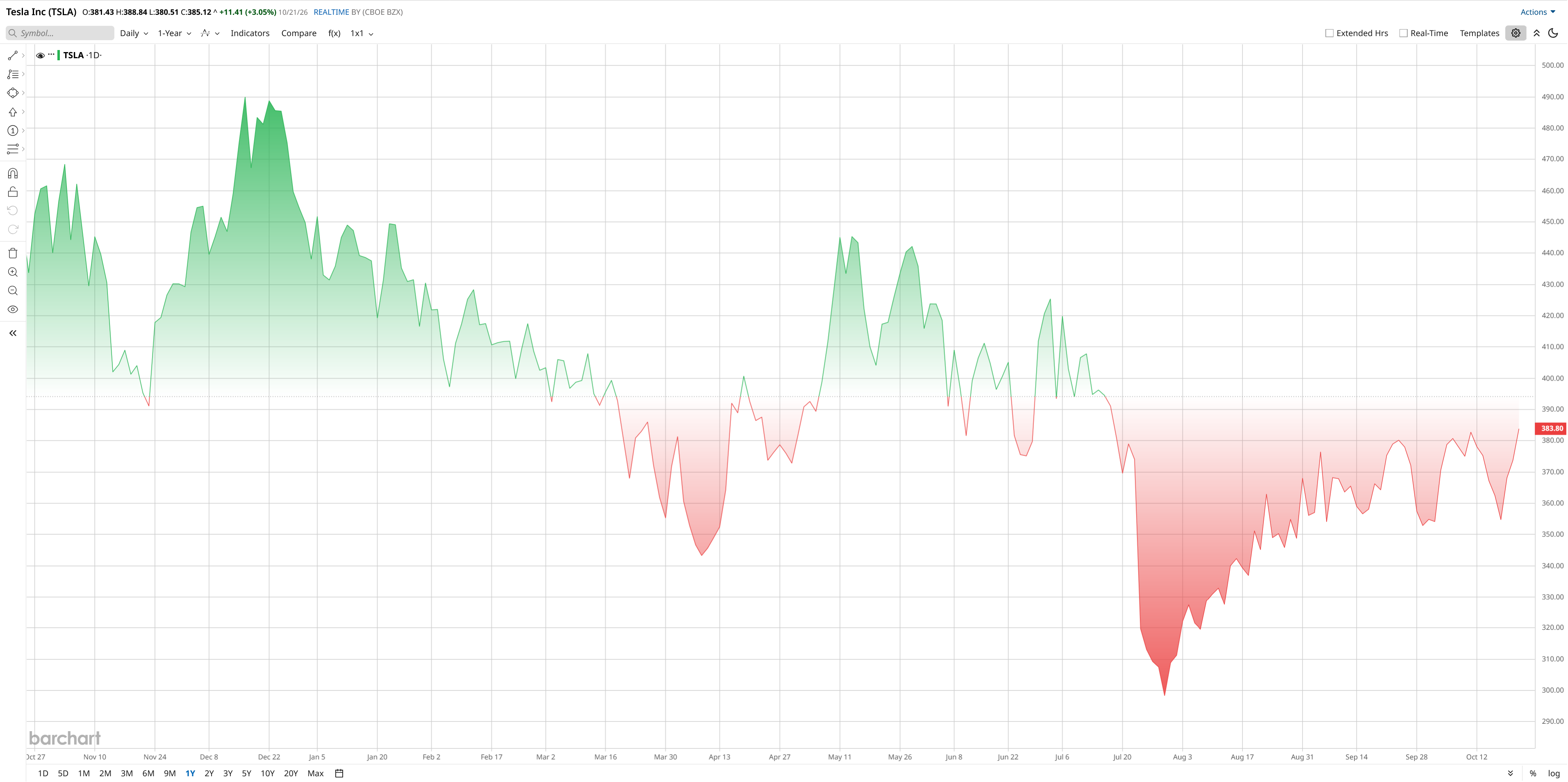
Tesla (TSLA) has quietly set its 2026 annual meeting for Dec. 3. In a recent letter, Board Chair Robyn Denholm noted Tesla has “accomplished a great deal” but is still in its early innings. She stressed the company remains focused on cost control and long‑term goals. The meeting will cover board elections for Musk, Denholm, Straubel, etc., and votes on the huge 2025 compensation plan for Elon Musk. It’s a reminder that even as Tesla pushed new industries, investors still want to steer the ship. TSLA stock slipped about 6.8% last week as broader AI stock selling hit the sector but has bounced back by almost the same amount over the past three days.
The timing matters. Tesla shares have faced pressure from concerns about electric vehicle demand, AI spending, and competition. Last week's price decrease was driven by a broader selloff across AI-related stocks weighed on sentiment. With Tesla’s third-quarter earnings scheduled for Oct. 21, investors have several catalysts to watch before the December meeting.
Why December 3 Could Matter for Tesla Stock
Tesla's annual meeting is as much a corporate event as it is anything else. Shareholders will debate various governance issues, including proposed board re-elections of Musk and Denholm as well as nominations for board positions, all via a vote.
Musk's massive compensation package is another dispute. This deal, which is structured as a multi-year achievement bonus, could potentially pay as much as $1 trillion in the company's success, depending on how stiff it sets its targets. However, the award hasn't been truly earned, and its magnitude sparks concerns of shareholder dilution, executive responsibility, and executive pay against business performance.
In Denholm's letter, he further referenced Tesla's plans to expand beyond cars. The company is making strategic investments in areas such as Artificial Intelligence, autonomous driving, and robotics, which have the potential to impact its future revenue generation if they prove to be commercial successes.
The insinuation of more synergy between Tesla and SpaceX (SPCX) has thrown in another acid bath. According to a report, Barclays has called it a “potential” deal in discussions with their annual meeting, but neither Barclays nor the other party has confirmed. Such reports are for speculative purposes only and should not be regarded as a corporate plan.
That could make it easier for the Tesla investors to know what the board values and how management plans to manage the risks from their high aspirations for expansion plans.
Deliveries, the Roadster, and Tesla’s Financial Challenges
Tesla recently reported its Q3 delivery report, which offers a mixed picture ahead of the meeting. For the third quarter, the firm sold 486,532 units, which fell by around 2.1% compared to the prior year's quarter sales of 497,099 units. Deliveries of Model 3 and Model Y totaled 478,237 vehicles, compared with 8,295 for Other Models (which include the Cybertruck, Semi, and leftover S and X models).
464,391 vehicles were produced, an increase of 34,881, and energy storage deployments totaled 12.5 gigawatt-hours, up from 13.7 gigawatt-hours a year earlier. The surge marks Tesla's expanding energy enterprise amid its continued uncertainty over car sales.
On Oct. 21, Tesla is expected to release its third-quarter earnings. Investors may want to look at three variables before the company's final meeting to determine if it's on track to realize the potential of its premium valuation: revenue, profitability, and management’s outlook.
At the same time, Tesla announced its new iteration on Oct. 15 of its Roadster. The sports car is powered by SpaceX's cold-gas propulsion system; it accelerates up to 60 miles per hour within a second, according to its specifications. Musk has said that 2028 is the intended target for production, and this vehicle is “more relevant to the brand than this is to the profitability of Tesla.”
The Roadster has the potential to boost Tesla's technology profile but isn't necessarily a game-changer for short-term profits. The broader issue here is the commercialization of its investments in several technology fields like AI, robotaxis, and robotics into profitable products or revenue.
That's the theme of Tesla's 2025 financial results. Revenue dropped roughly 3% to $94.83 billion, and net income attributable to common shareholders declined by about 46% to $3.79 billion. Free cash flow was an estimated $6.22 billion after operating cash flow of $14.75 billion and capex of $8.53 billion. Tesla closes its year with $44.06 billion in cash and cash equivalents and investments.
Without that safety net, though, Tesla would have to be more prudent about its investments in the future, and stockholders will want to see proof that those investments can make up for the declines in profitability they've seen lately.
What Wall Street Thinks About TSLA Stock
Investors are still split on how much the Texas-based carmaker stock is worth right now. The bull case revolves around robotaxis, autonomous driving, and the Optimus humanoid robots, which might create new opportunities beyond selling cars. But opportunities for those depend on execution, commercialization, and regulations.
Analysts at Morgan Stanley are getting more upbeat for the third-quarter report partly because more deliveries have been made, a testament to the strength of Tesla's Cybercab business, and in part because of continued expansion of its Cybercab fleet. They believe growth in robotaxis could be a good catalyst and are seeking more information regarding advances in autonomous driving. Barclays analysts, along with others, have speculated about the possibility of SpaceX and Tesla merging, as they both focus on similar AI goals. However, the heavy focus on AI might be more consistent with SpaceX than Tesla, and there would be significant governance and regulatory concerns.
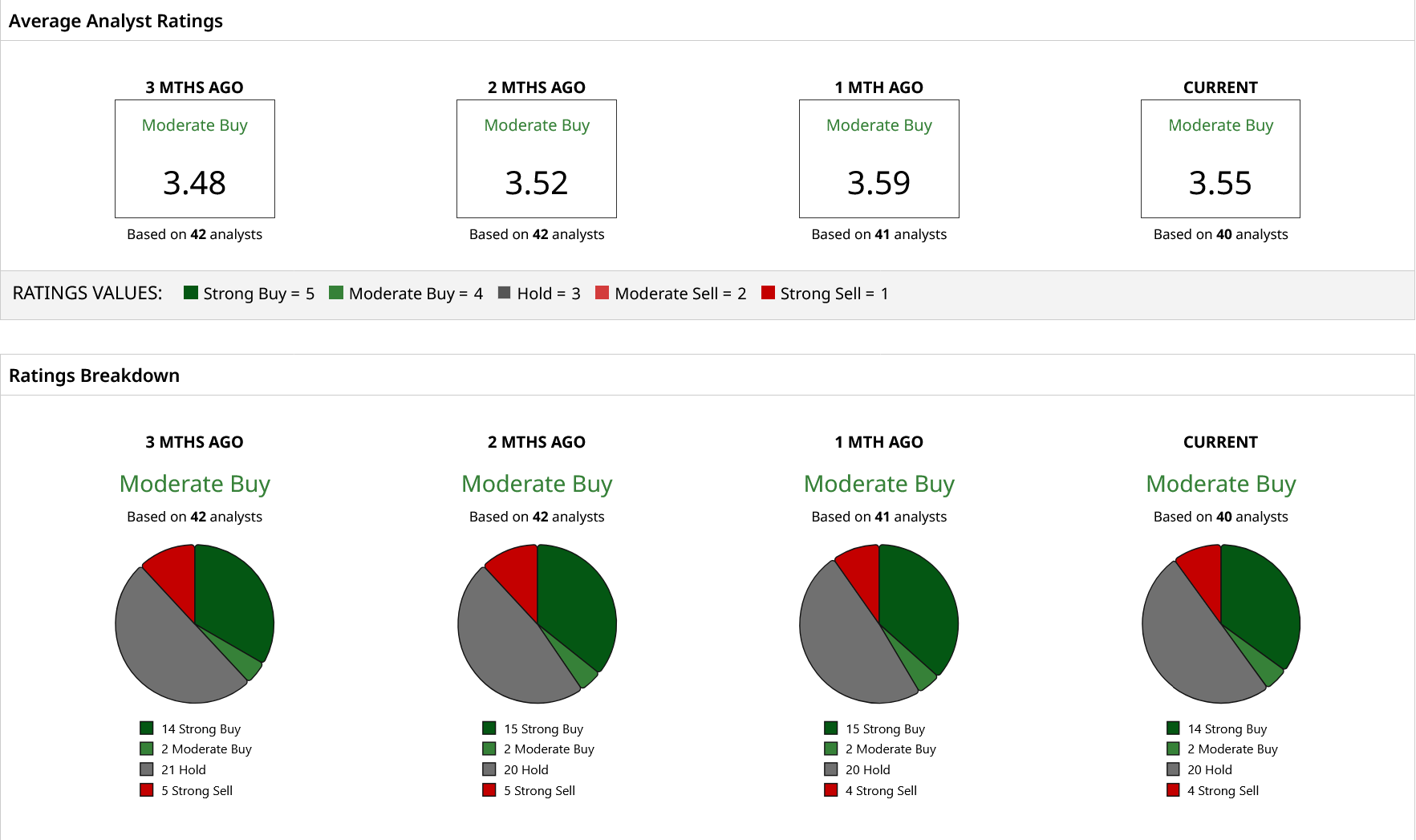
The current consensus of 40 analysts is a “Moderate Buy” rating for Wall Street. It averages about $401.36, indicating a potential of about 5% higher than a recent stock price of $384, although bulls believe AI and autonomy will become growth drivers, while skeptics await returns on such investments that will diminish instead of extend margin pressure.
Put briefly, it's possible that Dec. 3 could offer up vital tidbits of Tesla's governance and strategic goals. Yet right in the here and now, the earnings call scheduled for Oct. 21 is somewhat more likely to influence TSLA stock. For investors, the issue is whether Tesla can still generate a steady cash flow from its plans for expanded and novel technology.
On the date of publication, Nauman Khan did not have (either directly or indirectly) positions in any of the securities mentioned in this article. All information and data in this article is solely for informational purposes. For more information please view the Barchart Disclosure Policy here.