
- PRICING
- LIVE QUOTES
- LEARN
- HELP


EN
We're Keeping An Eye On Lyell Immunopharma's (NASDAQ:LYEL) Cash Burn Rate
We can readily understand why investors are attracted to unprofitable companies. For example, although software-as-a-service business Salesforce.com lost money for years while it grew recurring revenue, if you held shares since 2005, you'd have done very well indeed. But while the successes are well known, investors should not ignore the very many unprofitable companies that simply burn through all their cash and collapse.
So, the natural question for Lyell Immunopharma (NASDAQ:LYEL) shareholders is whether they should be concerned by its rate of cash burn. In this report, we will consider the company's annual negative free cash flow, henceforth referring to it as the 'cash burn'. The first step is to compare its cash burn with its cash reserves, to give us its 'cash runway'.
When Might Lyell Immunopharma Run Out Of Money?
A cash runway is defined as the length of time it would take a company to run out of money if it kept spending at its current rate of cash burn. In June 2026, Lyell Immunopharma had US$204m in cash, and was debt-free. Looking at the last year, the company burnt through US$134m. That means it had a cash runway of around 18 months as of June 2026. While that cash runway isn't too concerning, sensible holders would be peering into the distance, and considering what happens if the company runs out of cash. Depicted below, you can see how its cash holdings have changed over time.
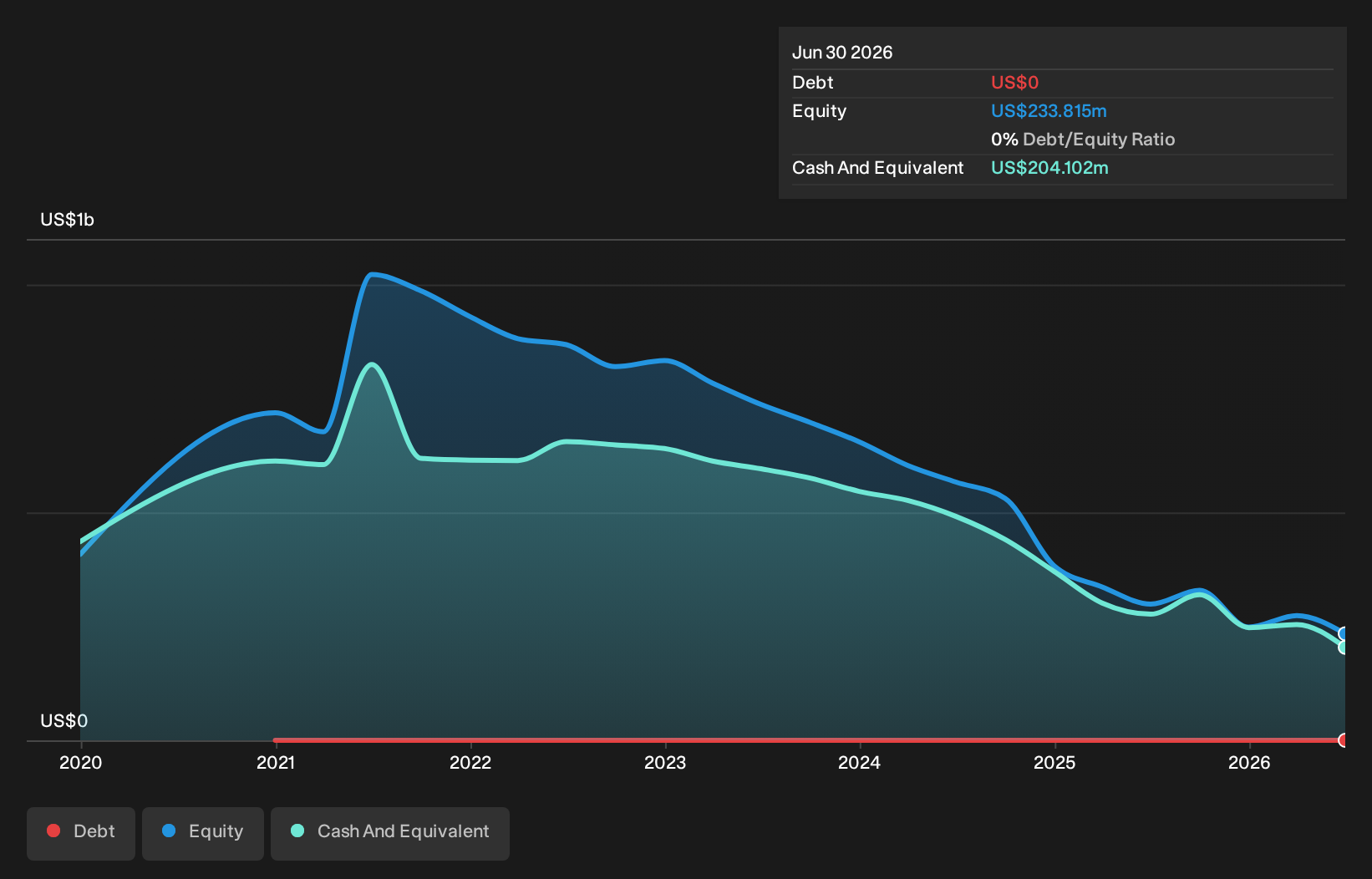
Check out our latest analysis for Lyell Immunopharma
How Is Lyell Immunopharma's Cash Burn Changing Over Time?
Whilst it's great to see that Lyell Immunopharma has already begun generating revenue from operations, last year it only produced US$27k, so we don't think it is generating significant revenue, at this point. As a result, we think it's a bit early to focus on the revenue growth, so we'll limit ourselves to looking at how the cash burn is changing over time. Even though it doesn't get us excited, the 22% reduction in cash burn year on year does suggest the company can continue operating for quite some time. Clearly, however, the crucial factor is whether the company will grow its business going forward. So you might want to take a peek at how much the company is expected to grow in the next few years.
How Hard Would It Be For Lyell Immunopharma To Raise More Cash For Growth?
Even though it has reduced its cash burn recently, shareholders should still consider how easy it would be for Lyell Immunopharma to raise more cash in the future. Issuing new shares, or taking on debt, are the most common ways for a listed company to raise more money for its business. Many companies end up issuing new shares to fund future growth. By looking at a company's cash burn relative to its market capitalisation, we gain insight on how much shareholders would be diluted if the company needed to raise enough cash to cover another year's cash burn.
Lyell Immunopharma has a market capitalisation of US$238m and burnt through US$134m last year, which is 56% of the company's market value. From this perspective, it seems that the company spent a huge amount relative to its market value, and we'd be very wary of a painful capital raising.
So, Should We Worry About Lyell Immunopharma's Cash Burn?
Even though its cash burn relative to its market cap makes us a little nervous, we are compelled to mention that we thought Lyell Immunopharma's cash runway was relatively promising. Looking at the factors mentioned in this short report, we do think that its cash burn is a bit risky, and it does make us slightly nervous about the stock. Taking a deeper dive, we've spotted 6 warning signs for Lyell Immunopharma you should be aware of, and 3 of them are a bit unpleasant.
Of course Lyell Immunopharma may not be the best stock to buy. So you may wish to see this free collection of companies boasting high return on equity, or this list of stocks with high insider ownership.
Have feedback on this article? Concerned about the content? Get in touch with us directly. Alternatively, email editorial-team (at) simplywallst.com.