
- PRICING
- LIVE QUOTES
- LEARN
- HELP


EN
Goldman Sachs Is Paying Up to $2.25 Billion for a $30 Billion ETF Business. Is That Enough to Lift the Stock Back to a Record by 2028?
Key Points
Goldman’s move to acquire NEOS Investments is shrewd.
The deal elevates the buyer’s footprints in actively managed and options-based ETFs.
More is likely required to get Goldman stock back to its all-time high.
Sometimes, it's a buyer's market. On other occasions, it's a seller's market. In the exchange-traded funds (ETFs) industry in 2026, it's both.
This year, eight ETF issuers have been acquired or are in the process of being acquired. Three others were purchased in the fourth quarter of 2025, so it's fair to say this is a busy stretch of ETF industry consolidation. Goldman Sachs (NYSE: GS) is participating in that trend.
Missed AI’s "Act 1"? Act 2 Could Be 15x Bigger. Most investors think they missed the AI boat because they didn't buy Nvidia in 2005. But according to our analysts, we’re only at the end of "Act 1"—the R&D phase. "Act 2" is the global rollout. Continue »
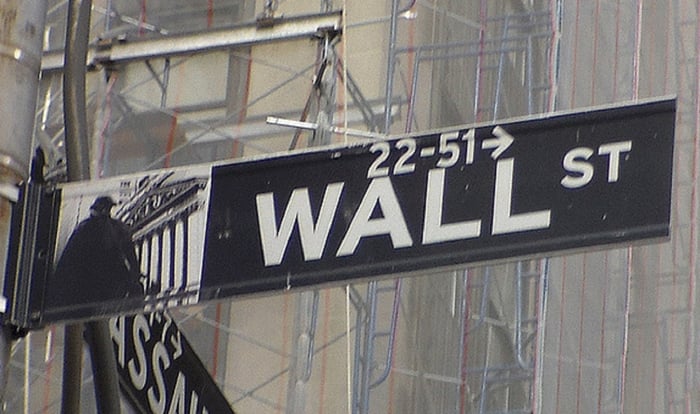
Goldman Sachs is acquiring NEOS Investments, but alone, that deal won't send the stock back to its all-time high. Image source: Getty Images
Goldman, a top-20 U.S. ETF issuer, accounts for two of those 11 deals, with the most recent being the August announcement of a $2.25 billion bid to acquire privately held NEOS Investments. It's a smart deal for Goldman, but on its own, it may not be enough to return the stock to its all-time high. Let's get into why that may be the case.
The math is tricky
With a market value of nearly $270 billion as of Oct. 16, Goldman is one of the largest financial companies by market cap, so it takes a lot to move the needle on acquisitions.
Additionally, the stock closed at $881.26 on Oct. 16, well below the record closing high of $1,146.65 notched on July 15. So a 30.1% rally is required to get back to that all-time high. It's hard to envision a bolt-on acquisition being the driving force behind a 30% surge by a $270 billion company.
Goldman's bread and butter in terms of revenue and profit generation is investment banking and trading of assets such as bonds, commodities, currencies, and equities. So while Goldman Sachs Asset Management (GSAM), the roof under which the bank's ETF unit resides, manages an impressive $3.3 trillion in assets, the asset and wealth management unit contributed just $5.1 billion of the bank's $18.7 billion in third-quarter revenue.
It's reasonable to surmise that if NEOS had been part of GSAM before the end of the third quarter, it would've boosted that unit's revenue, but not by enough to spark a 30% surge, and that may remain true even through 2028.
It's still a smart acquisition
Even if the NEOS purchase isn't the determining factor in sending Goldman shares back to record highs and beyond, the acquisition is likely to prove fruitful over the long term. When it was announced in August, NEOS had $30 billion in assets under management. Still, that figure has since swelled to $36.5 billion, cementing the target's status as one of the fastest-growing ETF issuers.
NEOS's growth is impressive. It's even more so when considering the issuer's initial batch of ETFs is barely more than four years old (it acquired some older funds).
That growth is a testament to the popularity of covered call ETFs, NEOS's specialty. In short order, NEOS has become one of the largest issuers of options income ETFs because many of its funds are adept at delivering high yields and large income streams to investors without subjecting them to erosion of their invested capital.
With dividend yields on broad equity benchmarks low and bond yields too high for comfort, alternative sources of income are all the more attractive, indicating that NEOS is positioned to be a long-term contributor to the broader Goldman Sachs ecosystem even if it doesn't carry the buyer's stock back to old glory.
Todd Shriber has no position in any of the stocks mentioned. The Motley Fool has positions in and recommends Goldman Sachs Group. The Motley Fool has a disclosure policy.