
- PRICING
- LIVE QUOTES
- LEARN
- HELP


EN
How Investors May Respond To Kadant (KAI) Ahead Of Earnings Report
- Kadant is preparing to report quarterly results for the period ended September 2026, with analysts expecting higher earnings and revenue compared with the prior year.
- The key tension for Kadant is that analysts see healthier fundamentals and backlog on one hand, while a negative Earnings ESP signals fresh caution on near term profitability.
- This article examines how Kadant’s investment narrative interacts with an upcoming earnings report that carries cautious expectations despite higher revenue.
Kadant Investment Narrative Recap
To own Kadant, you need to be comfortable with a story built on an aging installed base that keeps spending on maintenance, plus a sizeable backlog of capital projects that still has to turn into profitable revenue. The upcoming September quarter matters because it tests whether record bookings and acquisitions are translating into healthier earnings or simply higher levels of activity.
The biggest near term catalyst is how efficiently Kadant converts that backlog into work with solid margins while absorbing recent deals such as Kadant Profil. The key risk is that mix shifts, acquisition related costs, and a difficult Europe keep pressure on gross margin. The latest earnings outlook does not materially change that equation at this point.
A useful reference point for this setup is Kadant’s record Q2 2026 performance, when management reported the highest quarterly revenue and earnings, supported by organic activity, acquisitions, and currency effects. That period illustrated what the business can look like when aftermarket demand is strong and delayed capital equipment orders begin to flow.
In that context, the current quarter will indicate whether those drivers remain intact or whether mix and regional weakness weigh more heavily on profitability. Investors focusing on catalysts will be watching how acquired units such as Kadant Profil and others operate within the 80/20 performance system, and whether integration costs and borrowing expenses continue to offset the added scale.
What The Long Term Kadant Forecasts Assume
Kadant's narrative projects US$1.4b in revenue and US$177.6 million in earnings by 2029. Analysts are building that view on 6.6% yearly revenue growth and an earnings increase of about US$67.9 million from US$109.7 million today.
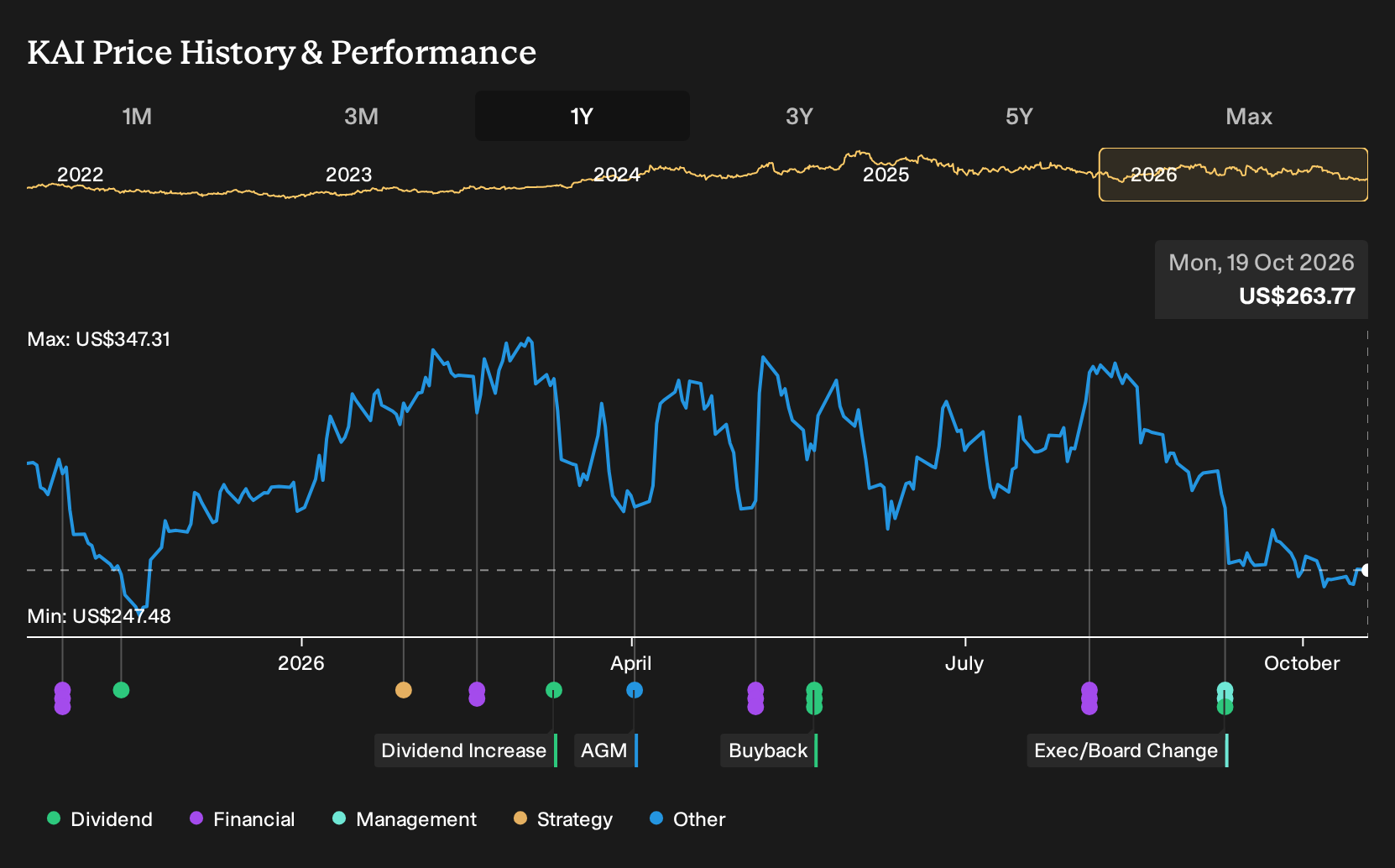
Uncover why Kadant's fair value indicates a 37% potential upside to its current price that could narrow quickly.
Exploring Other Perspectives
Some bearish analysts frame the key risk very differently. Instead of focusing on backlog conversion, they worry that Kadant’s higher leverage and capital intensity cap flexibility, even with earnings projected at about US$181.0 million on US$1.4b revenue by 2029. Those views were set before this earnings release, so opinions may shift as fresh information is released.
Reach Your Own Conclusion
Disagree with existing narratives? Extraordinary investment returns rarely come from following the herd, so go with your instincts.
- A great starting point for your Kadant research is our analysis highlighting 4 key rewards that could impact your investment decision.
- See our latest analysis for Kadant. The report includes a comprehensive fundamental analysis summarized in a single visual, the Snowflake, making it easy to evaluate Kadant's overall financial health at a glance.
Looking for more Kadant-like investment ideas?
If Kadant's setup appeals to you, it can be useful to cross-check that thesis against other companies with similar financial traits and very different market attention. The Simply Wall St Screener lets you filter for the kind of balance sheets, earnings profiles, and risk levels that fit your own approach, rather than relying solely on one stock's story.
- For investors who want potential mispricing backed by fundamentals, start with a curated pool of 35 high quality undervalued stocks that already clear quality and valuation checks.
- If resilience matters more than excitement, focus on defence first and filter by a 32 resilient stocks with low risk scores screen that emphasizes steadier financial profiles.
- For those who care most about financial strength and flexibility, work through a list of solid balance sheet and fundamentals (25 results) to see which businesses carry robust balance sheets and underlying fundamentals.
Have feedback on this article? Concerned about the content? Get in touch with us directly. Alternatively, email editorial-team@simplywallst.com