
- PRICING
- LIVE QUOTES
- LEARN
- HELP


EN
3 European Utility Stocks With Predictable Cash Flows as Bond Yields Rise
French bond yields are flashing warning lights, and that ripple is hitting everything tied to funding costs, regulation and sovereign risk. Investors who usually hide out in European infrastructure and utilities now face a tougher test, as balance sheets and business models are probed rather than assumed safe. This piece unpacks that shift and profiles 3 stocks exposed to the news backdrop that some investors may view as potential opportunities.
The three stocks below are a sample pulled from a wider group of European utilities and infrastructure operators that fit this defensive, budget-conscious brief, while the full screen surfaced 15 more companies with equally detailed narratives that are not covered here. To see the complete picture, identify which grids, pipelines and transport operators best fit your risk limits, then analyze and refine your shortlist directly inside the European Budget-Constrained Defensive Infrastructure and Utilities screener.
Terna (BIT:TRN)
Terna anchors this screener’s theme because it runs Italy’s high voltage grid, offering regulated, lower beta exposure to critical power infrastructure at a time when investors are reassessing interest rate and sovereign risk across Europe.
Terna is an electricity transmission specialist that designs, builds and operates Italy’s national grid and related equipment, earning about €3.3b from regulated activities and roughly €900 million from non regulated lines, with a market value near €18.6b.
"Ongoing and accelerating investments in grid modernization, digitalization and resilience remain visible through Terna’s H1 2026 CapEx of €1.6b, with about €1.5b in regulated activities and 92% of the 2024–28 plan already under awarded contracts, which supports future regulated asset base growth and, in turn, regulated revenue and EBITDA."
The real swing factor is how one quiet change in the rules could filter through into the cash flows that support both earnings and dividends.
That rule change question is exactly what the full narrative for Terna unpacks in detail, separating passing headlines from the grid operator’s longer term risk and opportunity profile.

E.ON (XTRA:EOAN)
E.ON is another large regulated grid and distribution player in this defensive utilities screen, with a €45.7b market cap and sizeable exposure to German and UK energy networks. Its Energy Retail units in Germany, the UK and other markets generate over €78b, and Energy Networks in Germany contributes about €22.9b.
E.ON gives you exposure to essential electricity and gas infrastructure across several European countries. This is the kind of regulated, fee based activity many investors look for when bond markets start to reprice sovereign risk and credit spreads.
"Rising connection requests for renewables, batteries, data centers, EVs and heat pumps, alongside EU electrification targets that point to a higher share of electricity in final energy use by 2040, can support sustained growth in E.ON’s regulated grid investment base and long term network revenue."
The real swing factor for E.ON is what happens when one unresolved regulatory decision filters through to allowed returns, investment appetite and future earnings quality.
Those regulatory outcomes are exactly what the full narrative for E.ON unpacks, showing where accelerating grid demand could offset pressure on allowed returns and improve the perception of E.ON’s earnings quality.

Ascopiave (BIT:ASC)
Ascopiave gives this screener exposure to regulated gas distribution in Italy, where tariff-based income and essential services can feel relatively insulated when bond markets start to reprice sovereign risk and funding costs across Europe.
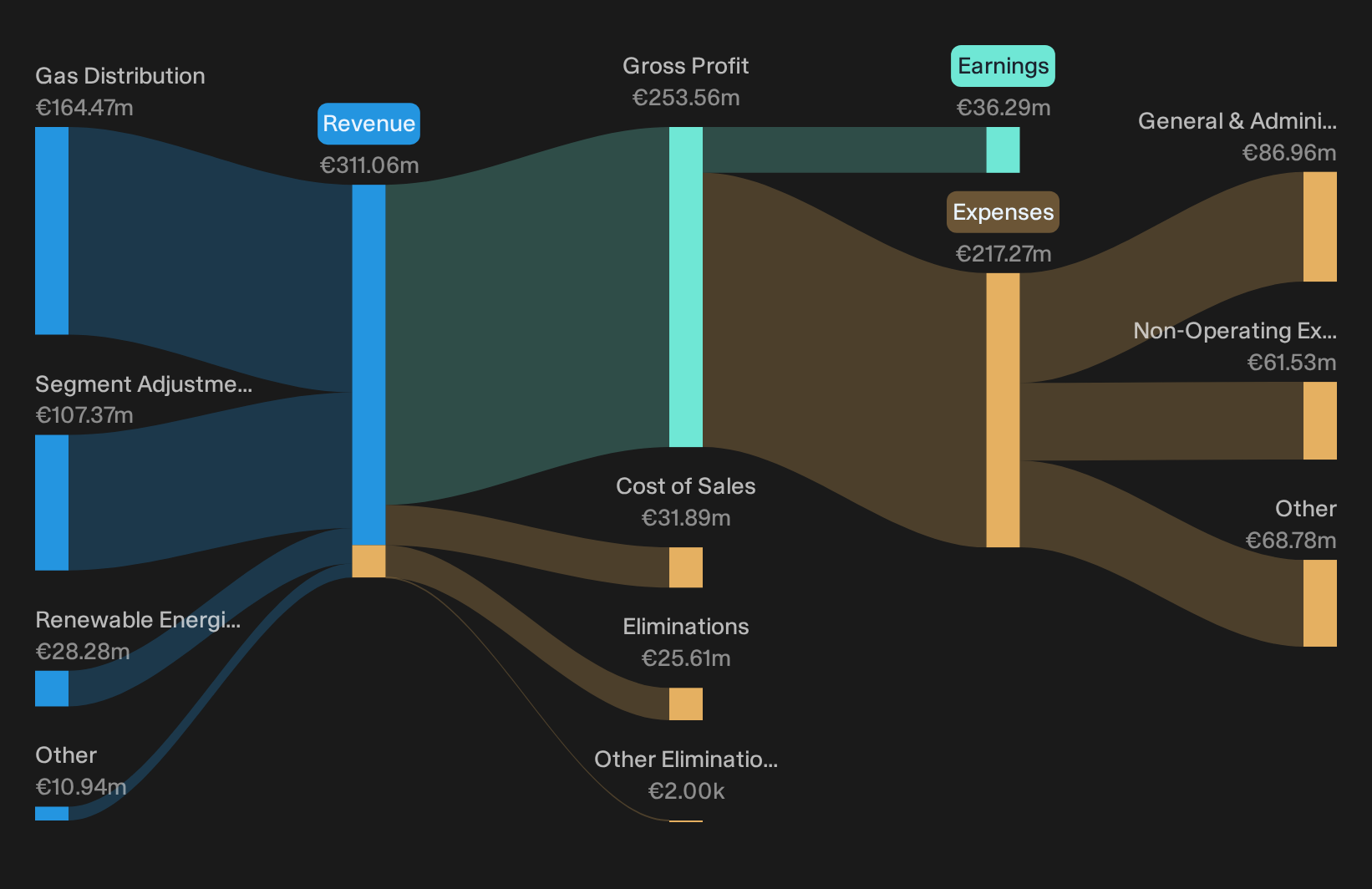
Ascopiave focuses on Italian natural gas distribution, generating about €164 million from that activity and roughly €28 million from renewable energy, with other segments and adjustments making up the rest of its €285 million mix, and the stock valued around €619 million.
"The sale of a 25% shareholding in EstEnergy scheduled for completion by July 2025 is likely to generate significant cash inflow and positively impact the net financial position, potentially improving earnings."
What really matters next is how one quiet shift in the financial profile feeds through to margins, dividend resilience and the capacity for long-term growth.
That inflection point is exactly where the full narrative for Ascopiave steps in, showing how accelerating cash flexibility could reshape Ascopiave’s growth profile and perceived resilience.
Seeking Alternatives Before The Crowd?
Fresh ideas move first. Once momentum takes hold, the cleanest entry points vanish and laggards get caught chasing. Scan under the radar for now and act now.
- Spot potential turnaround stories early and track 200 high quality undervalued stocks before renewed momentum sends quality balance sheet plays flying beyond comfortable entry ranges.
- Ride structural themes in next generation infrastructure by reviewing the curated 42 power grid technology and infrastructure stocks while these grid technology opportunities are still dropping quietly into institutional models.
- Target dependable cash flows with yield and assess the curated 217 dividend fortresses before income hunters crowd into the same high-payout compounders.
Have feedback on this article? Concerned about the content? Get in touch with us directly. Alternatively, email editorial-team@simplywallst.com