
- PRICING
- LIVE QUOTES
- LEARN
- HELP


EN
Missed Out On TSMC's Run? Here's The Bet Holders Made
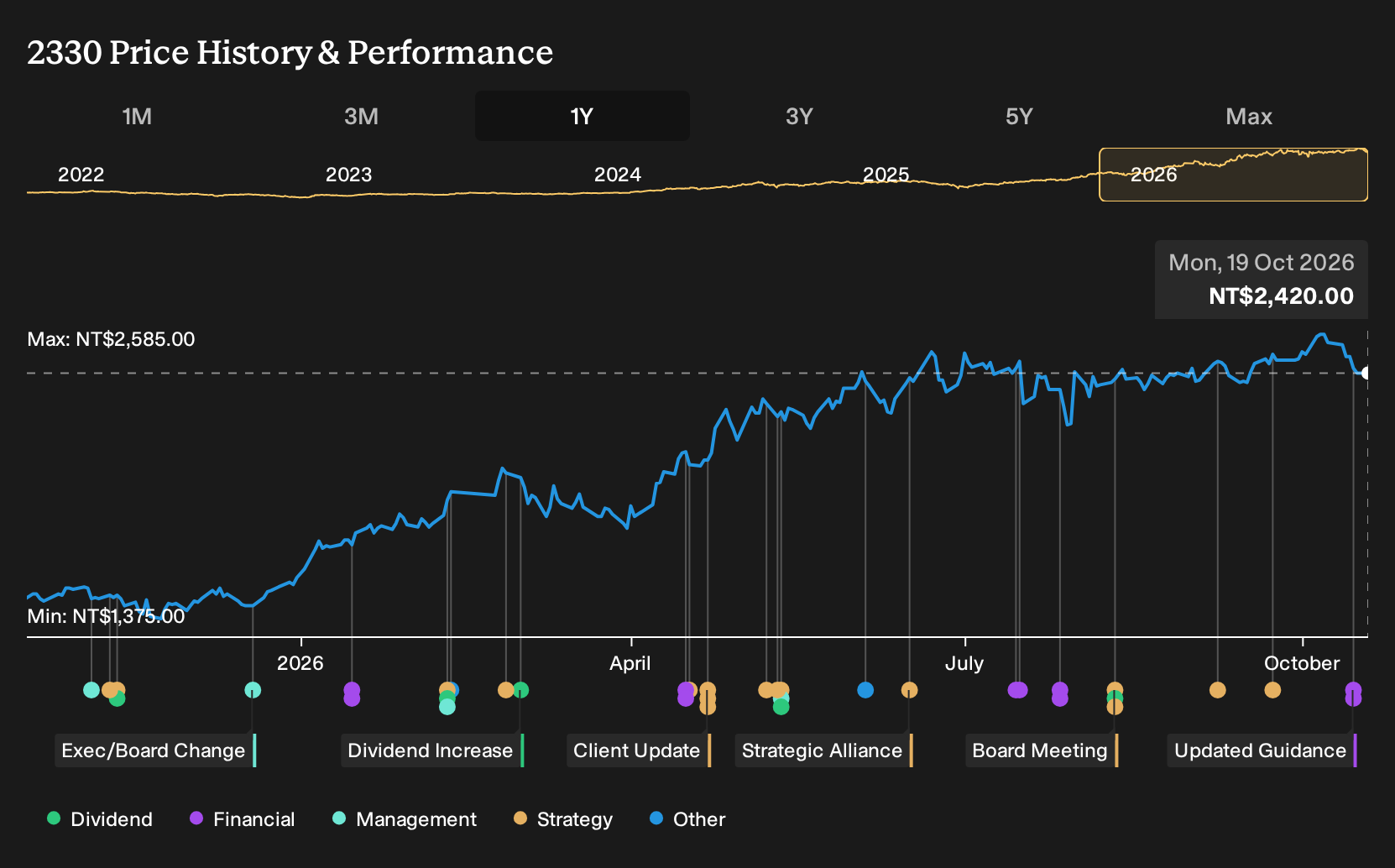
TSMC just printed record Q3 profit on AI demand, yet chip stocks recently slid as investors questioned how durable that spending really is. Holding Taiwan Semiconductor Manufacturing over the past year would have returned 64.5%, including dividends. If you had bought on 19 October 2025, you would have been stepping into a debate between bullish AI optimism, worries about margin erosion, and China competition. So what, exactly, was knowable when you made that call?
Taiwan Semiconductor Manufacturing has already moved. Pinpoint other ways to investigate the theme among 55 AI infrastructure stocks.
What Expectations Were Baked Into TSMC’s Price?
The shares cost NT$1,455 at the start of the period. Anyone looking at Taiwan Semiconductor Manufacturing then was really choosing between two sharply different but plausible stories about AI demand, overseas expansion, and future profitability.
The bullish narrative argued that sustained AI and digital transformation trends would lift the whole sector. It suggested a fair value of NT$1,800, a price level implied by upbeat assumptions. Supporters leaned on expectations that revenue could grow 23.4% a year and that margins might edge up from 41.7% to 43.8%.
The bearish narrative set fair value at NT$1,100, a figure that reflected more cautious assumptions about future earnings power. That view focused on overseas fabs, cost inflation, and tariffs, with an expectation that margin dilution from these projects would widen from 2% to 3% each year initially to 3% to 4% by 2030.
What The Evidence Did To The TSMC Argument
Record Q3 2026 results for Taiwan Semiconductor Manufacturing gave the bullish camp real support. Revenue moved from NT$989,918.3m in Q3 2025 to NT$1,494,243m and net income rose from NT$452,301.4m to NT$763,064m. Net margin stepped up from 45.7% to 51.1%, even as chip stocks fell on AI spending worries and Chinese competition headlines. The evidence cut both ways.
The real hinge here was not the AI story in the abstract. It was whether TSMC could grow AI related demand while holding or lifting profitability. For any other chip company, you would test that same claim against reported net margin and absolute earnings, not just the AI buzz in news flow.
What Today's Taiwan Semiconductor Manufacturing Price Already Assumes
Taiwan Semiconductor Manufacturing now trades at NT$2,405. The selected Narrative’s Fair Value sits above that level and frames TSMC less as a cyclical chip producer and more as critical infrastructure for global computing demand.
On that view, today’s price still underweights the idea that leading edge process dominance and customer lock in can endure longer than typical semiconductor cycles.
"The market prices TSMC as a cyclical manufacturer with transient pricing power. The financial reality supports pricing it as irreplaceable infrastructure with compounding economics."
The price and this Narrative do not agree. → Uncover what this Narrative says Taiwan Semiconductor Manufacturing is actually worth
Where Could TSMC Demand Echo Next?
TSMC anchors the physical side of AI ambition. The open question is who benefits as customers keep pushing that ambition harder.
Running complex models needs specialised processors and software that improve quickly. Data centre operators often pay up when new hardware promises more useful AI work.
One major chip designer targets that need by selling full AI computing platforms. Its systems tie together processors, networking and software tuned for training and running models.
If that stack stays important for customers, the power behind TSMC orders could share the spotlight with whoever shapes those AI systems.
One Narrative has already put a figure on it. → Uncover the company trading 37% below one Narrative's Fair Value
This article by Simply Wall St is general in nature. We provide commentary based on historical data and analyst forecasts only using an unbiased methodology and our articles are not intended to be financial advice. It does not constitute a recommendation to buy or sell any stock, and does not take account of your objectives, or your financial situation. We aim to bring you long-term focused analysis driven by fundamental data. Note that our analysis may not factor in the latest price-sensitive company announcements or qualitative material. Simply Wall St has no position in any stocks mentioned.
Have feedback on this article? Concerned about the content? Get in touch with us directly. Alternatively, email editorial-team@simplywallst.com