
- PRICING
- LIVE QUOTES
- LEARN
- HELP


EN
Dear MicroStrategy Investors, Mark Your Calendar for November 11
The story a company tells investors, and what the market is willing to believe, can be entirely different.
Michael Saylor’s software company, turned Bitcoin (BTCUSD) proxy, Strategy (MSTR), has spent the last six years arguing it is a new kind of business. Formerly known as MicroStrategy, the company holds Bitcoin and sells credit products backed by the digital asset.
Now, one of the biggest names in index investing says the world’s largest institutional owner of Bitcoin doesn't fit its rulebook.
Why MSCI Wants Strategy Out of its Indexes
MSCI (MSCI) adopted new rules last Thursday that would make nonoperating companies ineligible for its Global Investable Market Indexes, Reuters reported. The change starts at the close of Nov. 30, and MSCI will publish the final list of affected companies on Nov. 11. Strategy is on the list of potential deletions, along with Japan's Metaplanet (MPJPY). SharpLink (SBET) and several other crypto treasury firms sit on a watchlist.
Why does the index exclusion matter for Strategy? When a stock is removed from the index, passive funds tracking it must initiate sell orders, which can cause a short-term price decline and reduce liquidity. Strategy is part of the MSCI USA and MSCI World indexes, per Reuters.
MSCI's new test considers factors such as operating assets, business cash flow, and reliance on debt, BeInCrypto said. Strategy still sells software, but the MSTR stock is tied to the performance of Bitcoin.
MSCI first floated excluding digital asset treasury firms a year ago. It shelved that plan in January and opened a broader review, Reuters reported. Strategy warned last year that exclusion would force $2.8 billion of its stock to be sold.
How Big Is the Selling Pressure for MSTR Stock?
According to BeInCrypt, Strategy estimates MSCI-linked funds hold about 13 million shares, or 3.1% of its basic shares outstanding, which is less than the average daily trading volume. CEO Phong Le told investors in a live Q&A hosted by Natalie Brunell that MSCI indexes represent 3% to 4% of its shares, which is not too significant.
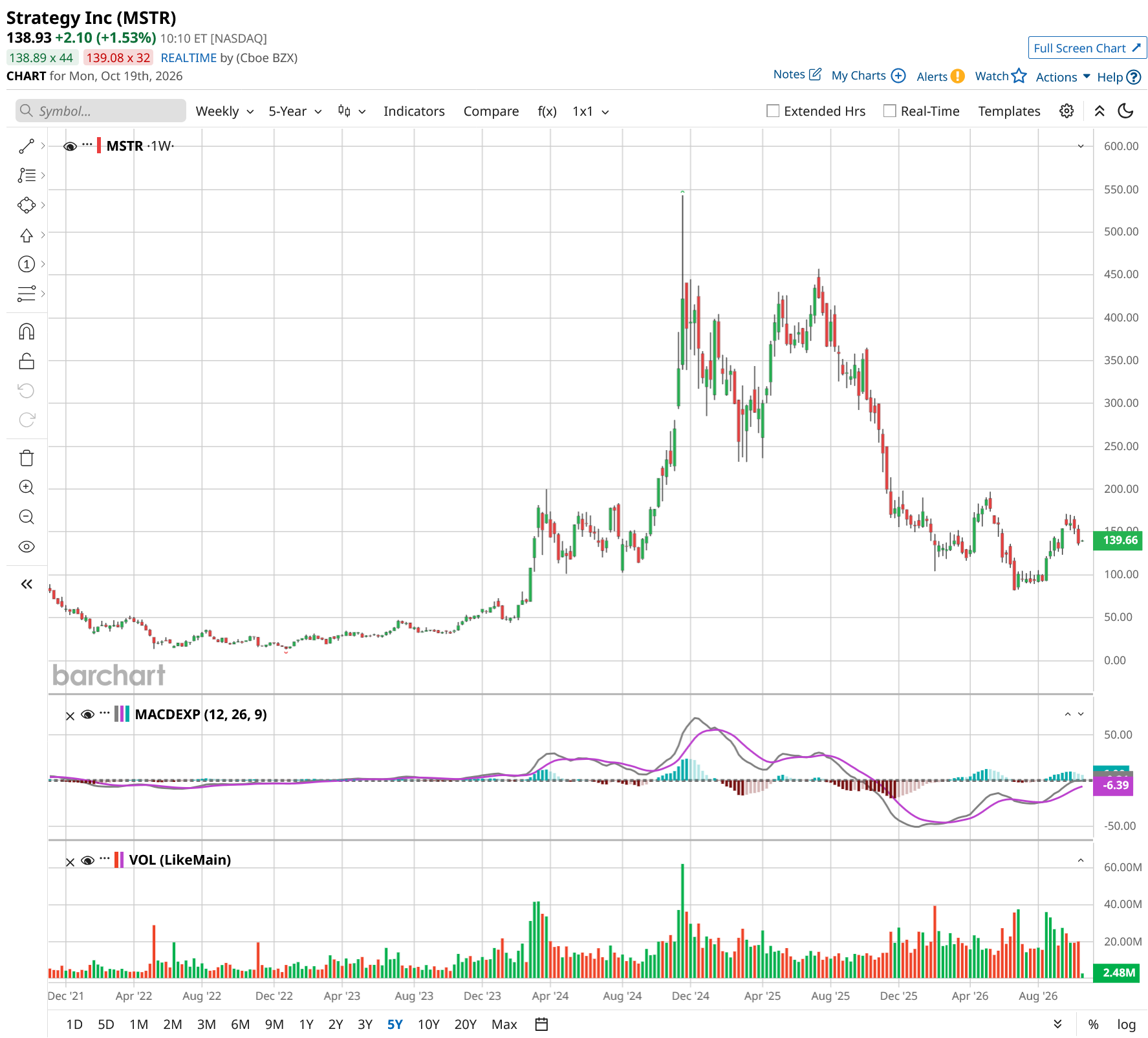
However, MSTR stock still fell 9.6% following the news. Valued at a market cap of $52.5 billion, Strategy's stock is down more than 70% from its all-time high.
In a letter to MSCI's Equity Index Committee, Strategy called the proposal “discriminatory, arbitrary, and misguided,” Stocktwits reported.
- The company says the new screen repackages the abandoned 2025 idea of targeting firms with at least 50% of assets in digital assets.
- It also argues that U.S. and international accounting standards don't define MSCI's operating and nonoperating terms.
- Strategy has asked to withdraw the plan or rewrite it with clear definitions, objective criteria, and a forward-looking start date.
- Moreover, it wants MSCI to publish its consultation record.
Le made a similar point in the Q&A. He said the SEC and FASB treat Bitcoin as an operating asset for Strategy. He said MSCI is taking a position against accepted accounting rules.
The Index Is the Sideshow
Strategy expects a modest selloff, which other buyers can absorb. What worries me more is the long-term drag on demand, and BeInCrypto flagged it: weaker demand for MSTR shares could make it harder to raise money for Bitcoin purchases.
In the Q&A, Le explained that selling stock above net asset value (NAV) adds Bitcoin per share. Saylor said that premium grows when demand for its credit products is strong. If fewer funds own MSTR, demand for the shares could weaken, making it harder to raise cash for Bitcoin, as BeInCrypto warned.
Shareholders are already hurting. Rob, an MSTR investor, told the Q&A that the $73,000 he invested in MSTR for each of his three children is now worth about $20,000. An index exit would hurt a stock already down 70% over the last 18 months.
Saylor said investors should be prepared for a difficult year or two. Le noted MSTR is up 41% since August 2020 versus 32% for Bitcoin. But it is down roughly 75% from its peak, against 50% for Bitcoin.
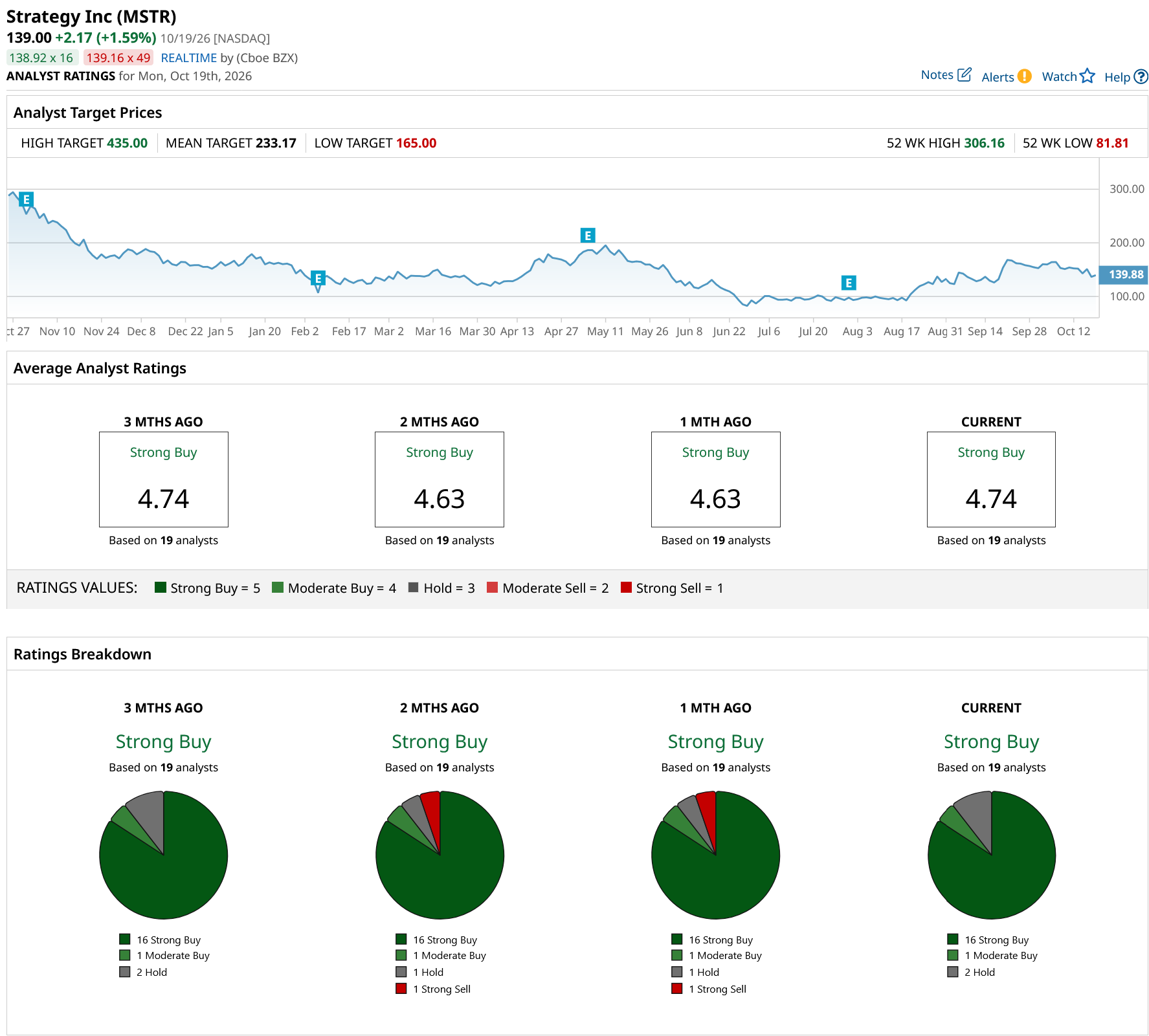
Wall Street remains bullish on MSTR stock. Out of the 19 analysts covering MSTR, 16 recommend “Strong Buy,” one recommends “Moderate Buy,” and two recommend “Hold.” The average Strategy stock price target is $233.17, above the current price of $139.
All eyes will be on the list MSCI will release on Nov. 11.
On the date of publication, Aditya Raghunath did not have (either directly or indirectly) positions in any of the securities mentioned in this article. All information and data in this article is solely for informational purposes. For more information please view the Barchart Disclosure Policy here.