
- PRICING
- LIVE QUOTES
- LEARN
- HELP


EN
Learn Why The Bull Case For Salesforce (CRM) Could Change Following Analyst Upgrade
- Recent announcements from partners Demandbase and Docusign show Salesforce embedding AI agents and third party data directly into core workflows across CRM, Agentforce and Slack.
- This deeper integration of external account intelligence and agreement data into Salesforce AI agents highlights how the company is trying to increase stickiness of its platform in day to day commercial operations.
- We will now look at how Salesforce's AI centric investment narrative is affected by this push to wire agents into workflows.
Scan beyond Salesforce and line up your next AI workflow ideas by reviewing our curated list of 55 AI infrastructure stocks that could benefit as agent based tools move deeper into enterprise systems.
Salesforce Investment Narrative Recap
To own Salesforce, you need to believe its bet on AI agents inside everyday workflows keeps customers deeply tied into its platform while still paying up for premium tiers. The Demandbase and Docusign moves fit that story by wiring third party data and agreements directly into Agentforce, Sales Cloud and Slack, which supports the idea of Salesforce as an operating system for go to market teams.
The near term swing factor remains how quickly customers adopt AIforce and Agentforce bundles without pushing back too hard on pricing. The biggest risk is that security incidents, outages or perceived unreliability around these new agent heavy workflows slow adoption just as Salesforce leans harder on AI monetization.
The Docusign agreement integration is the clearest operational tell in this batch of announcements. If you care about Salesforce, this is where the thesis gets tested, because it shows contracts, approvals and renewals all running through Agentforce and Slack rather than separate e signature tools and email. That depth of workflow gives Salesforce more touchpoints but also more to prove on uptime and trust.
For catalysts, this matters directly. As more of the agreement lifecycle sits natively inside Salesforce and Slack, there is a clearer path for usage based features, higher value editions and tighter Slack attach. On the flip side, any friction around AI agent quality, pricing or the extra data flows created by these deep Docusign hooks could amplify existing concerns about security, reliability and total cost.
Salesforce's current analyst story pegs revenues at US$58.7b and earnings at US$10.7b by 2029, based on a 10.1% yearly revenue growth rate and an earnings increase of about US$1b from US$9.7b today.
Uncover how Salesforce's fair value indicates a 17% potential upside to its current price before the market closes that discount.
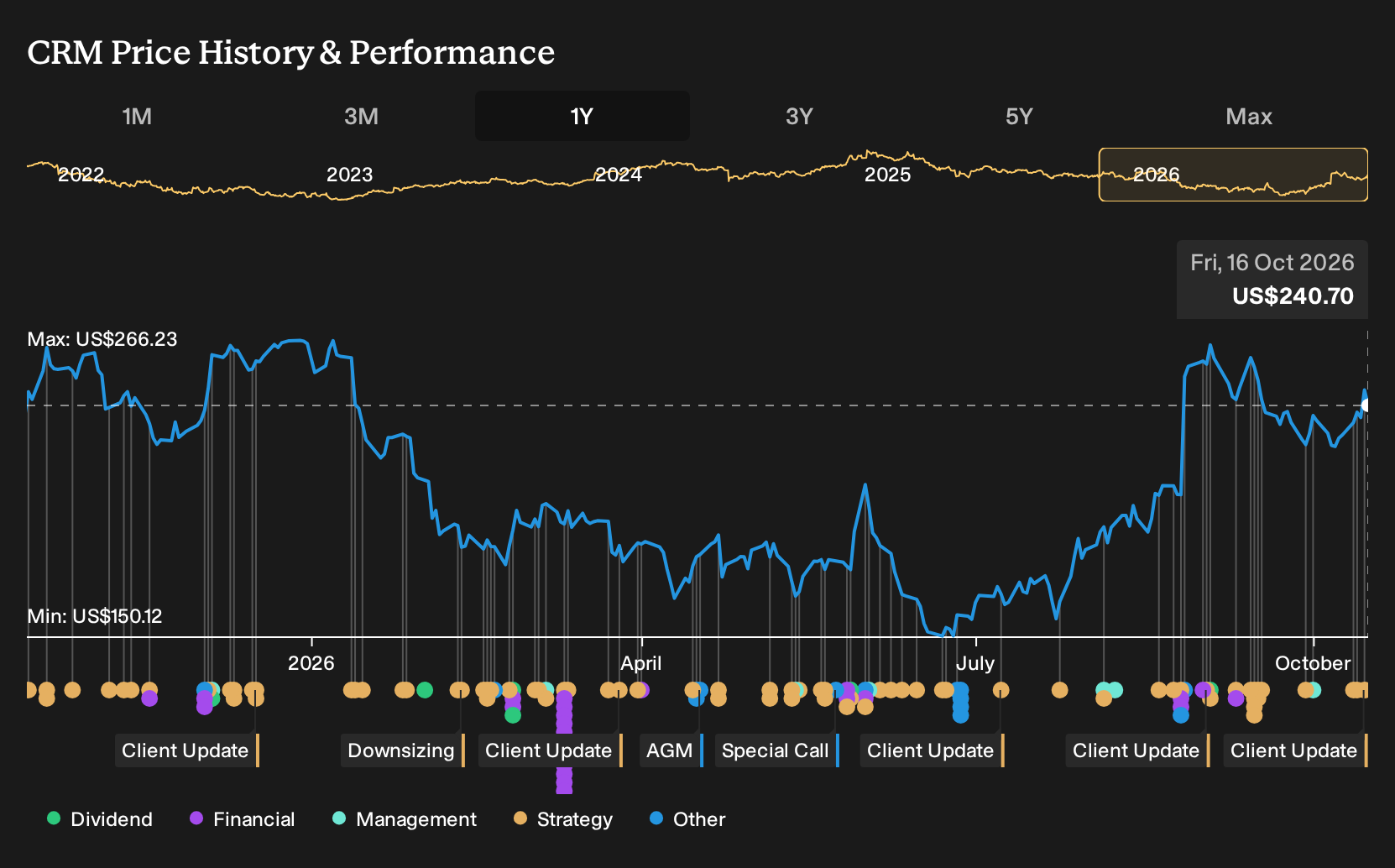
Exploring Other Perspectives
Security risk sits at the center of the bearish Salesforce view. The lowest analysts were already penciling in 9.2% annual revenue growth and earnings of US$8.8b by 2029, compared with US$10.7b in the consensus case. You can see how the new Hunter and Docusign agent workflows might eventually shift those more cautious forecasts, in either direction.
Explore 19 other Salesforce fair value estimates, including one that suggests it could be worth just $255.90.
Reach Your Own Conclusion
Disagree with existing narratives? Extraordinary investment returns rarely come from following the herd, so trust your own analysis and judgment.
- A great starting point for your Salesforce research is our analysis highlighting 3 key rewards and 3 important warning signs that could impact your investment decision.
- See our latest analysis for Salesforce. The report includes a comprehensive fundamental analysis summarized in a single visual, the Snowflake, making it easy to evaluate Salesforce's overall financial health at a glance.
Looking For More Investment Ideas Beyond Salesforce?
If the Salesforce AI story has sharpened your thinking, you can use that momentum to widen your opportunity set. The Simply Wall St Screener can help you turn a thesis about quality, risk and income into a broader watchlist built around clear fundamentals.
- For investors who want potential mispricing paired with strong business quality, consider scanning a curated universe of 33 high quality undervalued stocks that combine solid balance sheets with attractive fundamentals.
- If resilience matters more to you than excitement, filter for 32 resilient stocks with low risk scores that score well on financial health and offer a steadier ride through different market conditions.
- For those hunting for fresh ideas away from the usual crowd, sort through 20 high quality undiscovered gems that combine robust metrics with relatively low market attention.
This article by Simply Wall St is general in nature. We provide commentary based on historical data and analyst forecasts only using an unbiased methodology and our articles are not intended to be financial advice. It does not constitute a recommendation to buy or sell any stock, and does not take account of your objectives, or your financial situation. We aim to bring you long-term focused analysis driven by fundamental data. Note that our analysis may not factor in the latest price-sensitive company announcements or qualitative material. Simply Wall St has no position in any stocks mentioned.
Have feedback on this article? Concerned about the content? Get in touch with us directly. Alternatively, email editorial-team@simplywallst.com