
- PRICING
- LIVE QUOTES
- LEARN
- HELP


EN
Biotest (XTRA:BIO3) Could Be Trading At A 71% Premium To Fair Value
Biotest (XTRA:BIO3) drew attention after its latest close at €28.40, leaving the plasma specialist with a market value of about €1.40b and a mixed track record of recent share returns.
Recent trading has been choppy for Biotest, with the share price slipping around 3.4% over the past quarter while still posting a 4.41% year to date share price gain and a 4.94% total shareholder return over twelve months. This mix suggests momentum has cooled in the short run even as longer term holders have remained slightly ahead once dividends are included.
Scan how Biotest compares with other plasma and specialty pharma players by reviewing our hand-picked list of solid balance sheet and fundamentals (203 results) that may better match your risk and return preferences.
Biotest now trades at €28.40 after a modest pullback, yet the intrinsic value model points to a small premium. Is the recent drift enough to close that gap or widen it further in practice?
Preferred Price-to-Sales Multiple of 1.8x: Is It Justified?
On simple headline numbers, Biotest looks inexpensive, with the stock trading on a P/S ratio of 1.8x against a reported revenue base of €635.2m and a market value of about €1.40b. That low sales multiple sits beside an intrinsic value estimate of €8.22 per share, which implies the current €28.40 price carries a clear premium to the SWS DCF model output.
The P/S metric compares what investors are paying for each euro of sales that Biotest generates. For a loss-making plasma and biotech specialist where earnings are still negative and return on equity is currently below zero at 4.81% in the red, revenue based measures often become the go to yardstick because profits do not yet provide a clean signal.
Biotest is unprofitable today despite shrinking losses over the past five years at an annual rate of 47.4%. Interest costs are not yet well covered by earnings and all liabilities are funded through higher risk borrowing rather than customer deposits. In that context, a modest P/S multiple can reflect the combination of a sizeable top line and an earnings profile that still sits in loss making territory.
Where the relative value argument really sharpens is in comparison with peers. The stock trades on 1.8x sales, while the broader European biotech group sits around 8.9x and a narrower peer set screens at 23.8x. This means the market is pricing Biotest at a steep discount to both the sector and closer comparables.
See what the numbers say about this price — find out in our valuation breakdown.
Result: Price-to-Sales ratio of 1.8x (UNDERVALUED)
Still, Biotest carries clear risks, including ongoing losses of €24.5m and interest costs that are not yet well covered by earnings.
Find out about the key risks to this Biotest narrative.
Another View: What The SWS DCF Model Says About Biotest
While the low 1.8x P/S multiple suggests Biotest looks inexpensive beside peers, the SWS DCF model lands in a very different place. On that approach, fair value comes out at €8.22 per share, which leaves the current €28.40 price looking overvalued. So which signal should carry more weight for you right now?
Look into how the SWS DCF model arrives at its fair value.
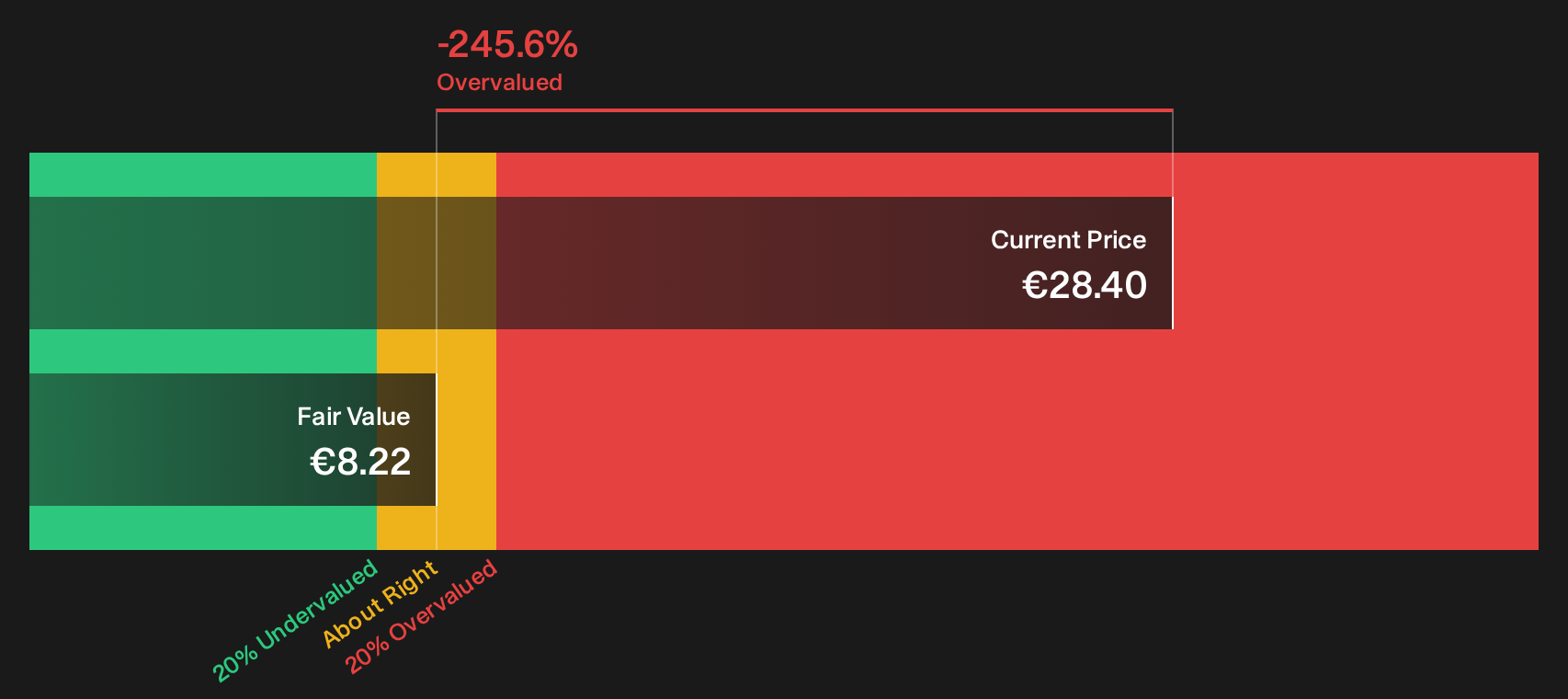
Simply Wall St performs a discounted cash flow (DCF) on every stock in the world every day (check out Biotest for example). We show the entire calculation in full. You can track the result in your watchlist or portfolio and be alerted when this changes, or use our stock screener to discover 189 high quality undervalued stocks. If you save a screener we even alert you when new companies match - so you never miss a potential opportunity.
Next Steps
If this mix of low P/S, premium to DCF and ongoing losses leaves you on the fence about Biotest, move quickly from headline impressions to hard data and stress test your own thesis against the 2 important warning signs.
Looking for more ideas beyond Biotest?
If Biotest leaves you undecided, broaden your watchlist with a few focused stock ideas that match different risk and return profiles.
- Target potential mispricing by scanning a curated pool of quality companies that look cheap on fundamentals through the 189 high quality undervalued stocks.
- Prioritise steady income by checking out companies screened for strong yields and resilience via the 215 dividend fortresses.
- Dial down risk by reviewing a hand picked 232 resilient stocks with low risk scores, which filters for sturdier balance sheets and more stable trading histories.
This article by Simply Wall St is general in nature. We provide commentary based on historical data and analyst forecasts only using an unbiased methodology and our articles are not intended to be financial advice. It does not constitute a recommendation to buy or sell any stock, and does not take account of your objectives, or your financial situation. We aim to bring you long-term focused analysis driven by fundamental data. Note that our analysis may not factor in the latest price-sensitive company announcements or qualitative material. Simply Wall St has no position in any stocks mentioned.
Have feedback on this article? Concerned about the content? Get in touch with us directly. Alternatively, email editorial-team@simplywallst.com