
- PRICING
- LIVE QUOTES
- LEARN
- HELP


EN
3 Insurance Stocks Investors May Watch For Tail Risk Protection
Michael Burry is calling today’s market a “supervolcano,” and that image matters for anyone holding long-term equity risk. When fear of hidden cracks grows, demand often shifts toward long-duration hedges and tail-risk insurers that aim to cushion severe drawdowns. This article unpacks that tension and walks through 3 stocks exposed to this news shock, helping you think about where portfolio protection might quietly gain importance.
The stocks covered below are just a sample set, and the full screen surfaced 11 more insurers, reinsurers, and risk-transfer specialists with equally compelling portfolio protection stories that are not listed in this article. If you want to identify which of these potential long-duration equity hedgers and tail-risk insurers best fits your own risk plan, head straight to the Long-Duration Equity Hedgers and Tail-Risk Insurers screener.
New India Assurance (NSEI:NIACL)
New India Assurance plugs into the long-duration hedging theme through its broad general insurance and reinsurance book, giving you exposure to catastrophe cover and long-tail risks at scale, while India’s protection needs, from rural micro policies to large industrial assets, keep evolving.
New India Assurance earns most of its premium from fire cover of about ₹39.7b, engineering at roughly ₹7.6b, other miscellaneous lines of around ₹14.1b, plus crop and aviation, and has a market value near ₹295.9b, making it a large player in India’s risk-transfer market.
Management is pruning high loss Motor accounts and is willing to accept single digit Motor growth to improve mix. However, both Motor own damage and Motor third party incurred claim ratios have moved further above 100% at 108.85% and 113.86% respectively. As a result, even a cleaner portfolio can continue to drag on underwriting results and keep return on equity subdued.
What really matters next is how one quiet shift in business mix reshapes the balance between slim underwriting margins and growing protection demand.
That shifting mix is the real story. Read the full narrative for New India Assurance to see how underwriting discipline, pricing power and capital strength could be quietly decoupling.

IRB-Brasil Resseguros (BOVESPA:IRBR3)
IRB-Brasil Resseguros is a pure-play reinsurer that helps other insurers offload catastrophe and long-dated risks, directly tied to tail-risk and portfolio protection themes, with about R$4.9b in reinsurance operations revenue and a roughly R$5.7b market value.
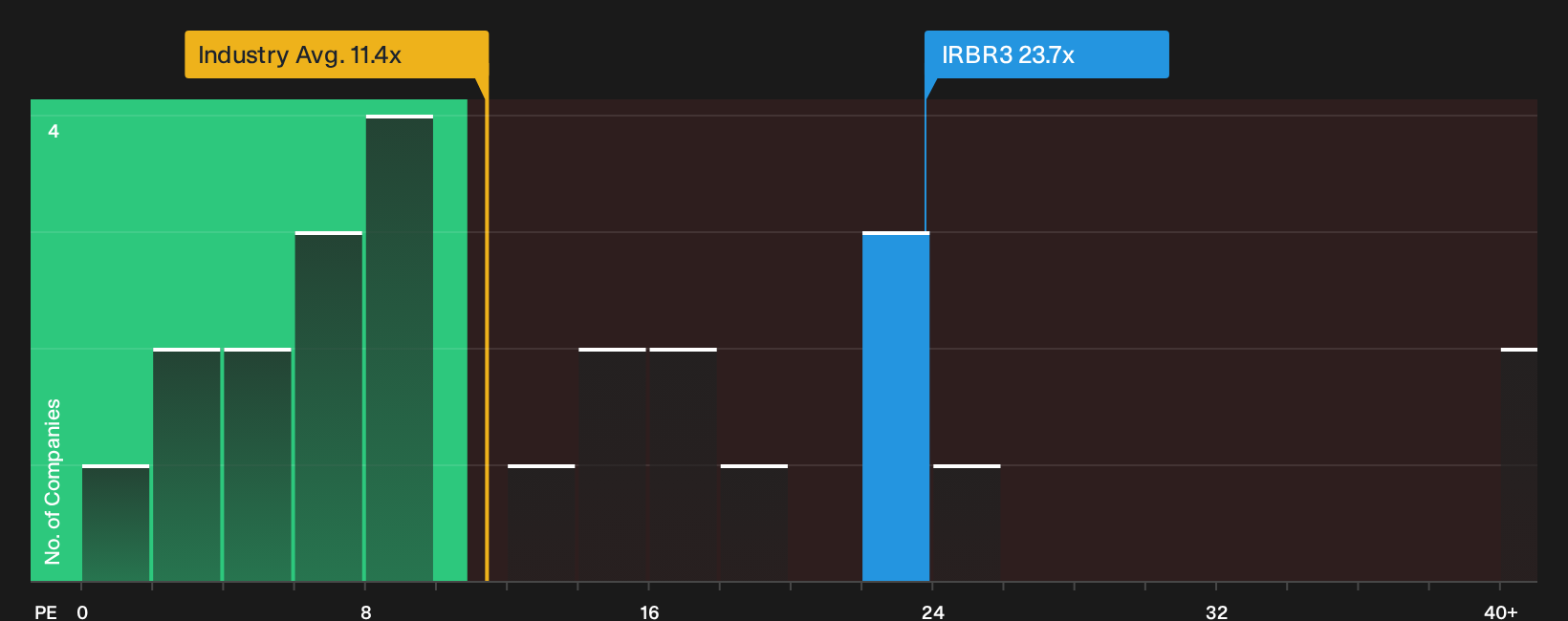
IRB-Brasil Resseguros fits directly into Michael Burry’s “supervolcano” concern because its business is reinsurance, providing a backstop when extreme loss scenarios hit primary insurers. However, recent earnings volatility and a rich P/E indicate that investors are effectively making a call on what happens when one unseen pressure on protection pricing and margins shifts.
Those shifting pressures on protection pricing make the 1 key reward and 1 important warning sign a sharp way to see how IRB-Brasil Resseguros’ risk profile and upside story really line up.
Palomar Holdings (PLMR)
Palomar Holdings taps directly into the long-duration hedging theme through its specialty property and casualty focus, where earthquake, crop, and other catastrophe linked lines sit at the frontline when concern about tail risk and portfolio shocks pushes investors toward protection.
Palomar Holdings writes specialty property and casualty cover across earthquake, crop, and other niche risks, generating about US$1.1b in property and casualty insurance business revenue in the United States, with the stock valued around US$3.7b by the market.
Ongoing investment in proprietary technology, data analytics, and advanced underwriting disciplines now includes AI led tools such as the PLMR.Farm crop platform and an AI underwriting workbench. These tools can improve risk selection and operating leverage and support stronger net margins as these systems scale through the book.
What happens to Palomar Holdings’ earnings power if one quiet shift in its risk mix and pricing balance tilts just a little further?
If that balance tips further, read the full narrative for Palomar Holdings to see how Palomar Holdings’ technology stack, risk appetite and capital choices could be quietly decoupling.

Curious About Alternative Opportunities?
Fresh themes can move fast when momentum builds and early money spots a breakout before the crowd. Do not get caught watching from the sidelines, act now.
- Target resilient cash generators and stress test your income plan using the 215 dividend fortresses while yields still reflect today’s prices instead of tomorrow’s demand.
- Scan high-conviction high quality stories that most people have not spotted yet, starting with the curated 614 high quality undiscovered gems before attention floods into the same tickers.
- Zero in on strong balance sheets and robust fundamentals through the hand picked list of solid balance sheet and fundamentals (204 results) while these businesses stay under the radar for now.
This article by Simply Wall St is general in nature. We provide commentary based on historical data and analyst forecasts only using an unbiased methodology and our articles are not intended to be financial advice. It does not constitute a recommendation to buy or sell any stock, and does not take account of your objectives, or your financial situation. We aim to bring you long-term focused analysis driven by fundamental data. Note that our analysis may not factor in the latest price-sensitive company announcements or qualitative material. Simply Wall St has no position in any stocks mentioned.
Have feedback on this article? Concerned about the content? Get in touch with us directly. Alternatively, email editorial-team@simplywallst.com