
- PRICING
- LIVE QUOTES
- LEARN
- HELP


EN
Ryman Healthcare (NZSE:RYM) Sees Strong Village Sales But Is The Valuation Catching Up
Recent reports of stronger unit sales and high retirement village occupancy at Ryman Healthcare (NZSE:RYM) have sharpened focus on whether its current share price aligns with the cash the business can generate.
At a latest share price of NZ$1.83, Ryman Healthcare has seen a sharp reset, with a recent 7-day share price return of 7.02% contrasting with a year-to-date share price decline of 38.18% and a 5-year total shareholder return drop of 85.33%. This hints that recent operational news is improving sentiment after a long period of weak performance.
Spot potential turnarounds beyond Ryman Healthcare by scanning our curated list of 191 high quality undervalued stocks, which combines stronger fundamentals with beaten-down share prices.The rebound in Ryman Healthcare’s share price could be the market finally catching up with improving village metrics, or it could simply be a short burst of optimism. The valuation work now needs to show which it is.
Most Popular Narrative: 39% Undervalued
Ryman Healthcare’s most followed narrative puts fair value at NZ$3.01 per share, compared with the latest close at NZ$1.83. The story being told is that the share price has not fully caught up with the company’s potential cash generation.
The new executive leadership team at Ryman Healthcare, including a new CEO with a track record in transformation, aims to rebuild confidence and drive efficient governance and leadership. This may improve alignment and execution of the company’s strategic objectives, which could enhance earnings.
Ryman is implementing a new pricing structure for retirement village units and aged care services. Although not immediately impactful on cash, this is expected to create significant long-term value for shareholders.
See why 35 investors see Ryman Healthcare as 39% undervalued.
Result: Fair Value of NZ$3.01 (UNDERVALUED)
Still, the heavy debt of NZ$2.56b and a recent net loss of NZ$171.3m leave little room for disappointment if property conditions or sales momentum weaken.
Find out about the key risks to this Ryman Healthcare narrative.
Another View: Ryman Healthcare Looks Expensive On Sales
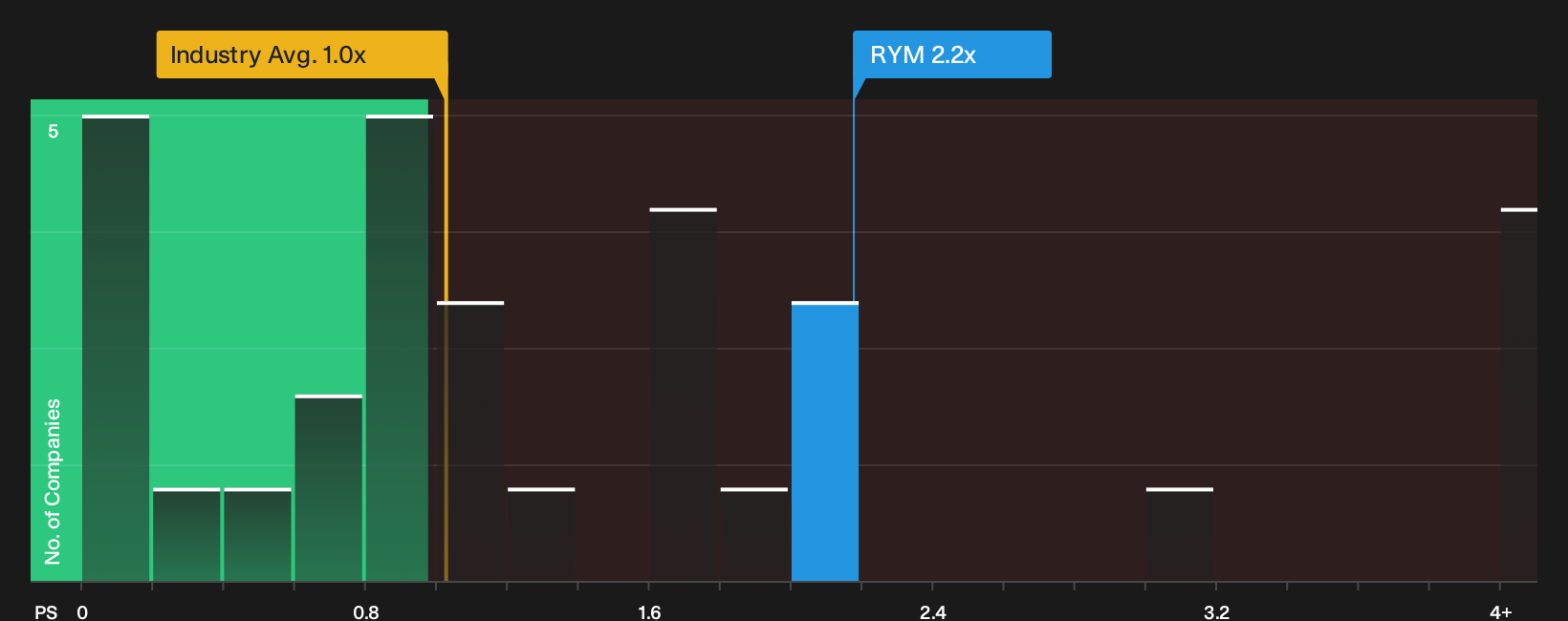
The story changes once you leave cash flows and focus on what investors are paying for each dollar of Ryman Healthcare’s revenue. On a P/S ratio of 2.2x, the stock trades at more than double the Oceanic healthcare sector on 1.0x and above peers on 1.9x, while the fair ratio sits at 1.1x. That gap points to meaningful valuation risk if sentiment weakens again.
Our tools break down this pricing gap in more detail so you can judge whether the current premium is justified or a sign to be cautious, starting with the See what the numbers say about this price — find out in our valuation breakdown.
Next Steps
If this mix of concern and opportunity around Ryman Healthcare feels familiar, move quickly to review the full picture and shape your own stance. To understand what any optimism is based on, start with the 3 key rewards.
Looking for more investment ideas beyond Ryman Healthcare?
Ryman Healthcare might be front of mind today, but your next strong contender could already be showing up in the Simply Wall St screener if you act on it.
- Target resilient compounding potential by focusing on companies built to return cash, starting with a shortlist of 216 dividend fortresses that already clear a high income bar.
- Hunt for mispriced opportunities where fundamentals and price have fallen out of sync, using the curated pool of 614 high quality undiscovered gems to spark fresh ideas.
- Prioritise capital protection by filtering for businesses with sturdy finances through a focused 234 resilient stocks with low risk scores that screens for resilience first.
This article by Simply Wall St is general in nature. We provide commentary based on historical data and analyst forecasts only using an unbiased methodology and our articles are not intended to be financial advice. It does not constitute a recommendation to buy or sell any stock, and does not take account of your objectives, or your financial situation. We aim to bring you long-term focused analysis driven by fundamental data. Note that our analysis may not factor in the latest price-sensitive company announcements or qualitative material. Simply Wall St has no position in any stocks mentioned.
Have feedback on this article? Concerned about the content? Get in touch with us directly. Alternatively, email editorial-team@simplywallst.com