
- PRICING
- LIVE QUOTES
- LEARN
- HELP


EN
What Aurobindo Pharma Holders Bought Into
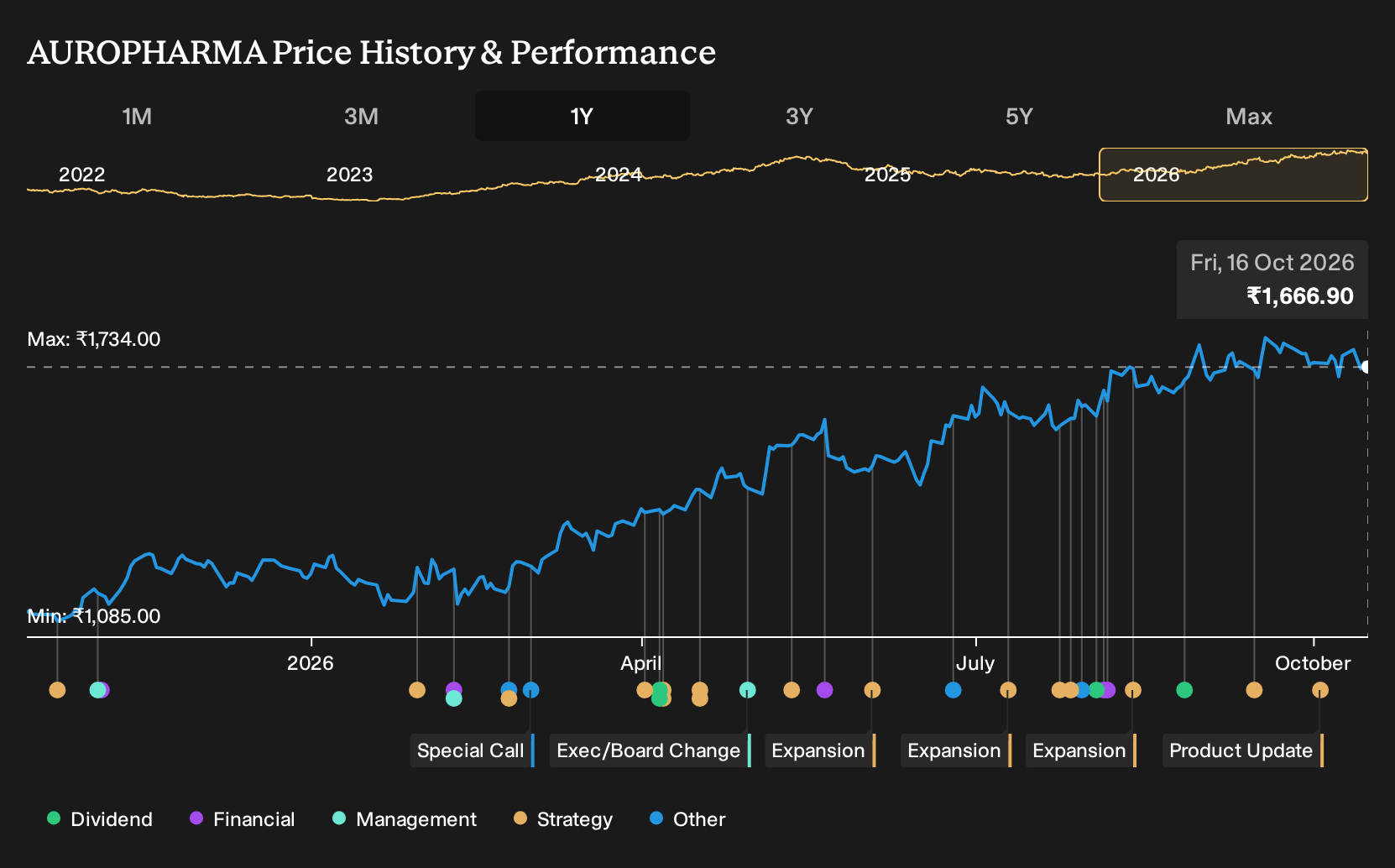
If you only glanced at headlines about regulatory risk and pricing pressure around Aurobindo Pharma last year, a double digit setback might have seemed just as plausible as a win. Investors who held Aurobindo Pharma over the past year are up 51.4%, including dividends. That jump now sits alongside fresh numbers showing higher revenue and a wider net margin. If you were weighing a purchase back in October 2025, what exactly in the record might have justified taking that risk?
If the move has made Aurobindo Pharma harder to judge, start where the gap is still open and scan 191 high quality undervalued stocks.
The Two Futures Investors Had To Price In For Aurobindo Pharma
The shares cost ₹1,106 at the start of the period, and anyone looking at Aurobindo Pharma then had to decide which story about the future felt more plausible.
On the optimistic side, the bullish narrative pointed to a Fair Value of ₹1,293, essentially a price implied by an expectation of expansion. That view relied on revenue growing 8.0% a year and profit margins rising to 12.6%, supported by biosimilars, specialty products and EU approvals.
The bearish case pointed to a very different Fair Value of ₹730, reflecting caution about what the assumptions could justify. This version still used 6.5% annual revenue growth, but focused on U.S. and European pricing pressure and rising compliance costs as the key margin risk.
What The Results Changed For Aurobindo Pharma
The clearest fresh fact is the latest quarterly report. Aurobindo Pharma posted revenue of ₹91,503.5m and net income of ₹10,325.6m in Q1 2027, up from ₹78,681.4m and ₹8,247.5m a year earlier, with net margin rising from 10.5% to 11.3%. That tilt toward higher profitability supports the optimistic margin story, even if only over one quarter.
The lesson is simple. When a forecast depends on better profitability, track net margin alongside sales, then judge whether both move toward or away from the original claim.
What Aurobindo Pharma's Price Already Bakes In
With Aurobindo Pharma now at ₹1,667 after a 51.4% gain over the past year, the selected Narrative’s Fair Value sits below the current price. That view leans on the idea that a lot of good news on complex generics, biosimilars and injectables is already reflected.
For today’s level to hold up, you would need to believe input cost inflation does not erode the extra profitability expected from these higher value products and backward integration projects.
"Although Aurobindo Pharma points to complex generics, injectables and biosimilars as future margin drivers, management has already flagged input costs such as solvents rising by around 2.5 to 2.7 times in early 2026. This can blunt the intended uplift from higher value launches and leave gross margin and EBITDA margin below what current expectations imply if this inflation persists or spreads to other raw materials."
One Narrative disagrees with today's price. → See where this Narrative says Aurobindo Pharma should trade
How Could You Get There Earlier?
What if your next investment idea came before the headlines? Go straight to the companies whose prices and our estimates still disagree. Three places to start, with the names waiting behind the link.
- Company 1 - 26% below our estimate - uses a single high-margin mine to fund drilling that could extend operations.
- Company 2 - 46% below our estimate - supplies custom hardware as hyperscalers upgrade to 800G and 1.6T network capacity.
- Company 3 - 47% below our estimate - expands online betting as more regions legalise digital wagering and tax pressure eases.
That is three of the list. See all 204 companies with the balance sheet to back it up →
This article by Simply Wall St is general in nature. We provide commentary based on historical data and analyst forecasts only using an unbiased methodology and our articles are not intended to be financial advice. It does not constitute a recommendation to buy or sell any stock, and does not take account of your objectives, or your financial situation. We aim to bring you long-term focused analysis driven by fundamental data. Note that our analysis may not factor in the latest price-sensitive company announcements or qualitative material. Simply Wall St has no position in any stocks mentioned.
Have feedback on this article? Concerned about the content? Get in touch with us directly. Alternatively, email editorial-team@simplywallst.com