
- PRICING
- LIVE QUOTES
- LEARN
- HELP


EN
Do These 3 Checks Before Buying Elisa Oyj (HEL:ELISA) For Its Upcoming Dividend
Regular readers will know that we love our dividends at Simply Wall St, which is why it's exciting to see Elisa Oyj (HEL:ELISA) is about to trade ex-dividend in the next four days. The ex-dividend date is usually set to be two business days before the record date, which is the cut-off date on which you must be present on the company's books as a shareholder in order to receive the dividend. It is important to be aware of the ex-dividend date because any trade on the stock needs to have been settled on or before the record date. This means that investors who purchase Elisa Oyj's shares on or after the 23rd of October will not receive the dividend, which will be paid on the 4th of November.
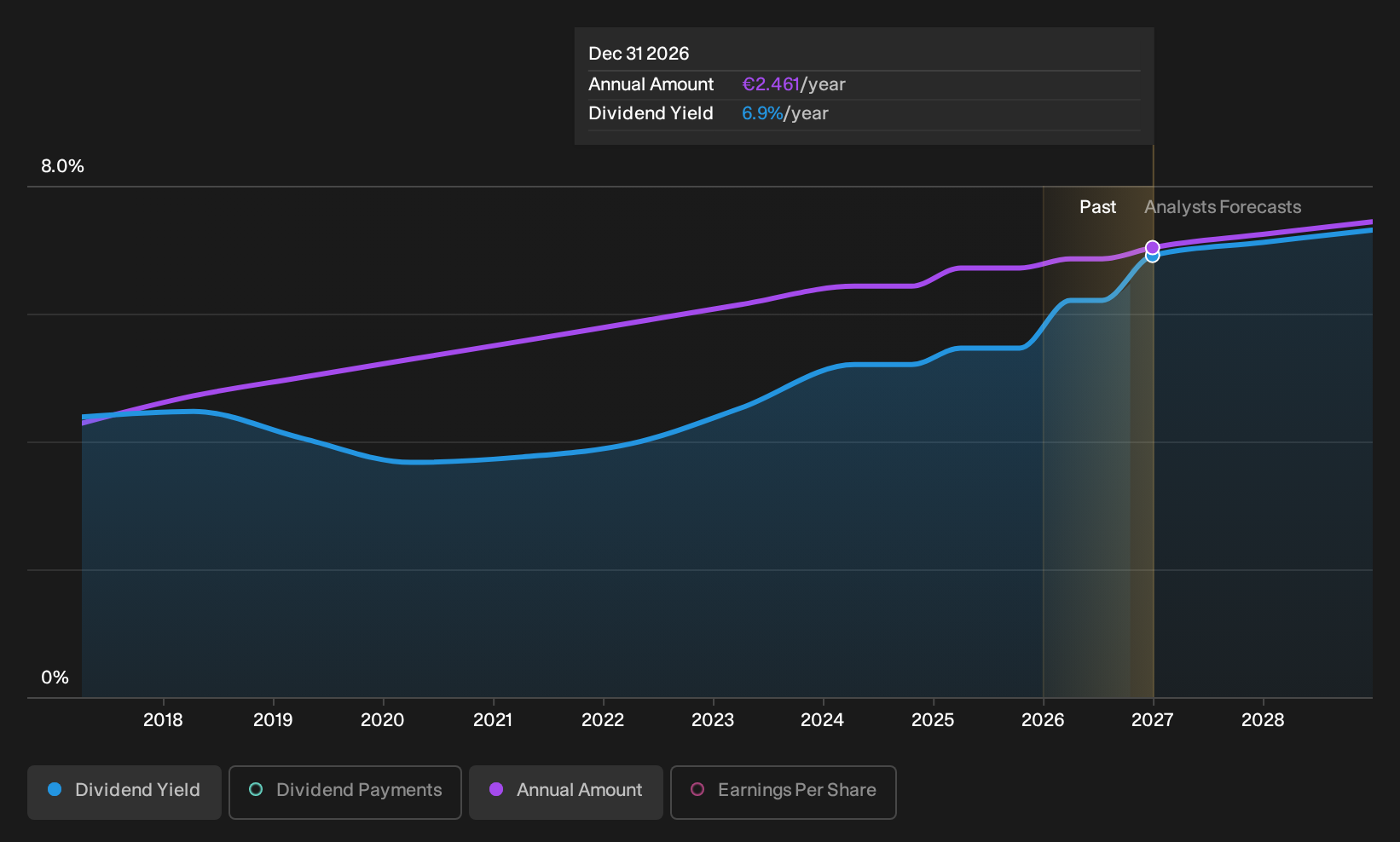
The company's next dividend payment will be €0.60 per share, on the back of last year when the company paid a total of €2.40 to shareholders. Looking at the last 12 months of distributions, Elisa Oyj has a trailing yield of approximately 6.7% on its current stock price of €35.62. We love seeing companies pay a dividend, but it's also important to be sure that laying the golden eggs isn't going to kill our golden goose! So we need to investigate whether Elisa Oyj can afford its dividend, and if the dividend could grow.
Dividends are usually paid out of company profits, so if a company pays out more than it earned then its dividend is usually at greater risk of being cut. Elisa Oyj paid out 113% of profit in the past year, which we think is typically not sustainable unless there are mitigating characteristics such as unusually strong cash flow or a large cash balance. Yet cash flow is typically more important than profit for assessing dividend sustainability, so we should always check if the company generated enough cash to afford its dividend. Over the last year it paid out 75% of its free cash flow as dividends, within the usual range for most companies.
It's disappointing to see that the dividend was not covered by profits, but cash is more important from a dividend sustainability perspective, and Elisa Oyj fortunately did generate enough cash to fund its dividend. If executives were to continue paying more in dividends than the company reported in profits, we'd view this as a warning sign. Very few companies are able to sustainably pay dividends larger than their reported earnings.
View our latest analysis for Elisa Oyj
Click here to see the company's payout ratio, plus analyst estimates of its future dividends.
Have Earnings And Dividends Been Growing?
Companies that aren't growing their earnings can still be valuable, but it is even more important to assess the sustainability of the dividend if it looks like the company will struggle to grow. If earnings fall far enough, the company could be forced to cut its dividend. That explains why we're not overly excited about Elisa Oyj's flat earnings over the past five years. Better than seeing them fall off a cliff, for sure, but the best dividend stocks grow their earnings meaningfully over the long run.
Many investors will assess a company's dividend performance by evaluating how much the dividend payments have changed over time. In the past 10 years, Elisa Oyj has increased its dividend at approximately 5.5% a year on average.
To Sum It Up
From a dividend perspective, should investors buy or avoid Elisa Oyj? Earnings per share have barely moved in recent times, and the company is paying out an uncomfortably high percentage of its income. Fortunately its cash generation was somewhat stronger. Bottom line: Elisa Oyj has some unfortunate characteristics that we think could lead to sub-optimal outcomes for dividend investors.
Although, if you're still interested in Elisa Oyj and want to know more, you'll find it very useful to know what risks this stock faces. For example, we've found 2 warning signs for Elisa Oyj (1 shouldn't be ignored!) that deserve your attention before investing in the shares.
If you're in the market for strong dividend payers, we recommend checking our selection of top dividend stocks.
Have feedback on this article? Concerned about the content? Get in touch with us directly. Alternatively, email editorial-team (at) simplywallst.com.
This article by Simply Wall St is general in nature. We provide commentary based on historical data and analyst forecasts only using an unbiased methodology and our articles are not intended to be financial advice. It does not constitute a recommendation to buy or sell any stock, and does not take account of your objectives, or your financial situation. We aim to bring you long-term focused analysis driven by fundamental data. Note that our analysis may not factor in the latest price-sensitive company announcements or qualitative material. Simply Wall St has no position in any stocks mentioned.