
- PRICING
- LIVE QUOTES
- LEARN
- HELP


EN
3 Truck Stocks Tied To Freight Recovery And Margin Pressure
Trucking is quietly being rewired, from cleaner diesel engines that meet tough EPA 2027 rules without credits to early moves toward driverless routes and per mile software fees. That mix of regulation, freight recovery and higher interest rates is already reshaping which Commercial Truck OEMs & Fleet Leasing/Finance Platforms can keep margins resilient and win customer loyalty. This article walks through three stocks exposed to these shifts and explains how the same news can create opportunity or risk for your portfolio.
The stocks covered below are only a small sample, and the full screen surfaced 23 more Commercial Truck OEMs & Fleet Leasing/Finance Platforms with equally compelling narratives that are not included in this article. To identify and analyze your own highest conviction ideas in this space, head straight to the Commercial Truck OEMs & Fleet Leasing/Finance Platforms screener.
TFI International (TSX:TFII)
TFI International is effectively the trucking backbone of this screener, running a large North American fleet that links directly to freight volumes, equipment cycles and the economics of Commercial Truck OEMs & Fleet Leasing/Finance Platforms.
TFI International runs one of North America’s largest truck based logistics networks, tying it closely to fleet demand and freight cycles. It generates about US$3.4b from Less Than Truckload, US$3.2b from Truckload and US$1.6b from Logistics, and carries a market value of roughly CA$13.3b.
Rising domestic and cross-border freight activity driven by North American reshoring/nearshoring and potential resolution of tariff uncertainties is expected to unlock volume growth, especially for profitable U.S.-Canada LTL trade lanes and specialized truckload. This is expected to support revenue and operating earnings if the macro cycle improves.
What really moves the needle for TFI International now is how one less visible shift in its freight mix ultimately feeds through to margins.
That shift in freight mix is exactly what the full narrative for TFI International unpacks in detail, revealing where pricing power may be accelerating and where cost pressure could be quietly building.

AB Volvo (OM:VOLV B)
AB Volvo is the pure truck OEM plus fleet finance story in this screen, combining global heavy vehicle manufacturing with in house leasing and financing that tie its fortunes directly to how operators refresh and run their fleets.
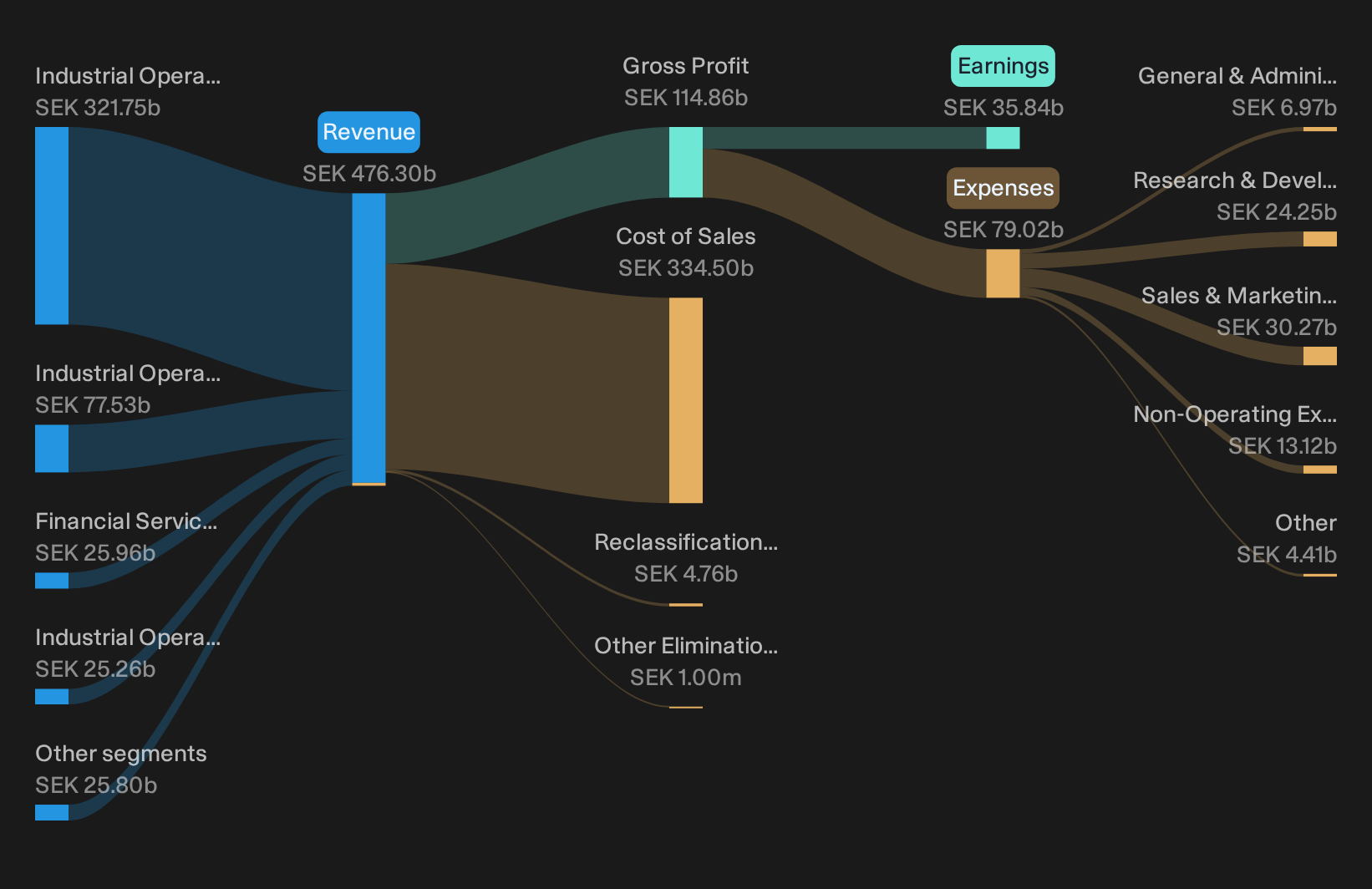
AB Volvo manufactures trucks, buses, construction machinery and engines worldwide, with its Commercial Truck OEMs & Fleet Leasing/Finance profile anchored by Industrial Operations - Trucks at about SEK 321.7b of revenue, supported by SEK 77.5b from Construction Equipment and SEK 26.0b from Financial Services, and a roughly SEK 661.5b market value.
Investors looking at AB Volvo are really asking how much value can be drawn from the installed truck base once services, financing and new drivetrains are layered on top.
The continued shift at AB Volvo toward higher-margin services, with service revenue of about SEK 123 to 126b and 26 to 28% of group sales, supports a larger recurring earnings base that can smooth truck cycle swings and potentially lift group operating margins over time.
What happens to those margins depends heavily on how one still developing part of the truck and fleet financing model actually lands with customers.
That hinges on how far services can decouple earnings from the truck cycle. The full narrative for AB Volvo unpacks this, including where risks might be masking upside.
DEUTZ (XTRA:DEZ)
DEUTZ plugs into the trucking theme from the engine bay, supplying and servicing diesel, gas and emerging low emission drives that power commercial vehicles and off highway equipment across global fleets.
DEUTZ develops and services engines used in commercial and industrial equipment, tying it indirectly to truck cycles through drivetrain supply and aftermarket support. Management reports around €591 million from the Americas and €140.6 million from China, and the business carries a market capitalization of about €1.7 billion.
The company's accelerating transformation from an engine pure play to a diversified solutions provider, particularly via strategic M&A in electrification, energy systems, and defense, is intended to position it to participate in the global shift toward decarbonization and rising demand for low-emission/hybrid powertrains.
What really matters for DEUTZ now is how a single, less visible shift in where those engines earn money ends up feeding through to margins.
That margin shift is exactly where the full narrative for DEUTZ digs in, surfacing how DEUTZ’s evolving engine mix, M&A, and aftermarket earnings could accelerate or stall returns from here.

Curious About Fresh Alternatives?
Fresh ideas move first. Breakout themes can build momentum even while they are still under the radar. Do not get caught reacting after prices start moving sharply upward. Consider planning your next steps in advance.
- Scan for steady cash generators before the crowd starts chasing them by running the 5 high quality undervalued stocks while valuations and expectations still look reasonable.
- Target durable income streams from resilient payers using the 3 dividend fortresses and look for yield opportunities that others may overlook when prices are dropping or stalled.
- Focus on structural themes connected to electrification and data usage trends by checking the 41 power grid technology and infrastructure stocks while these infrastructure stories are still developing.
This article by Simply Wall St is general in nature. We provide commentary based on historical data and analyst forecasts only using an unbiased methodology and our articles are not intended to be financial advice. It does not constitute a recommendation to buy or sell any stock, and does not take account of your objectives, or your financial situation. We aim to bring you long-term focused analysis driven by fundamental data. Note that our analysis may not factor in the latest price-sensitive company announcements or qualitative material. Simply Wall St has no position in any stocks mentioned.
Have feedback on this article? Concerned about the content? Get in touch with us directly. Alternatively, email editorial-team@simplywallst.com