
- PRICING
- LIVE QUOTES
- LEARN
- HELP


EN
What Ford (F)'s Software Push Means For Shareholders
- Ford Motor is preparing to report third quarter results after shifting its vehicle mix toward higher margin trucks and SUVs, expanding its Model e electric vehicle lineup and building recurring revenue from software subscriptions.
- The combination of a growing base of paid software and telematics subscriptions and management's higher 2026 Ford Blue EBIT guidance highlights how Ford is trying to rely more on fee based services layered on top of its traditional hardware business.
- We will now look at how Ford Motor's push into higher margin software subscriptions might reshape the investment narrative investors focus on.
Ford Motor Investment Narrative Recap
To own Ford Motor, you need to be comfortable with a story built around higher margin trucks and SUVs, a growing software and telematics base, and a long, expensive shift to EVs and energy storage. The big near term swing factor is execution on that mix shift while keeping quality improvements on track and recall costs contained.
The CP4 fuel pump class certification adds another layer to an already present quality and legal risk. It introduces potential repair and settlement costs and could absorb management attention, but it does not directly change the near term catalysts tied to software subscriptions, Ford Pro earnings power, or upcoming quarterly results unless cash outflows become sizable.
The recent highlight that ties closest to this is Ford Motor’s push to build recurring software and Ford Pro Intelligence subscriptions. That effort aims to increase the share of predictable, fee based revenue sitting on top of the core truck and van base. This is important when you are also facing possible legal and warranty bills from issues like the CP4 litigation.
If software and connected services continue to scale, they may help offset pressure from warranty, recall and legal exposure, and from mixed results in EV programs. For you as a shareholder, the key question is whether Ford Pro, Model e and Ford Energy can support the 8% EBIT margin target while the business manages legal disputes and invests heavily in new platforms.
Ford Motor's current analyst script points to revenues of US$193.8b and earnings of US$15.0b by 2029, built on a 1.0% yearly revenue growth assumption. That outlook implies a shift from a loss of US$7.4b in earnings today to US$15.0b, which is an earnings swing of about US$22.4b over the period.
Uncover why Ford Motor's fair value indicates a 26% potential upside to its current price, which could narrow quickly as investors re-rate Ford Motor.
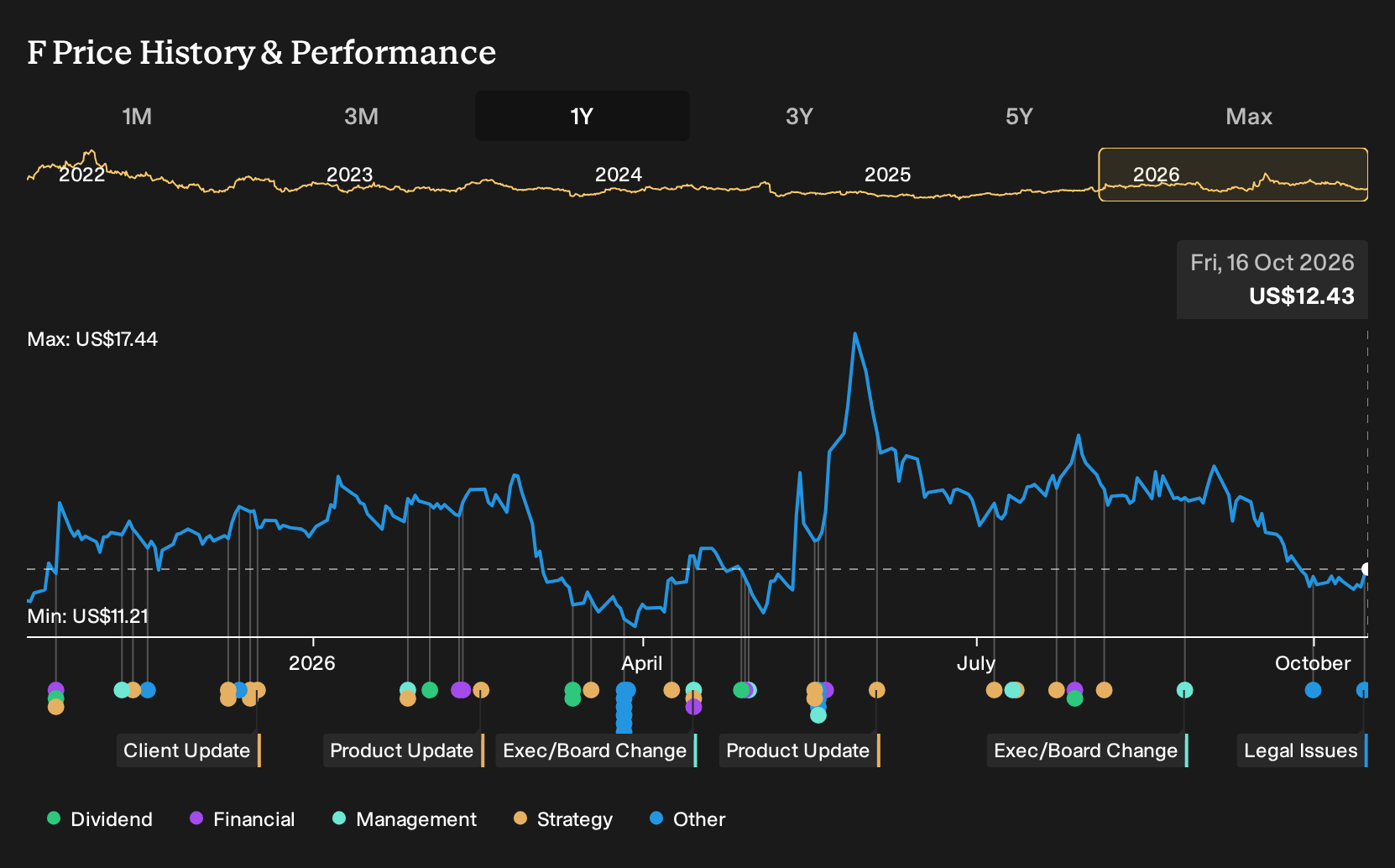
Exploring Other Perspectives
One alternate view treats the CP4 lawsuit as the real swing factor for Ford Motor rather than software growth. In that more cautious script, the lowest analysts were already working off revenue of about US$170.4b and earnings of roughly US$13.4b by 2029. You can treat that as a stress test and ask whether this new legal step pushes those numbers lower or forces a rethink of how much software and Ford Pro strength can offset legal and warranty costs.
Explore 6 other Ford Motor fair value estimates, including one that suggests as much as 14% downside from the current price.
Form Your Own Verdict
Don't just follow the ticker. Dig into the data and build a conviction that's truly your own.
- A great starting point for your Ford Motor research is our analysis highlighting 3 key rewards and 2 important warning signs that could impact your investment decision.
- See our latest analysis for Ford Motor. The report includes a comprehensive fundamental analysis summarized in a single visual, the Snowflake, making it easy to evaluate Ford Motor's overall financial health at a glance.
Looking For More Investment Ideas Beyond Ford Motor?
Once you have a handle on Ford Motor, it can help to widen the lens and compare it with other businesses that match your preferred balance of quality, income and risk.
- If you want potential mispricings with solid fundamentals to back them up, start with a focused group of companies screened for quality and attractive valuations through the 33 high quality undervalued stocks.
- For investors who care most about steady income and payout resilience, you can zero in on companies offering strong yields and robust coverage using the 8 dividend fortresses.
- If capital protection sits higher on your priority list than aggressive upside, consider filtering for companies with stronger balance sheets and lower risk profiles via the 32 resilient stocks with low risk scores.
This article by Simply Wall St is general in nature. We provide commentary based on historical data and analyst forecasts only using an unbiased methodology and our articles are not intended to be financial advice. It does not constitute a recommendation to buy or sell any stock, and does not take account of your objectives, or your financial situation. We aim to bring you long-term focused analysis driven by fundamental data. Note that our analysis may not factor in the latest price-sensitive company announcements or qualitative material. Simply Wall St has no position in any stocks mentioned.
Have feedback on this article? Concerned about the content? Get in touch with us directly. Alternatively, email editorial-team@simplywallst.com