
- PRICING
- LIVE QUOTES
- LEARN
- HELP


EN
Is Coursera (COUR) Cheap On Its Udemy Combination News?
Coursera (COUR) has scheduled its third quarter 2026 earnings release for October 29, following its combination with Udemy, which has reshaped the online skills training market.
At a share price of US$4.94, Coursera has seen its 1-day share price return decline 2.95% and its 30-day share price return fall 5.73%, while the 1-year total shareholder return is down 50.75%. This suggests momentum has been fading even as the Udemy combination resets expectations around growth potential and execution risk.
Look beyond Coursera and the Udemy tie-up by comparing its recent slide with 33 high quality undervalued stocks that also combine solid fundamentals with share prices under pressure.
Coursera trades at a steep discount to both analyst targets and some intrinsic value estimates after its recent slide. So where does a fair number actually land in that spread?
Most Popular Narrative: 38% Undervalued
Coursera’s most followed valuation narrative pegs fair value at $8 per share versus the last close of $4.94, which leaves a wide gap that hinges on execution around margins and credential demand.
The accelerating global need for technology-driven upskilling and reskilling continues to fuel new user growth and broadens Coursera's addressable market, as evidenced by record new learner additions and surging demand for AI, tech, and industry-specific credentials. This may directly impact future top-line revenue.
See why 15 investors see Coursera as 38% undervalued.
Result: Fair Value of $8 (UNDERVALUED)
Still, the Coursera story can be knocked off course if free or low cost rivals keep pressuring pricing, or if skepticism about micro credentials limits what learners are willing to pay.
Find out about the key risks to this Coursera narrative.
Another View: Coursera on Sales-Based Valuation
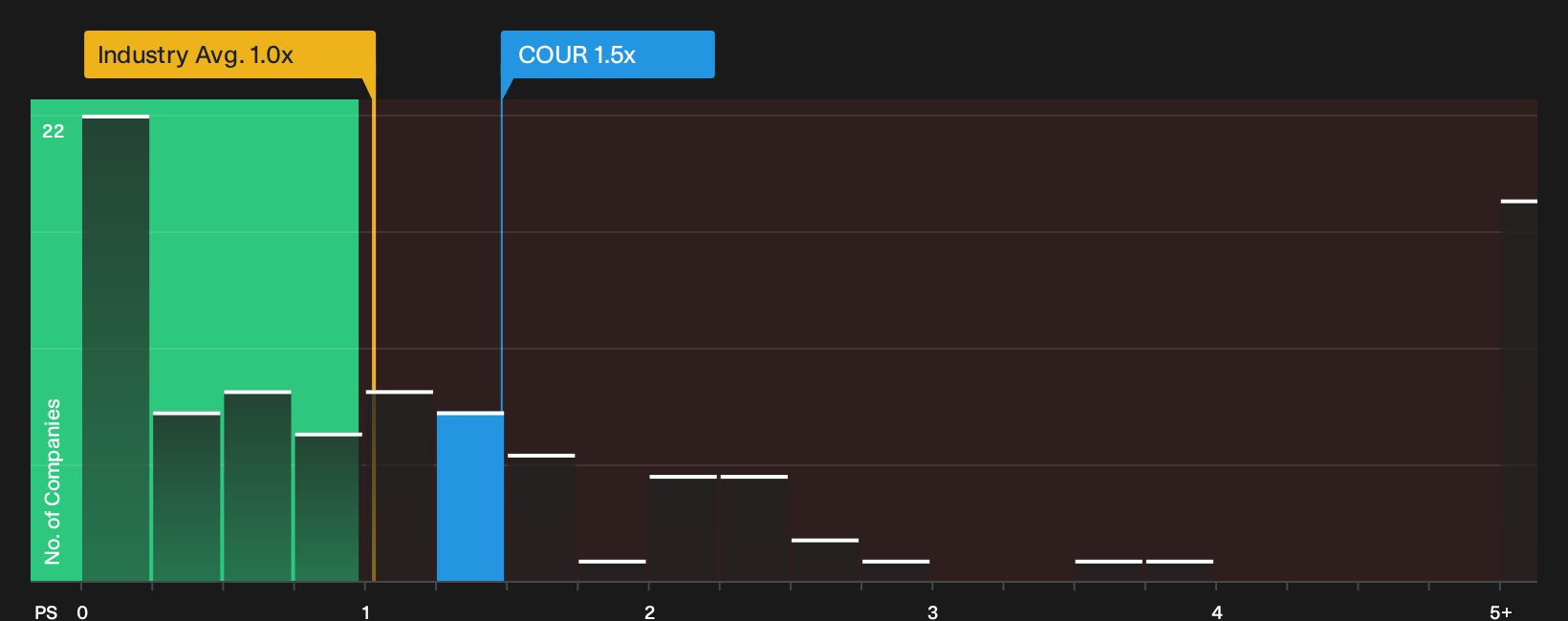
Coursera screens as deeply undervalued on some models, yet its P/S ratio of 1.5x looks expensive next to the US Consumer Services sector on 1x and peer averages of 1.3x, even though the fair ratio sits higher at 2.4x. Is this a mispriced opportunity or a warning that expectations are still rich?
To see how that gap between current P/S and the fair ratio could close in either direction, and what it might mean for future returns, See what the numbers say about this price — find out in our valuation breakdown..
Next Steps
Mixed signals around Coursera’s potential do not have to leave you stuck on the sidelines. Instead, move quickly, examine the data, and decide where you land on 2 key rewards and 1 important warning sign.
Ready for more investment ideas beyond Coursera?
You have already done the hard part by digging into Coursera, so keep that momentum going and line up your next three potential opportunities right now.
- Target income stability by scanning for dependable high-yield payers through the 8 dividend fortresses.
- Hunt for mispriced quality by reviewing the 20 high quality undiscovered gems before other investors catch on.
- Prioritise resilience under pressure by filtering for 32 resilient stocks with low risk scores that keep risk scores in check while fundamentals stay intact.
This article by Simply Wall St is general in nature. We provide commentary based on historical data and analyst forecasts only using an unbiased methodology and our articles are not intended to be financial advice. It does not constitute a recommendation to buy or sell any stock, and does not take account of your objectives, or your financial situation. We aim to bring you long-term focused analysis driven by fundamental data. Note that our analysis may not factor in the latest price-sensitive company announcements or qualitative material. Simply Wall St has no position in any stocks mentioned.
Have feedback on this article? Concerned about the content? Get in touch with us directly. Alternatively, email editorial-team@simplywallst.com