
- PRICING
- LIVE QUOTES
- LEARN
- HELP


EN
3 Tanker Stocks With Direct Exposure To Higher Oil Shipping Rates
Energy routes are being reshaped in real time as conflicts from the Red Sea to the Strait of Hormuz disrupt shipping, push Brent crude and refined product prices higher, and keep inflation in the headlines ahead of the US midterms. That mix of risk and higher freight demand can punish some stocks while creating rare pricing power for others. This article explains how that story affects three global tanker operators from our screener, which focuses on listed oil and product shipping companies most exposed to these specific news shocks.
The three stocks highlighted below are only a starting sample, and the full screen surfaced 10 more tanker focused companies with equally compelling narratives that are not covered here.
If you want to identify which operators best fit your own risk and return criteria, head straight into the Global Oil & Product Tanker Shipping screener to filter, analyze, and focus on your highest conviction ideas.
Okeanis Eco Tankers (OB:OET)
Okeanis Eco Tankers is a pure play on the Global Oil & Product Tanker Shipping theme, running a young crude focused fleet that earned about $706 million from tanker vessels and carries a roughly $3.1b market value.
For investors looking for direct exposure to longer crude voyages and higher war risk premiums, Okeanis Eco Tankers offers a focused way to tap into changing trade routes without spreading capital across unrelated shipping segments.
"The company stands to benefit from rising long-haul crude trade volumes as OPEC is reversing production cuts, emerging producers like Guyana and Brazil are ramping up exports, and shifting trade flows (e.g., Indian imports diverting away from Russia, Middle East barrels redirected to Asia) are increasing ton-miles and supporting higher fleet utilization, which should have a favorable impact on revenues."
The real swing factor is how one evolving supply side constraint ultimately filters through to day rates, operating leverage, and dividend capacity.
That operating leverage question is exactly what the full narrative for Okeanis Eco Tankers unpacks, highlighting how management is positioning Okeanis Eco Tankers if war risk pricing accelerates or stalls.

DHT Holdings (DHT)
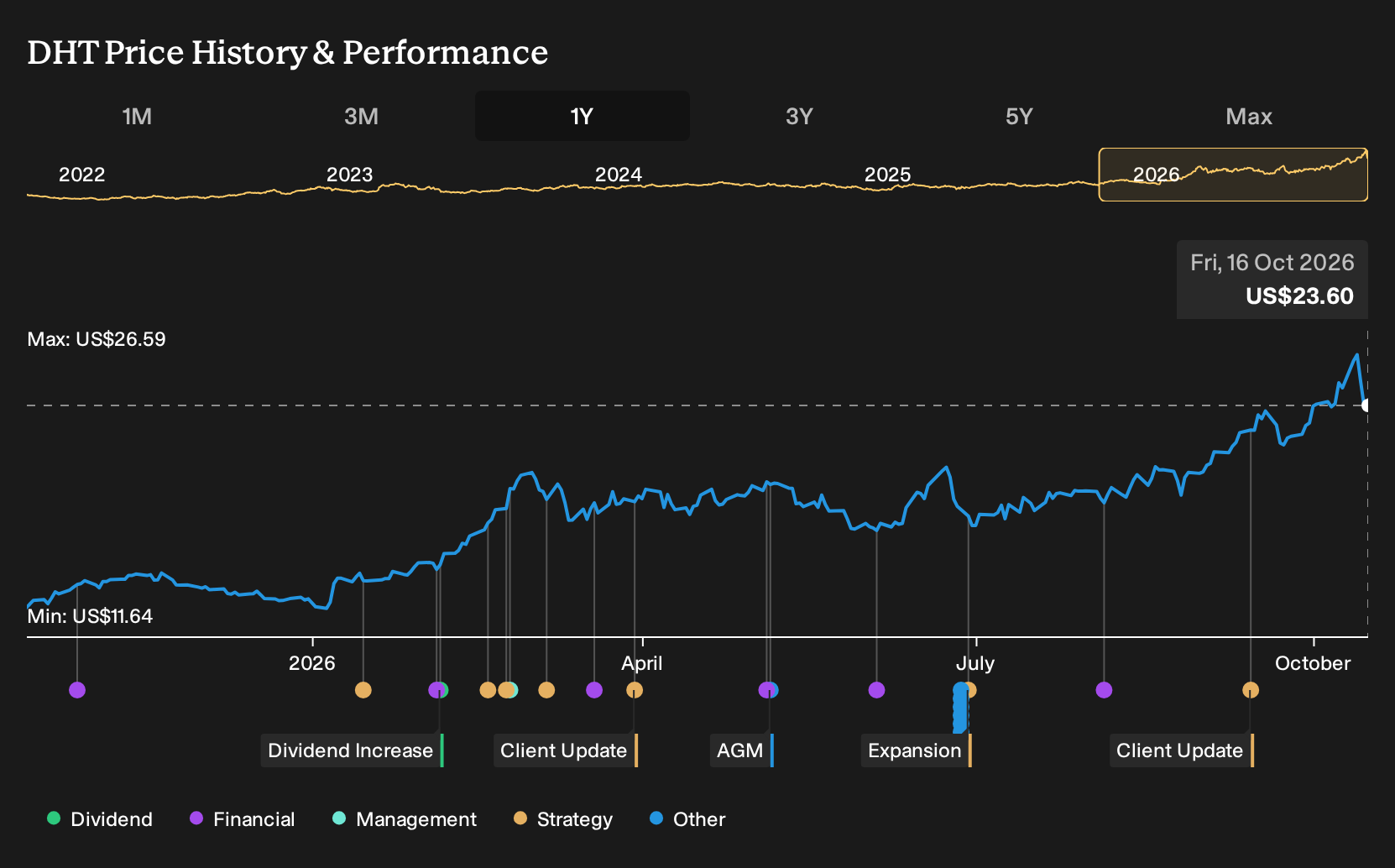
DHT Holdings is one of the purest Global Oil & Product Tanker Shipping plays in this list, running a VLCC fleet that earned about $799 million from crude carriers and giving the stock a roughly $3.8b market value tied directly to long-haul crude trade routes.
DHT sits squarely in the long-haul crude end of the trade, so any rerouting around conflict zones or scramble for replacement barrels can have an outsized effect on its day rates and cash generation.
"The escalation of US-Israel strikes on Iran, including the assasination of Iran's Supreme Leader, Khamenei, has triggered Iranian retaliation which include effective disruptions or closures in the Strait of Hormuz that serves as a vital chokepoint for global oil trade."
What happens to DHT Holdings’ earnings power will depend on how one unresolved supply route pressure reshapes pricing, voyage distance, and vessel availability.
That unresolved pressure is exactly where the story turns for DHT Holdings, and the full narrative for DHT Holdings shows how rerouting, pricing power, and risk premiums could be accelerating under the surface.
Frontline (FRO)
Frontline is one of the purest plays on the Global Oil & Product Tanker Shipping theme, running a worldwide fleet of crude and product vessels that generated about US$2.7b from tankers and carries a market value near US$11.7b.
For investors who want direct exposure to dislocated crude and product flows rather than owning diversified energy stocks, Frontline sits squarely in the middle of the tanker rate story, where longer voyages and war risk premiums can quickly change earnings power.
"Longer haul routes driven by rerouted flows around risk zones and multi stage ship to ship chains are increasing ton miles and idling days per VLCC. This supports elevated TCEs and keeps revenue and earnings for Frontline closely geared to sustained route inefficiencies."
The key question is what happens to that earnings power if a single supply and demand pressure on compliant tanker capacity shifts direction.
If that pressure point on compliant capacity is what you care about, the full narrative for Frontline shows where Frontline’s risk premiums and day rate leverage could be heading next.

Seeking Alternatives Before The Crowd?
Fresh themes are breaking out while older ideas lose momentum. Do not get caught chasing what just flew. Scan under the radar for now and act now.
- Spot resilient cash generators before sentiment shifts by reviewing the list of solid balance sheet and fundamentals (203 results) while it still highlights companies the wider market has not fully priced in.
- Use the 32 best rare earth metal stocks to track miners that could benefit if electrification keeps gaining pace.
- Target stronger income streams as rates move by scanning the 214 dividend fortresses for higher yielding payers that still keep balance sheets in reasonable shape.
This article by Simply Wall St is general in nature. We provide commentary based on historical data and analyst forecasts only using an unbiased methodology and our articles are not intended to be financial advice. It does not constitute a recommendation to buy or sell any stock, and does not take account of your objectives, or your financial situation. We aim to bring you long-term focused analysis driven by fundamental data. Note that our analysis may not factor in the latest price-sensitive company announcements or qualitative material. Simply Wall St has no position in any stocks mentioned.
Have feedback on this article? Concerned about the content? Get in touch with us directly. Alternatively, email editorial-team@simplywallst.com