
- PRICING
- LIVE QUOTES
- LEARN
- HELP


EN
3 Energy Efficiency Stocks For Higher Fuel Prices
Energy shocks from the U.S.-Iran war are pushing fuel prices higher, squeezing airlines and retailers, and pressuring household budgets. At the same time, they are shining a spotlight on vehicle and home energy efficiency plays. Investors who ignore this shift risk missing where cost-conscious consumers and businesses may redirect spending. This article walks through three stocks exposed to this news backdrop and why each could matter for your portfolio decisions.
The stocks covered below are just a starting sample, and the full screen surfaced 12 more companies with equally compelling narratives that do not fit into a short article. To see the broader opportunity set, head straight into the Vehicle and Home Energy Efficiency Plays screener to identify, compare, and analyze the vehicle and home energy efficiency plays that best match your own conviction and risk profile.
EVgo (EVGO)
Overview: EVgo runs a U.S. fast charging network for electric vehicles, giving drivers an alternative to gasoline and diesel refuelling.
Operations: EVgo reports about US$403 million of revenue from retail gasoline and auto dealer activities, all generated within the United States.
Market Cap: US$349 million
EVgo matters in this screener because its fast charging footprint is directly tied to how quickly drivers and fleets can shift away from high petrol costs.
"Expansion into higher-frequency segments and slower-than-market stall buildout enhances network utilization, supports recurring revenue, and advances market share capture."
What happens to EVgo’s margins if one key input cost or funding channel moves in the wrong direction will be crucial for investors.
If that risk-reward balance is what you are weighing, the full narrative for EVgo maps how EVgo’s charging buildout, capital needs, and pricing power could be decoupling from fuel shocks.

QuantumScape (QS)
Overview: QuantumScape develops solid-state lithium-metal batteries aimed at electric vehicles and other uses, targeting longer range, faster charging, and higher efficiency.
Market Cap: US$2.5b
QuantumScape matters to this energy-efficiency screen because its solid-state battery tech targets the biggest cost lever for drivers, how far each kilowatt-hour can take an EV before a recharge.
"A cornerstone of QuantumScape's commercial strategy is its deep partnership with Volkswagen (VW), dating back to 2012, and VW's battery arm, PowerCo, now has a non‑exclusive licensing agreement with QuantumScape."
What that partnership means for margins and real-world demand ultimately hinges on how one crucial scale-up risk gets resolved.
If that scale question is what you are wrestling with, the full narrative for QuantumScape lays out how QuantumScape’s ramp risks, partnerships, and upside potential could be evolving.

Monro (MNRO)
Overview: Monro runs branded tire and auto repair shops across the United States, helping drivers maintain vehicles and improve everyday fuel efficiency.
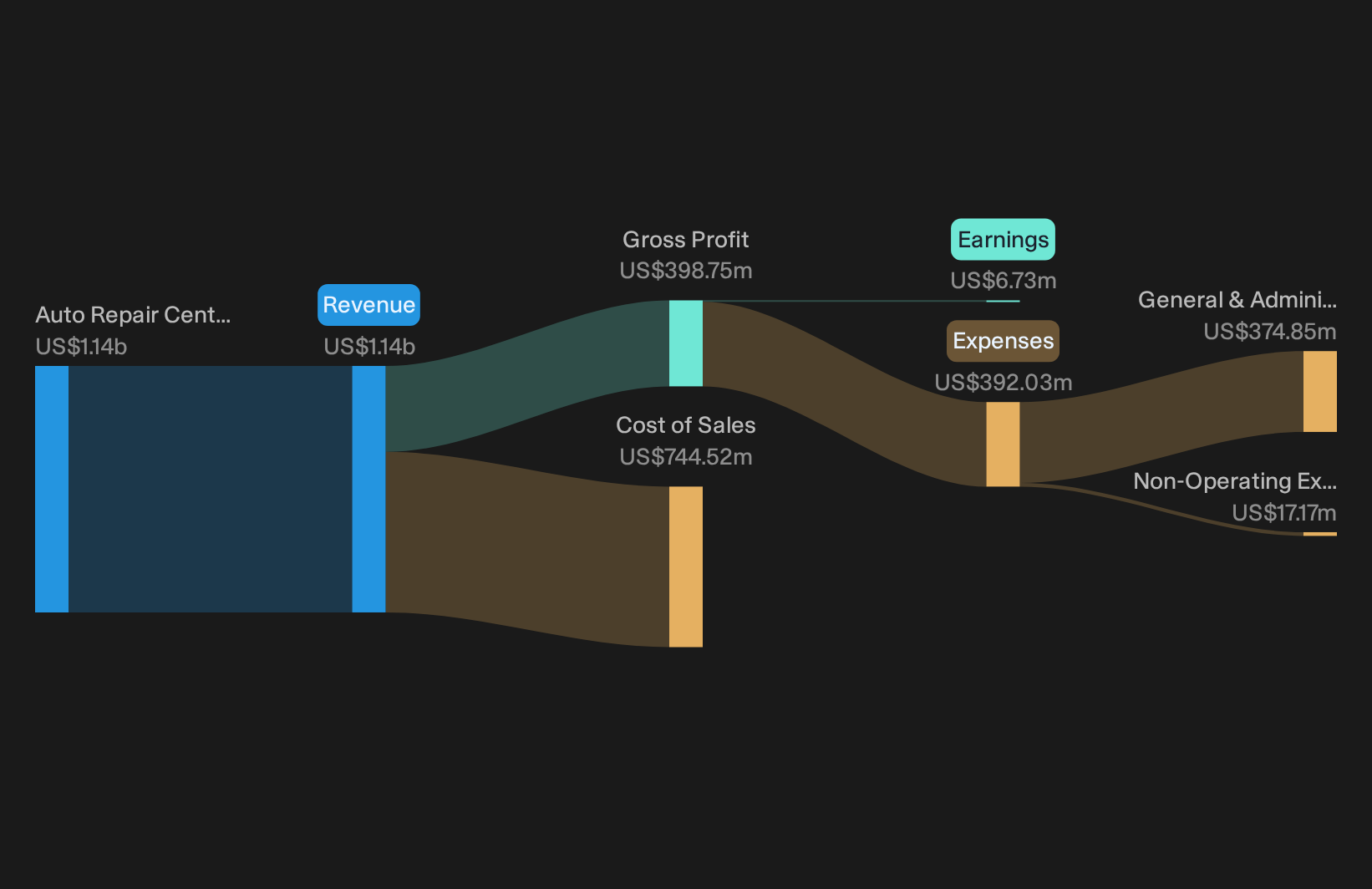
Operations: Monro generates about US$1.1b of revenue from auto repair centers, with all sales coming from customers in the United States.
Market Cap: US$449 million
Monro fits into this efficiency screen as the backyard mechanic for fuel savings, where tire choice, inflation, and alignment quietly shape how far a tank of gas takes you.
"The recent closure of 145 underperforming stores and ongoing exit or sale of the related real estate continue to remove lower margin locations from the network. This can lift consolidated store level EBITDA margins and net earnings as the smaller, healthier footprint carries a greater share of revenue."
What happens to Monro’s pricing power if one less visible cost pressure keeps building could matter far more than headline fuel prices.
That quieter pressure is exactly what the full narrative for Monro unpacks, showing how Monro’s store footprint, pricing power, and cost curve could be shifting underneath the headline fuel story.
Seeking Alternatives Before The Crowd
Fresh ideas move first. Breakout stories gain momentum while prices are still under the radar for now. Do not get caught watching others act. Consider acting early based on your own research and risk tolerance.
- Scan 8 dividend fortresses to explore income opportunities designed for investors who prioritize yield with staying power rather than short-lived payout spikes.
- Use the 55 AI infrastructure stocks to look for competitive moats in future-facing infrastructure and identify businesses supplying the picks and shovels behind the AI data boom.
- Review the 20 high quality undiscovered gems to follow smaller companies with fundamentals that may not stay overlooked for long.
This article by Simply Wall St is general in nature. We provide commentary based on historical data and analyst forecasts only using an unbiased methodology and our articles are not intended to be financial advice. It does not constitute a recommendation to buy or sell any stock, and does not take account of your objectives, or your financial situation. We aim to bring you long-term focused analysis driven by fundamental data. Note that our analysis may not factor in the latest price-sensitive company announcements or qualitative material. Simply Wall St has no position in any stocks mentioned.
Have feedback on this article? Concerned about the content? Get in touch with us directly. Alternatively, email editorial-team@simplywallst.com