
- PRICING
- LIVE QUOTES
- LEARN
- HELP


EN
3 Transportation Stocks to Watch as Lower Fuel Costs Lift Margins
Fuel now sits back in the spotlight for transportation and logistics stocks after the U.S. chose to waive fresh Russia-related sanctions and tariffs, easing an immediate threat of higher oil and diesel costs. That decision keeps a floor under margins for fuel-hungry carriers and freight operators, while political pushback in Washington keeps volatility on the table. This article walks through 3 stocks from our Fuel-Sensitive Transportation & Logistics Stocks screener that appear especially exposed to this policy twist, and explains why that may matter for your portfolio decisions.
The three stocks in focus below are only a starter set, and the full screen throws up 17 more transportation and logistics companies with equally compelling fuel stories that this article does not cover.
If you want to identify and analyze your own highest-conviction ideas across this group, head straight into the Fuel-Sensitive Transportation & Logistics Stocks screener.
Mahindra Logistics (NSEI:MAHLOG)
Mahindra Logistics is one of the purest plays in this screener, with transportation-heavy, fuel hungry networks sitting behind everything from warehousing to last mile delivery. Even small shifts in diesel and freight costs can ripple quickly through its integrated logistics model.
Mahindra Logistics runs end to end logistics across India and overseas, heavily exposed to fuel driven transport costs. Supply chain management brings in about ₹69.6b and enterprise mobility about ₹4.2b in revenue, and the stock is valued at roughly ₹40.6b by market cap.
"Express logistics has turned gross margin positive at 0.2% with yield per kg improving by about ₹0.90 and tonnage up 7% year on year."
What really matters next is how a single cost lever away from fuel reshapes the path for margins and cash generation.
That single lever can be the difference between sluggish returns and accelerating value, so read the full narrative for Mahindra Logistics to see how fuel sensitivity plays against Mahindra Logistics and its cash story.

Southwest Airlines (LUV)
Southwest Airlines is the pure fuel story in this screener, a passenger carrier where jet fuel sits near the top of the cost stack and every move in energy prices filters quickly into ticket economics, loyalty profits and the room management has to reshape its product mix.
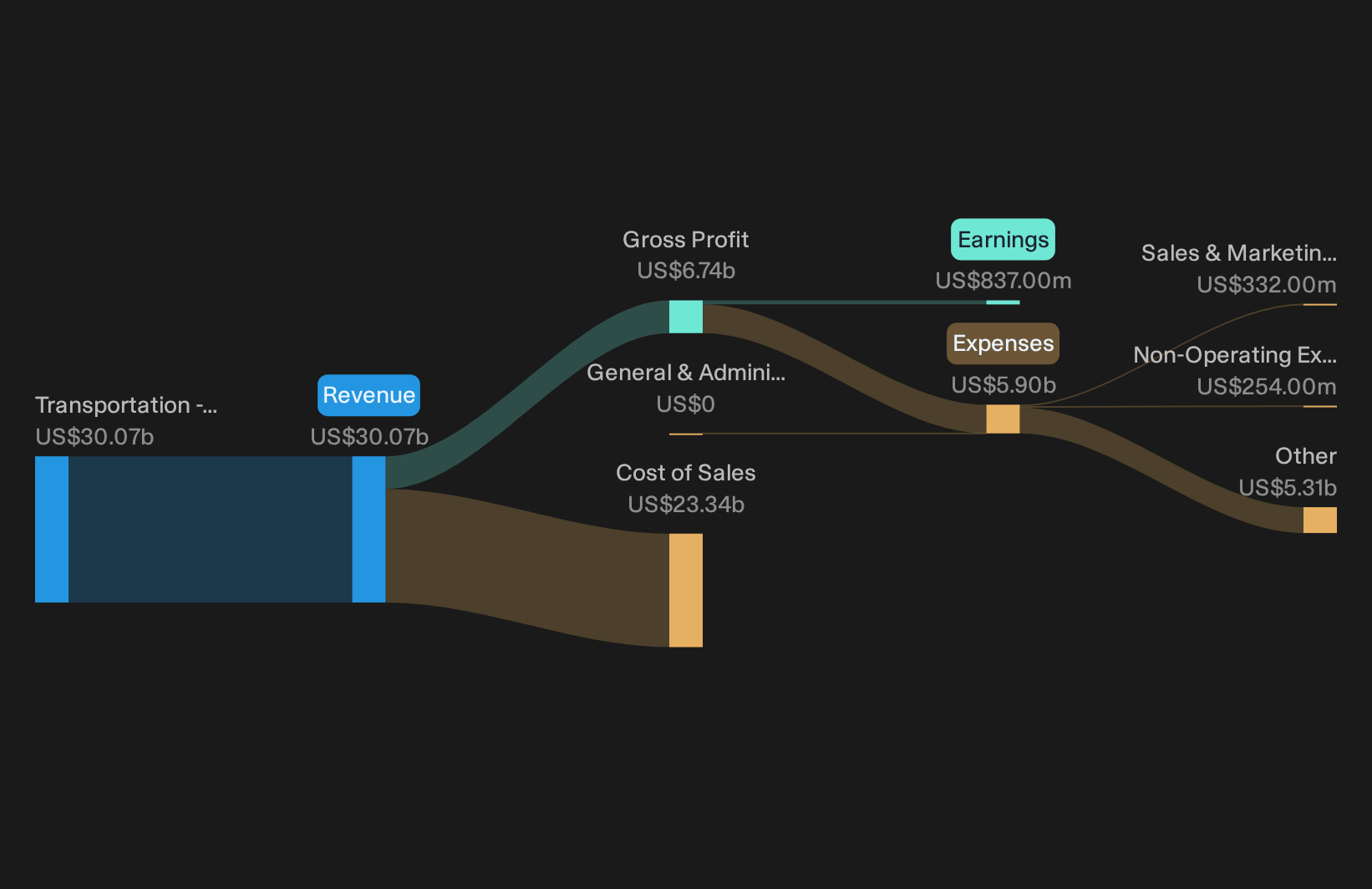
Southwest Airlines runs passenger flights across the U.S. and select international routes, supported by its Rapid Rewards program and various add on services. It generated about US$30.1b from airline transportation and currently carries a market value of roughly US$20.0b.
"The planned introduction of premium and assigned seating, along with basic economy offerings, can enhance revenue yield through differentiated pricing strategies catering to varied consumer preferences, thereby potentially boosting net margins and overall earnings. Fuel prices have already moved higher and are linked to ongoing oil volatility tied to conflict in the Middle East, which has led Southwest Airlines to trim planned 2026 capacity growth and reduce full year EPS guidance, so a period of persistently elevated fuel could further compress net margins and earnings."
What happens if a single tension between pricing power and that fuel line on the income statement breaks the wrong way will matter a lot.
If that balance between fares and fuel feels fragile, the full narrative for Southwest Airlines shows where Southwest Airlines could still accelerate, with efficiency and loyalty economics reshaping the story.
Marten Transport (MRTN)
Marten Transport is a fuel sensitive temperature controlled trucking business moving food and consumer goods across North America, where diesel costs heavily influence profitability. The Truckload segment produced about US$432 million, Dedicated US$264 million, Brokerage US$152 million, and the stock carries a roughly US$1.1b market value.
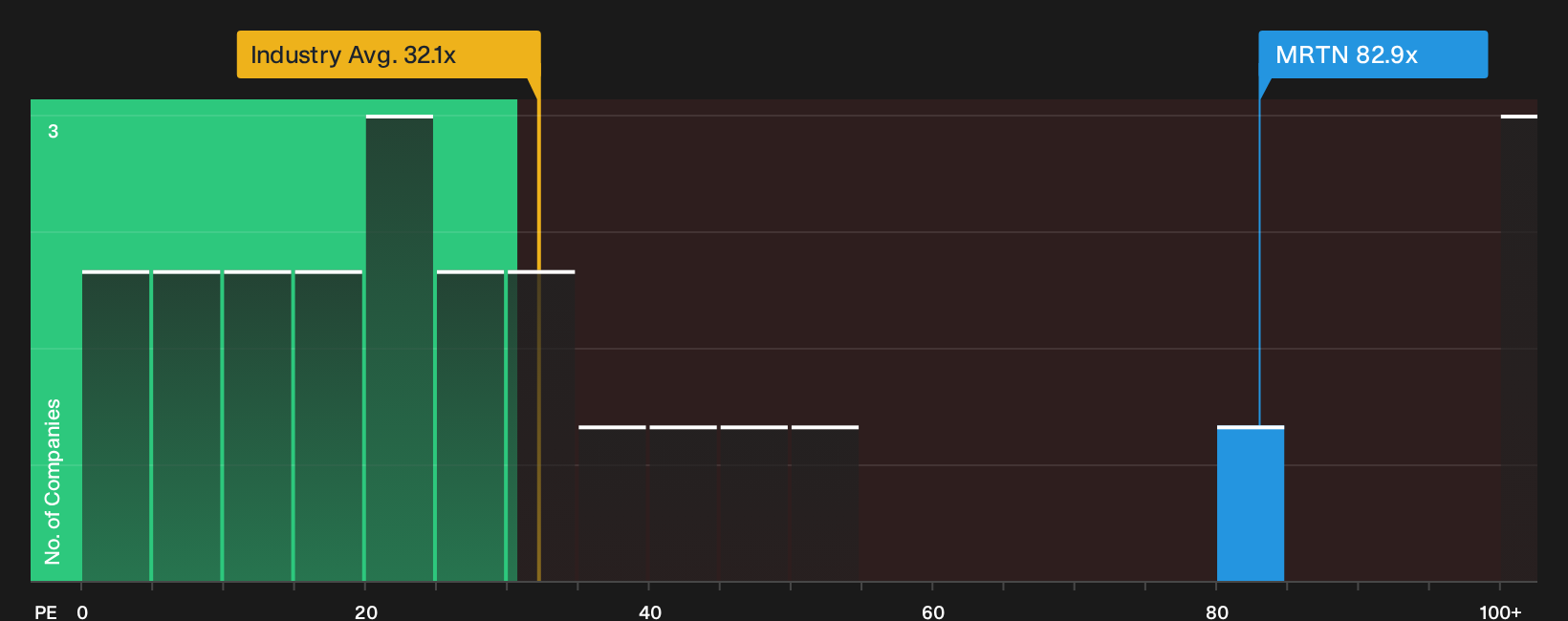
For a fuel intensive carrier like Marten Transport, the U.S. move to ease sanctions and support lower diesel costs goes straight to the income statement. Earnings are forecast to grow quickly from a modest 1.5% net margin. However, the stock trades on a very rich 82.9x P/E, so a shift in one unseen pressure on those thin margins could matter a lot.
Those thin margins and that rich multiple make the next turn critical, so read the analysis report for Marten Transport to see whether Marten Transport’s premium looks justified or stretched.
Seeking Alternatives Beyond Fuel Stories?
Fresh ideas move first. Breakout momentum, flying under the radar for now, often gets caught late once the crowd piles in. Scan these curated picks while it matters and act before broader interest grows.
- Target resilient paychecks from companies built around reliable cash generation through the 214 dividend fortresses, aiming to identify opportunities before yield hunters focus on the same names.
- Hunt for overlooked growth engines using the 618 high quality undiscovered gems, while they are still under the radar and valuations remain less influenced by momentum flows.
- Follow the buildout of next-generation computing infrastructure through the 55 AI infrastructure stocks, and consider positioning before enthusiasm for AI hardware becomes more widespread.
This article by Simply Wall St is general in nature. We provide commentary based on historical data and analyst forecasts only using an unbiased methodology and our articles are not intended to be financial advice. It does not constitute a recommendation to buy or sell any stock, and does not take account of your objectives, or your financial situation. We aim to bring you long-term focused analysis driven by fundamental data. Note that our analysis may not factor in the latest price-sensitive company announcements or qualitative material. Simply Wall St has no position in any stocks mentioned.
Have feedback on this article? Concerned about the content? Get in touch with us directly. Alternatively, email editorial-team@simplywallst.com